The Cambridge Science Tour
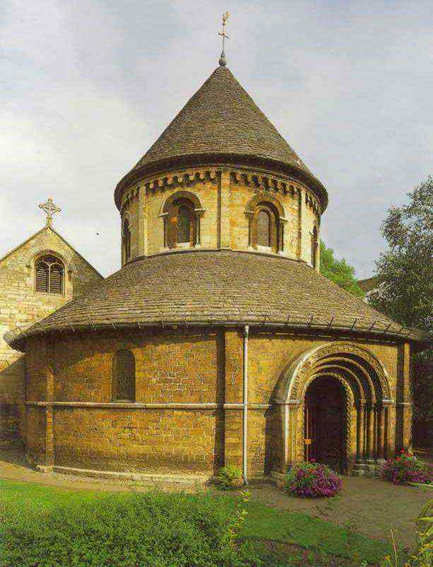
Just under two years ago in 2024, my brother, cousin and brother-in-law and I were given the Cambridge Spies tour by Sophie Smiley. It was the third time I had taken that tour with different guides and I really enjoyed Sophie’s version.
Cambridge Spies Tour Revisited | Fenlandphil’s Blog
Sophie mentioned at the time that she also did other tours and that the Science Tour might interest us. It did interest us, and eventually we got our heads together and booked the tour. The A bus from St Ives Park and Ride dropped us off at the Round Church a little after 11 am, which gave us an hour before our arranged rendezvous with Sophie outside the church at noon.
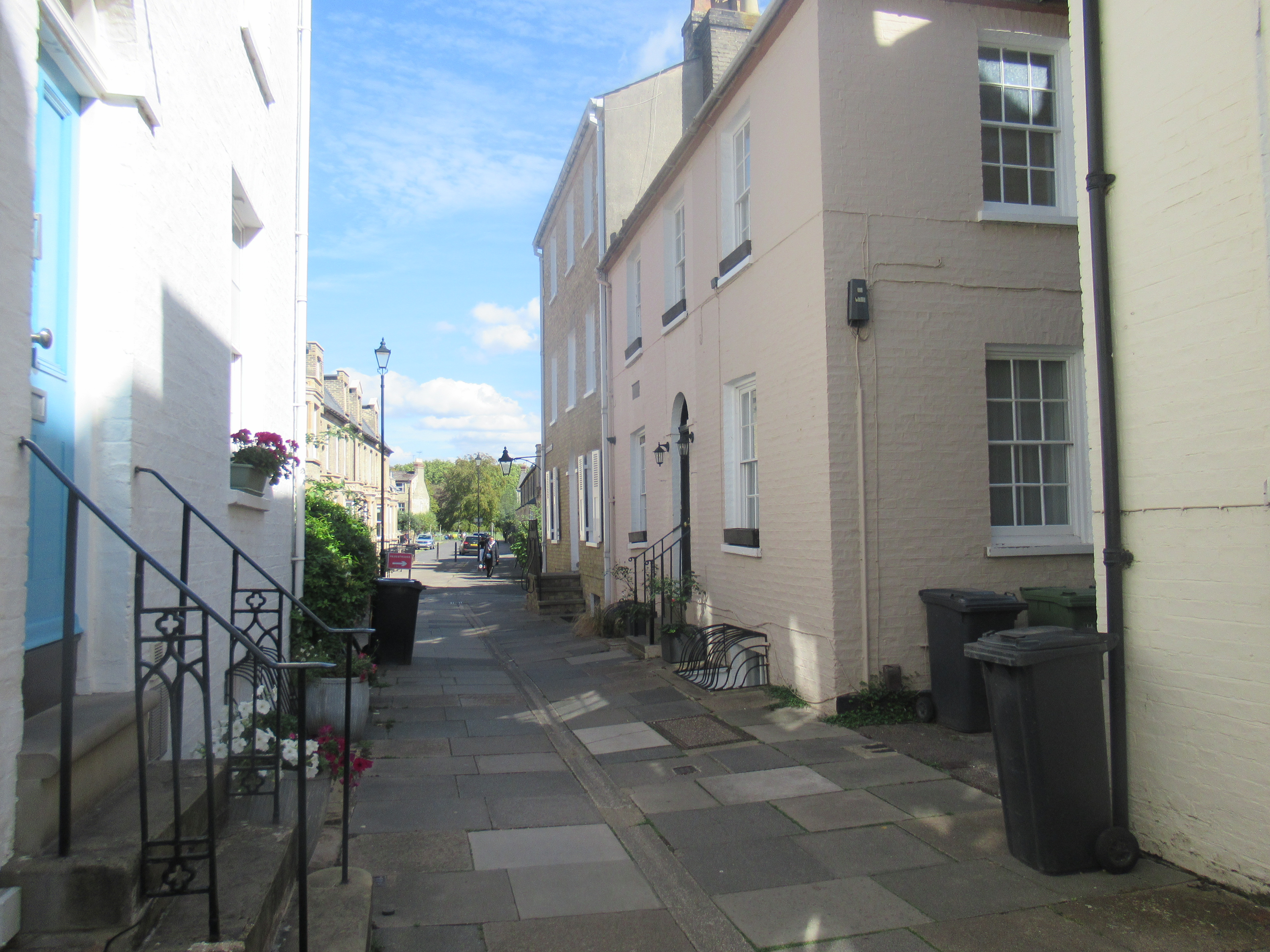
As we had a bit of time on our hands, a cuppa could be squeezed in before meeting up with Sophie at noon; the café was next to Portugal Place- well, that’s what the sign said. It was a narrow pathway between another, not-round church, St. Clement’s and Bridges Café, where we were enjoying a cuppa. I had seen Portugal Place on the telly in an episode of Professor T and persuaded my companions to join me for a walk through it, so we could see the house where the professor’s aunt lived. We had a very difficult time finding toilets in the area, but a portaloo answered the call eventually, and it was then time to meet up with Sophie.
We had a brief chat with Sophie outside the church, and she showed us an early map of how the city had looked in the early thirteenth century. This was when a group of students escaped to Cambridge from Oxford in 1209 to avoid capture by its townspeople after a dispute. The number of churches crowded into such a small area was, and still is, quite remarkable. Many of these churches provided the bases for the colleges some of which bear their names and are integral parts of Cambridge University.
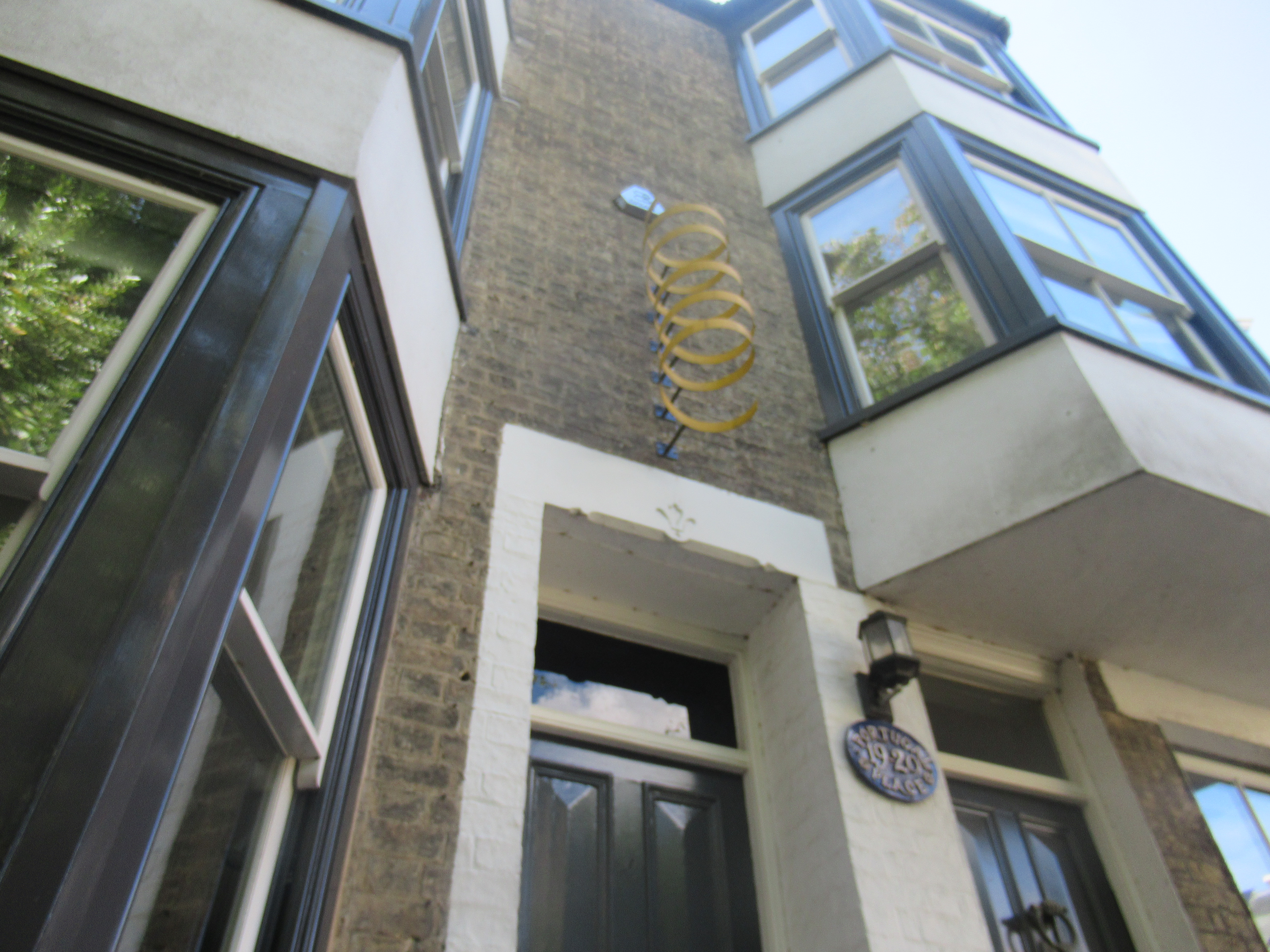
Sophie led us down Round Church Street until we turned into, I think, Park Street before re-entering Portugal Place, then walking along until we stopped outside Francis Crick’s house with its double helix sculpture above the door.
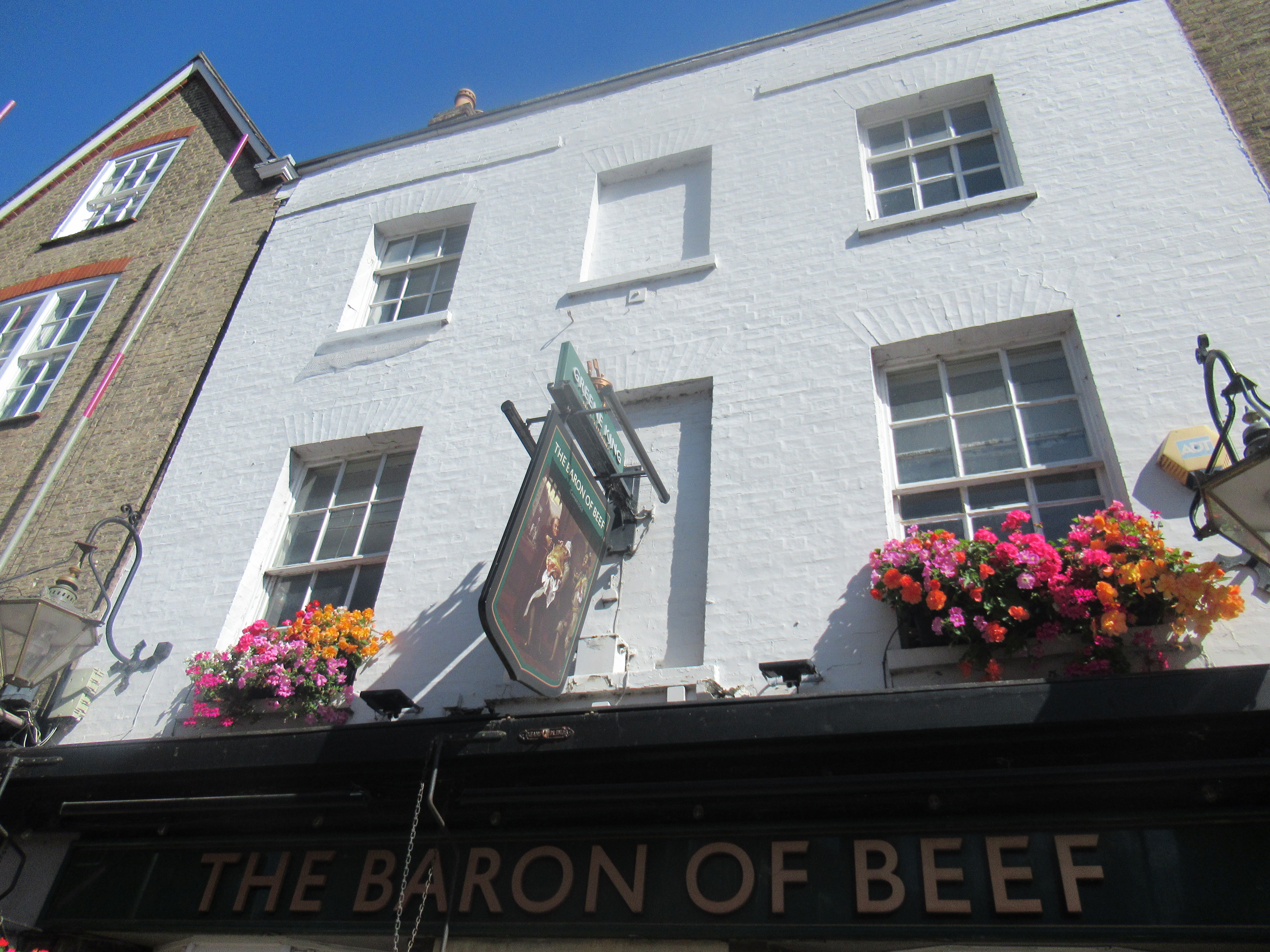
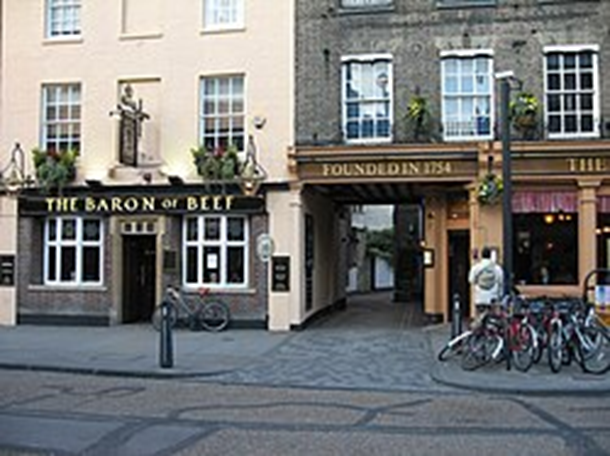
Emerging from Portugal Place, having passed St. Clement’s church, it was back onto Bridge Street and a walk past the Baron of Beef pub and its next-door neighbour, the Mitre. Sophie told us about the fight there between Clive Sinclair and Chris Curry, when Curry told Sinclair he was leaving to join Acorn Computers.
Having passed the two pubs, we crossed Bridge Street and walked into St John’s Street. I had seen these objects embedded in the pavement before, but helpfully, Sophie was able to tell me what they were.
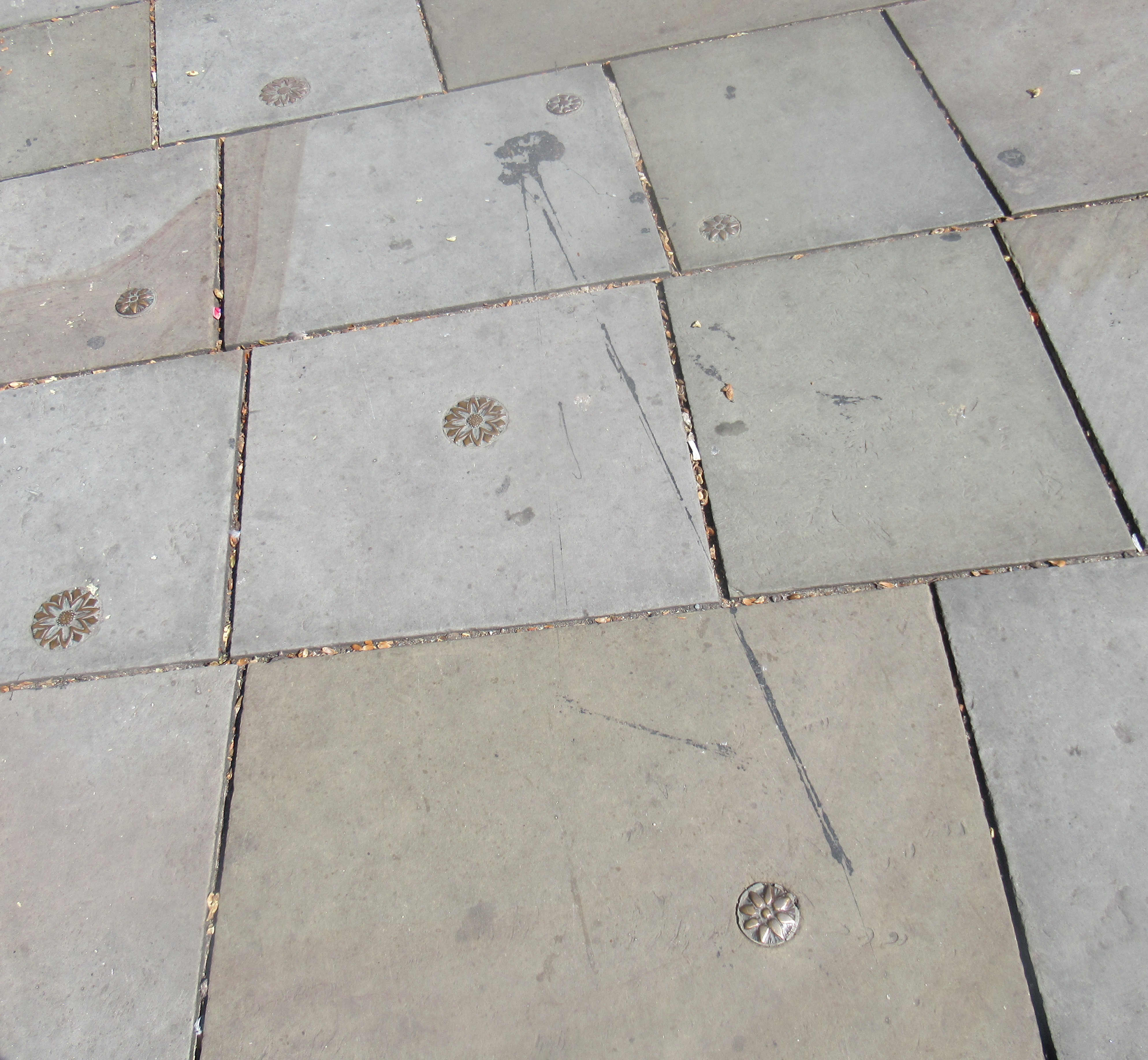
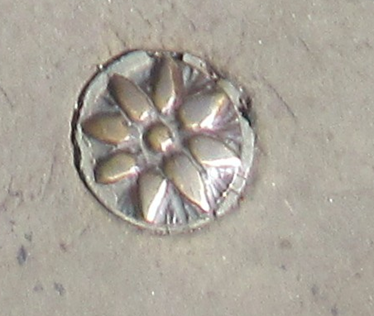
The Flower Trail leads to the gates of St John’s College. I did a bit more research, and there are 600 flowers on the pavements. Not just on St John’s Street but on others around the city. The flower designs are used in decorations on the gates of St John’s and other buildings. The artist who designed them is Michael Fairfax. The college was founded by Countess Margaret Beaufort.
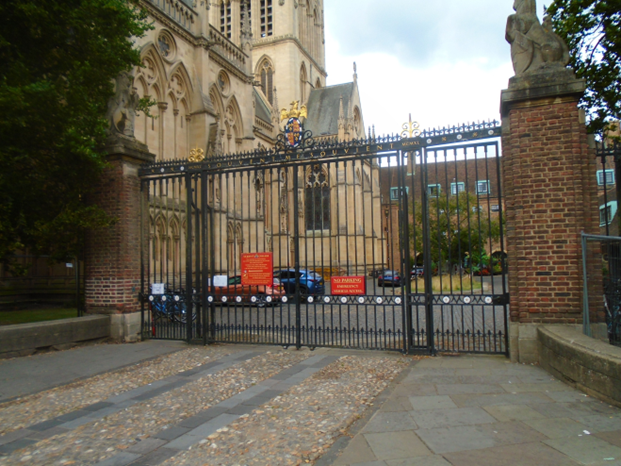
Photo credit: Jo Edkins, 2025
Douglas Adams, author of The Hitchhiker’s Guide to the Galaxy, attended St John’s College. He also based one of his shorter stories, in The Salmon of Doubt, on St John’s College, renamed St Cedd’s. It was also the college of Maurice Wilkins (DNA), Roger Penrose (Black Holes), Frederick Sanger (Biochemist), Max Born and Paul Dirac (Quantum Theory). Also much earlier, the college of the polymath John Herschel.
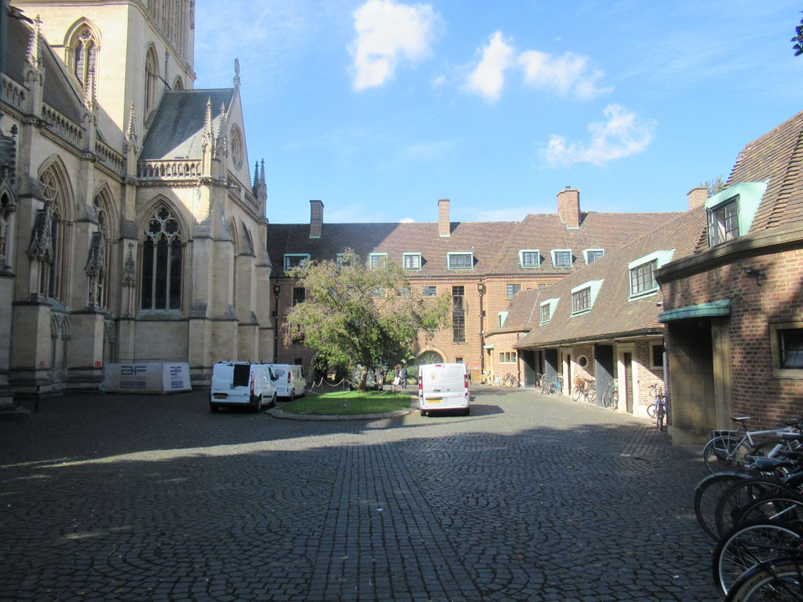
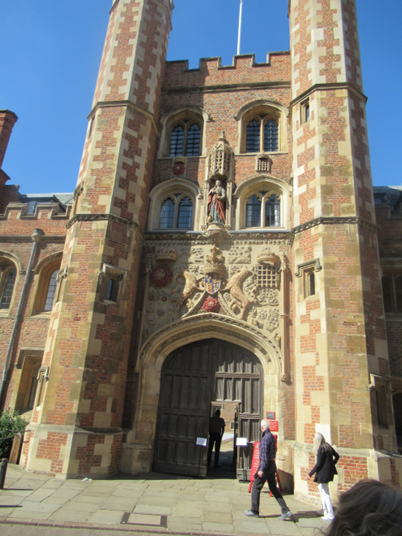
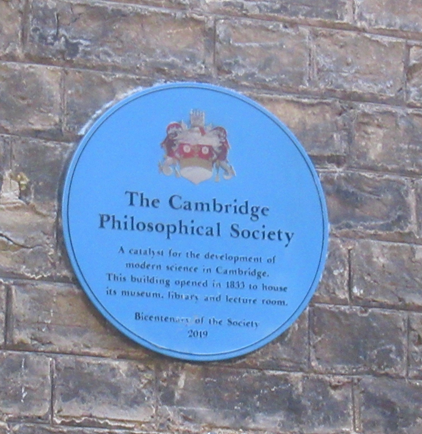
Having lingered at St John’s College and the pavement inspection, it was time to move further on along St John’s Street, then into All Saints’ Passage. The blue plaque marked the site of the Cambridge Philosophical Society’s early meeting place, library and museum.
As we were leaving All Saints’ Passage, we spotted one of Cambridge’s Dinky doors.
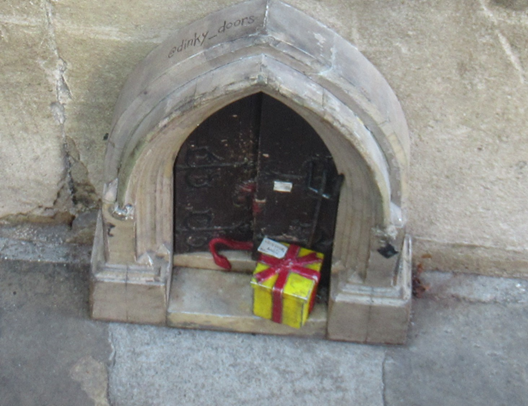
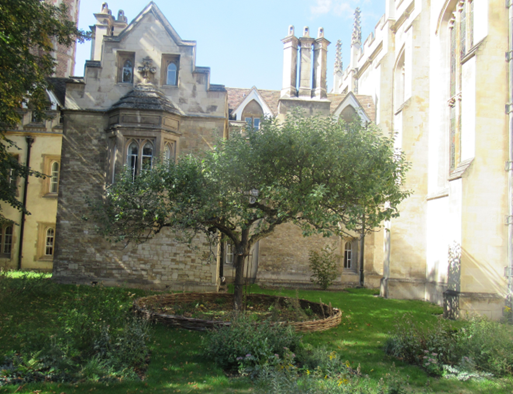
At the end of All Saints’ Passage, we crossed St John’s Street to Trinity College, stopping briefly to look at Newton’s apple tree-well, one grafted from one at Woolthorpe Manor.
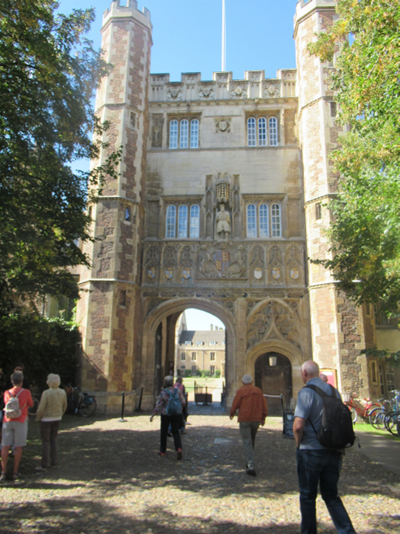
Trinity College’s great Gate stood in front of us, with Henry the Eighth’s statue as its founder standing centrally within its brickwork. Enterprising students regularly swap his sceptre for other objects, most notably a chair leg. Trinity’s most famous member was Sir Isaac Newton; other notable scientific alumni include Ernest Rutherford (physicist), James Clerk Maxwell (physicist), Niels Bohr (physicist), Charles Babbage (polymath) and Srinivasa Ramanujan Iyengar (mathematician).
Our next point of call was Gonville and Caius College, where Francis Crick had studied and had, amongst its other alumni, physicists: Thomas Allibone, Sam Edwards and Basil Schonland. Mathematicians: Eugenia Cheng, John Venn and George Green, together with Ed Anderson, (chemist), George Thomas Bettany (biologist) and Robert Percival Cook (biochemist).
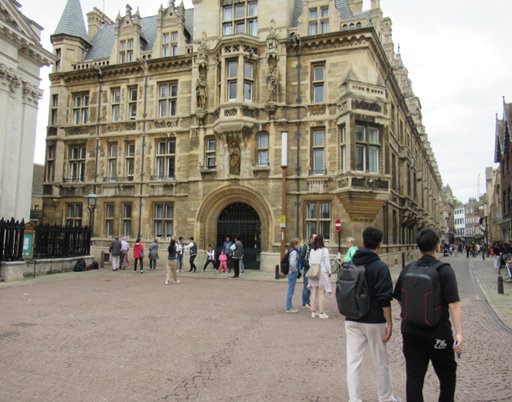
We carried on along King’s Parade, stopping briefly outside King’s College to learn that mathematician Alan Turing had studied here, as had chemist Frederick Sanger and physicist Patrick Blackett.
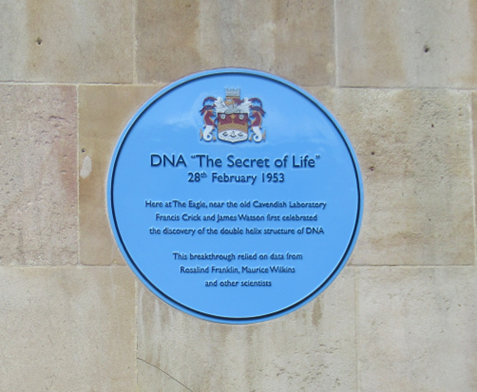
The next stop was the Eagle in Benet Street to look at the blue plaque celebrating the discovery of DNA.
Our last stop was at the site of the original Cavendish Laboratory in Free School Lane, just across the road from the Eagle. As Sophie reminded us, this was where the secret of life was discovered with the discovery of DNA and the means to end it with splitting the atom. Cathy’s father had worked here as a laboratory technician, describing himself as Rutherford’s tea boy.
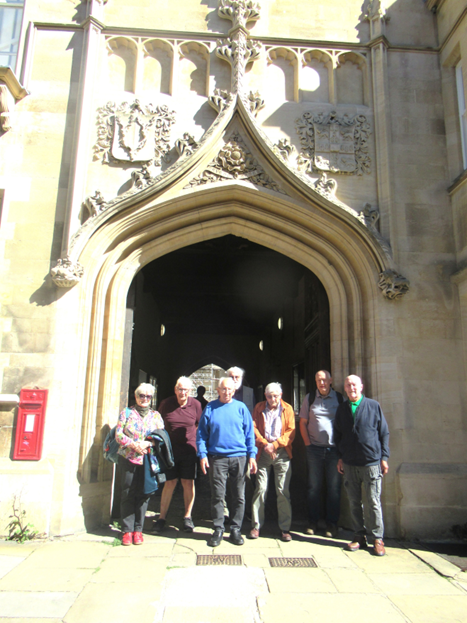
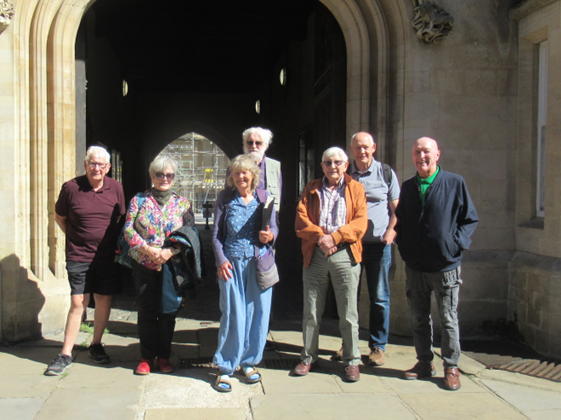
We concluded our day with a late lunch in the Bath House on Benet Street before heading for Drummer Street and the guided bus back to St Ives.
It was a great day out with excellent company and an excellent tour guide. I wish I could have remembered more of the information Sophie gave us.
Thanks to Jo Edkins for the use of her photo; it saved me a trip back to Cambridge.