Archive for the ‘Kings Parade’ Category

The Cambridge Science Tour

The Cambridge Science Tour
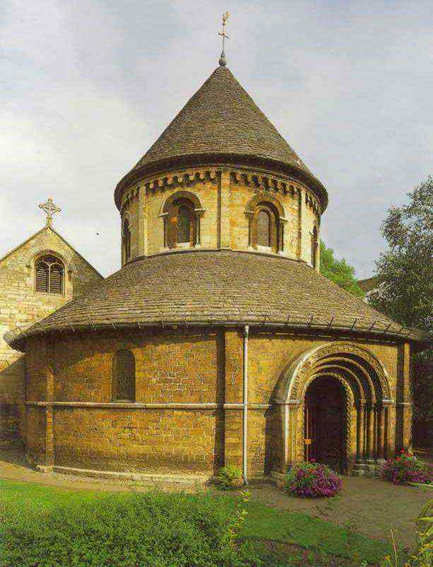
The Round Church Cambridge Photo credit: Noles1984, CC BY-SA 3.0, https://commons.wikimedia.org/w/index.php?curid=4404128

Just under two years ago in 2024, my brother, cousin and brother-in-law and I were given the Cambridge Spies tour by Sophie Smiley. It was the third time I had taken that tour with different guides and I really enjoyed Sophie’s version.

Cambridge Spies Tour Revisited | Fenlandphil’s Blog

Sophie mentioned at the time that she also did other tours and that the Science Tour might interest us. It did interest us, and eventually we got our heads together and booked the tour. The A bus from St Ives Park and Ride dropped us off at the Round Church a little after 11 am, which gave us an hour before our arranged rendezvous with Sophie outside the church at noon.

As we had a bit of time on our hands, a cuppa could be squeezed in before meeting up with Sophie at noon; the café was next to Portugal Place- well, that’s what the sign said. It was a narrow pathway between another, not-round church, St. Clement’s and Bridges Café, where we were enjoying a cuppa. I had seen Portugal Place on the telly in an episode of Professor T and persuaded my companions to join me for a walk through it, so we could see the house where the professor’s aunt lived. We had a very difficult time finding toilets in the area, but a portaloo answered the call eventually, and it was then time to meet up with Sophie.
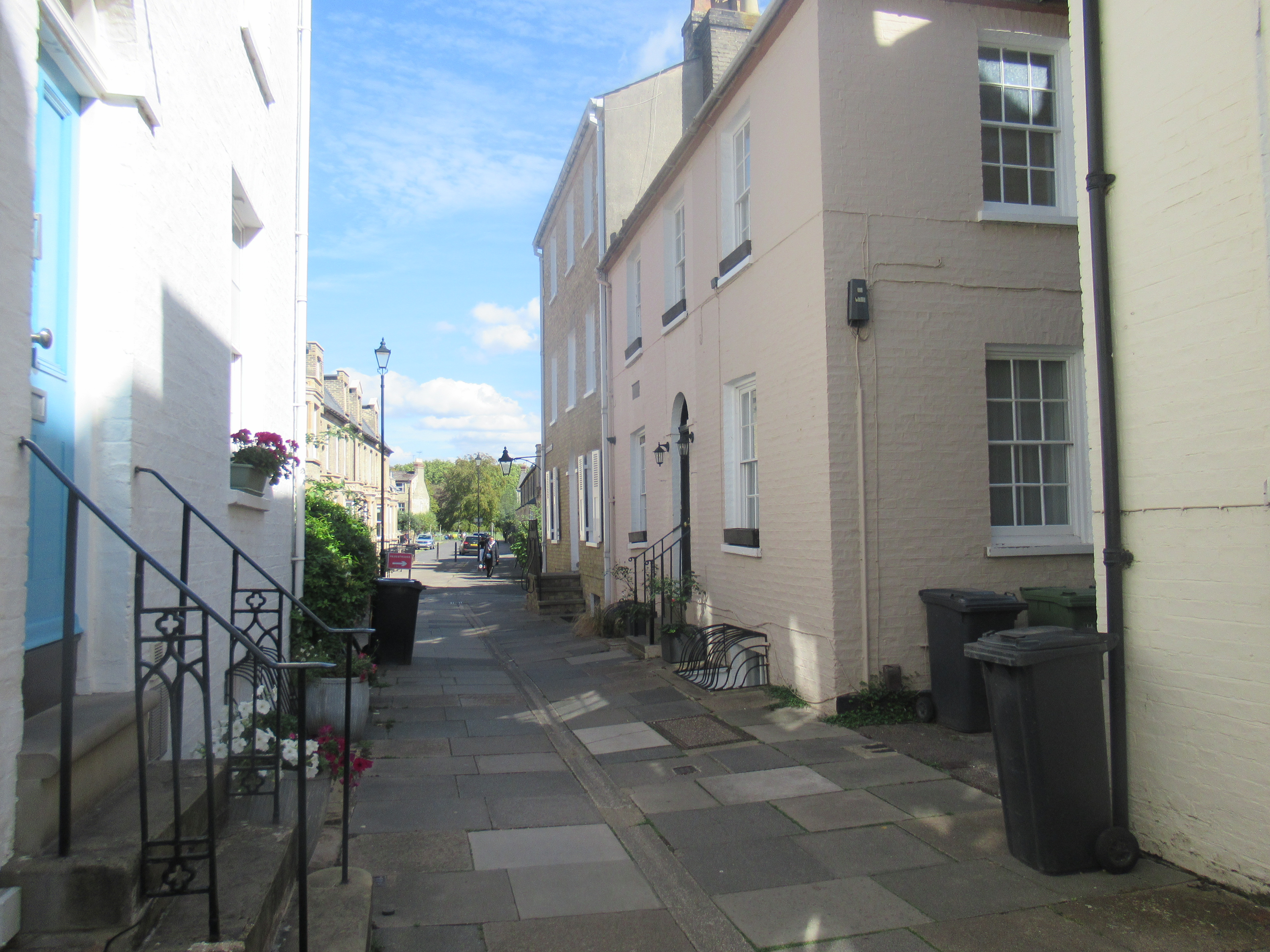
Portugal Place

We had a brief chat with Sophie outside the church, and she showed us an early map of how the city had looked in the early thirteenth century. This was when a group of students escaped to Cambridge from Oxford in 1209 to avoid capture by its townspeople after a dispute. The number of churches crowded into such a small area was, and still is, quite remarkable. Many of these churches provided the bases for the colleges some of which bear their names and are integral parts of Cambridge University.

Sophie led us down Round Church Street until we turned into, I think, Park Street before re-entering Portugal Place, then walking along until we stopped outside Francis Crick’s house with its double helix sculpture above the door.
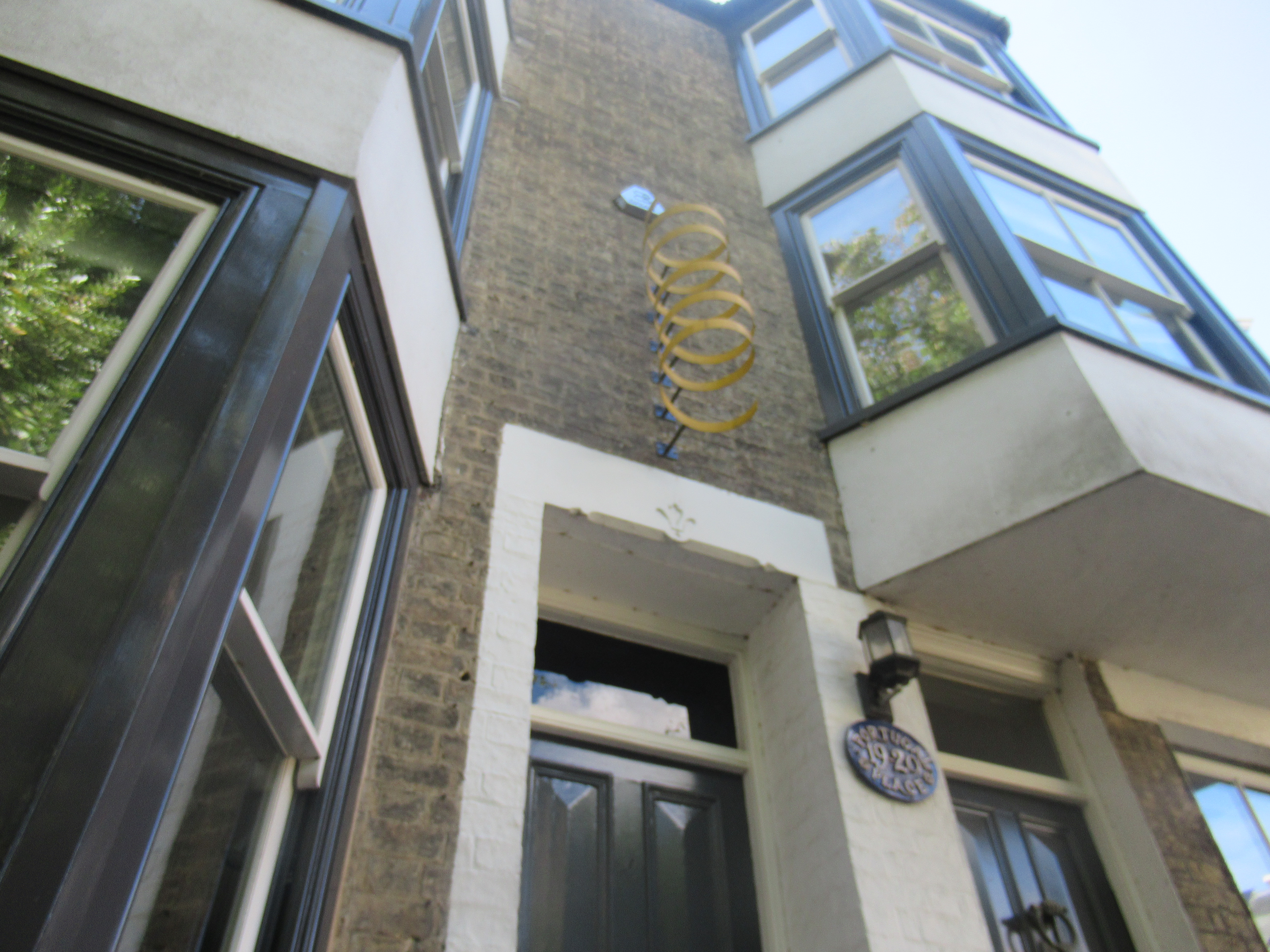
Francis Crick’s House in Portugal Place

Emerging from Portugal Place, having passed St. Clement’s church, it was back onto Bridge Street and a walk past the Baron of Beef pub and its next-door neighbour, the Mitre. Sophie told us about the fight there between Clive Sinclair and Chris Curry, when Curry told Sinclair he was leaving to join Acorn Computers.
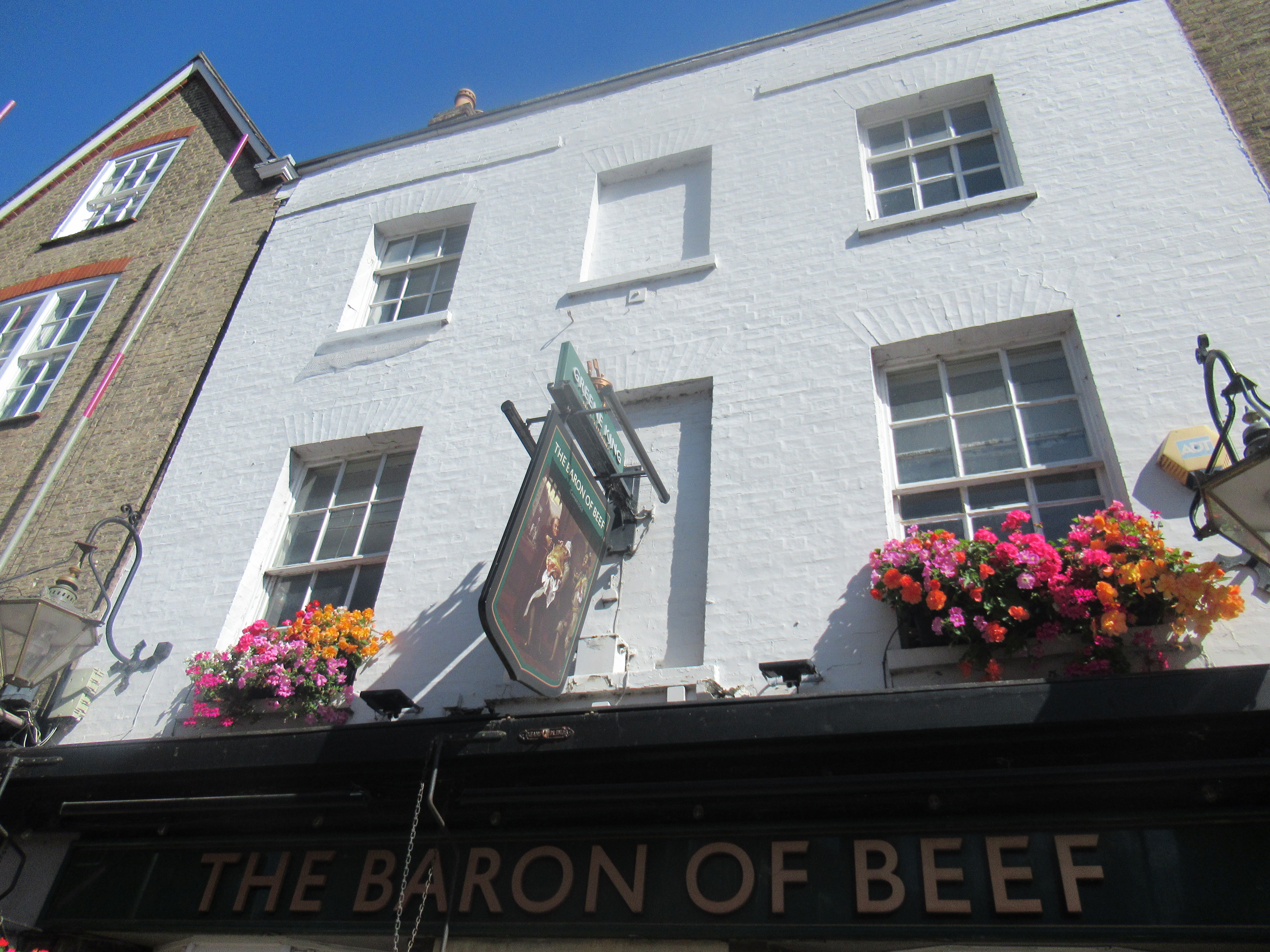
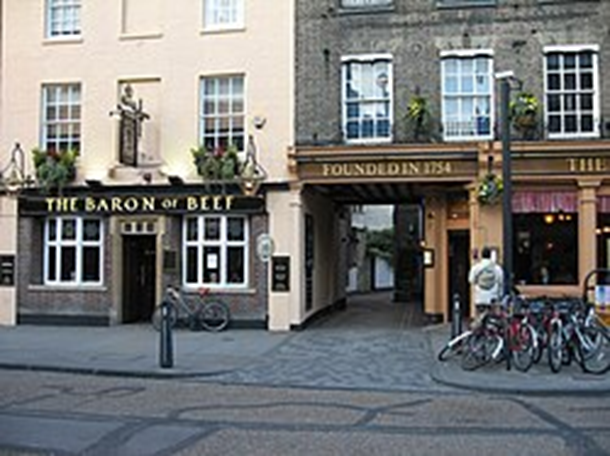
The Baron of Beef

This is a better picture, one showing both pubs. (Picture credit Hans Wolff, Public domain, via Wikimedia Commons)

Having passed the two pubs, we crossed Bridge Street and walked into St John’s Street. I had seen these objects embedded in the pavement before, but helpfully, Sophie was able to tell me what they were.
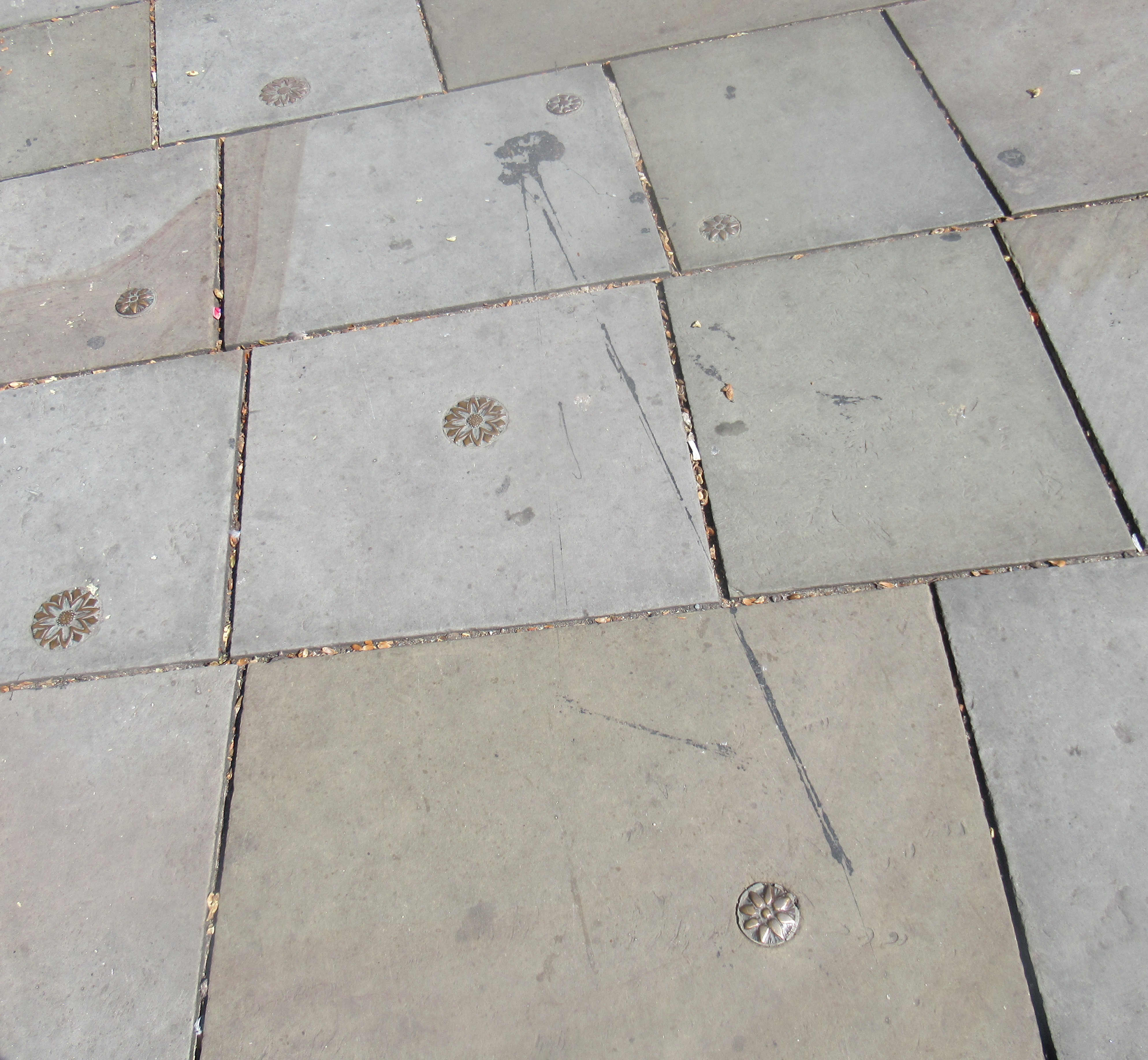
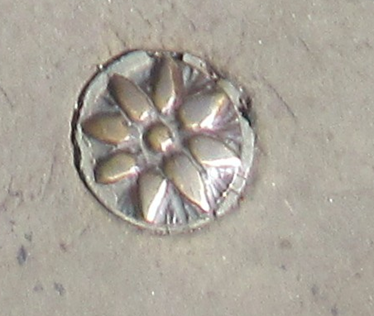
The objects in the pavement
Close up of one of the medallions

The Flower Trail leads to the gates of St John’s College. I did a bit more research, and there are 600 flowers on the pavements. Not just on St John’s Street but on others around the city. The flower designs are used in decorations on the gates of St John’s and other buildings.  The artist who designed them is Michael Fairfax. The college was founded by Countess Margaret Beaufort.
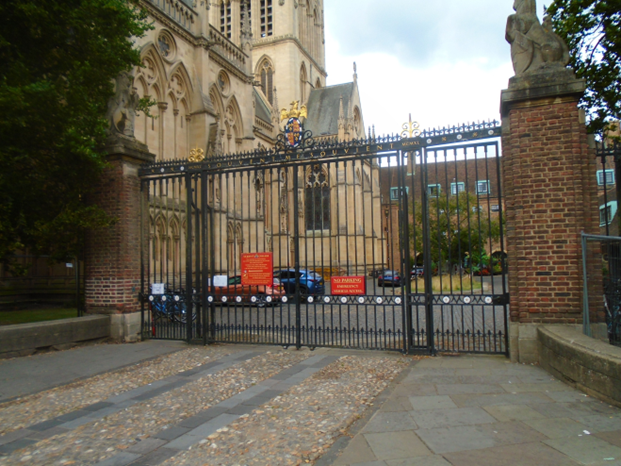
Gates of St John’s College incorporating the medallion designs.
Photo credit: Jo Edkins, 2025

Douglas Adams, author of The Hitchhiker’s Guide to the Galaxy, attended St John’s College. He also based one of his shorter stories, in The Salmon of Doubt, on St John’s College, renamed St Cedd’s. It was also the college of Maurice Wilkins (DNA), Roger Penrose (Black Holes), Frederick Sanger (Biochemist), Max Born and Paul Dirac (Quantum Theory). Also much earlier, the college of the polymath John Herschel.
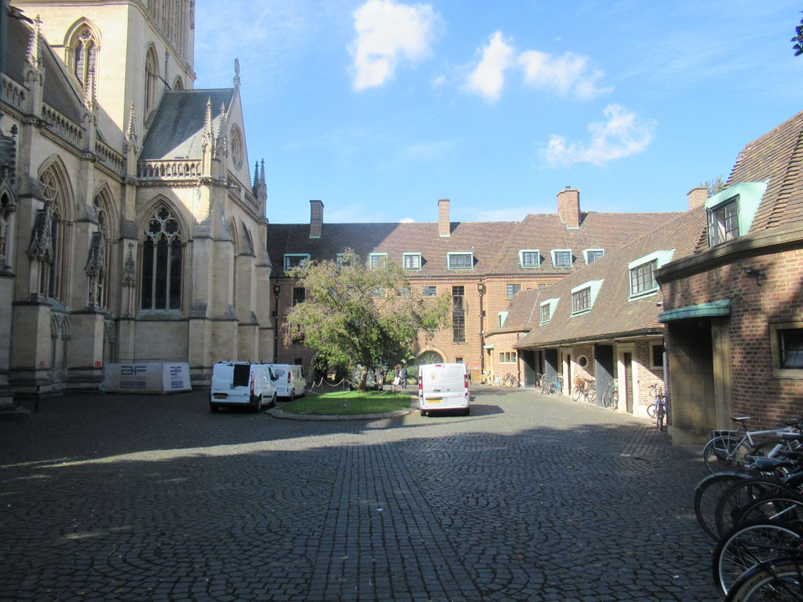
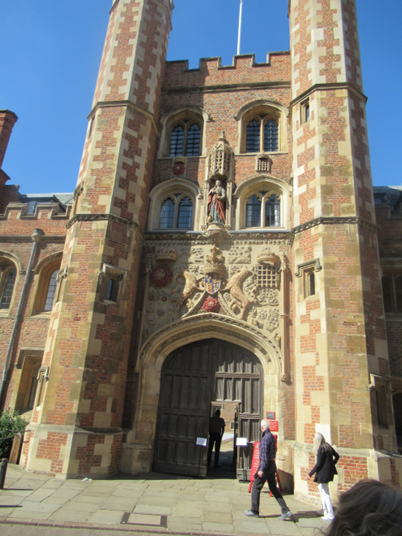
The other side of the gates at St John’s College
The main gate to St John’s College. The statue is that of the Saint John the Baptist.
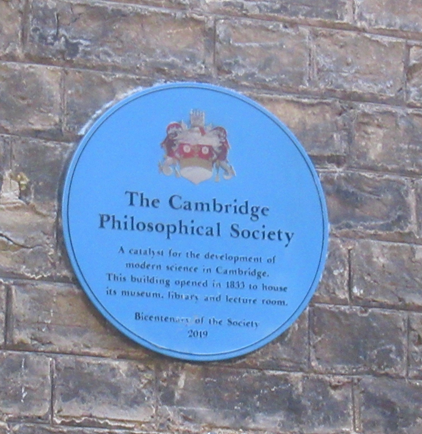
The blue Plaque in All Saints Passage

Having lingered at St John’s College and the pavement inspection, it was time to move further on along St John’s Street, then into All Saints’ Passage. The blue plaque marked the site of the Cambridge Philosophical Society’s early meeting place, library and museum.

As we were leaving All Saints’ Passage, we spotted one of Cambridge’s Dinky doors.
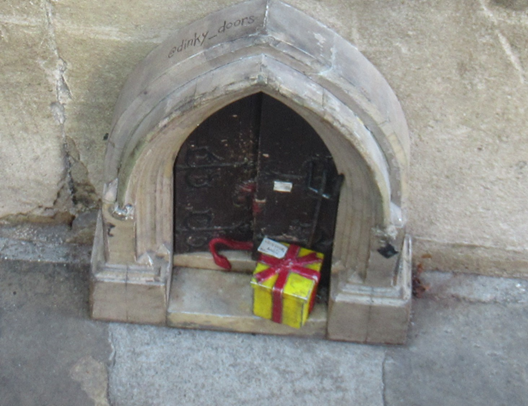
The Dinky Door in All Saints Passage

At the end of All Saints’ Passage, we crossed St John’s Street to Trinity College, stopping briefly to look at Newton’s apple tree-well, one grafted from one at Woolthorpe Manor.
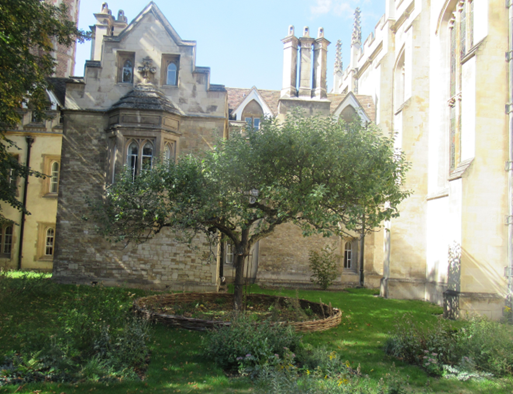
Newton’s Apple Tree.

Trinity College’s great Gate stood in front of us, with Henry the Eighth’s statue as its founder standing centrally within its brickwork. Enterprising students regularly swap his sceptre for other objects, most notably a chair leg. Trinity’s most famous member was Sir Isaac Newton; other notable scientific alumni include Ernest Rutherford (physicist), James Clerk Maxwell (physicist), Niels Bohr (physicist), Charles Babbage (polymath) and Srinivasa Ramanujan Iyengar (mathematician).
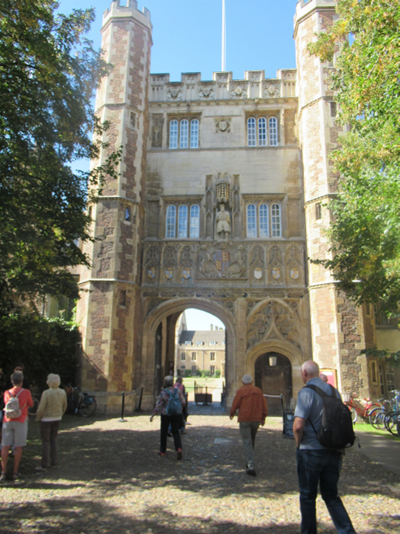
Trinity College’s Great Gate

Our next point of call was Gonville and Caius College, where Francis Crick had studied and had, amongst its other alumni, physicists: Thomas Allibone, Sam Edwards and Basil Schonland. Mathematicians: Eugenia Cheng, John Venn and George Green, together with Ed Anderson, (chemist), George Thomas Bettany (biologist) and Robert Percival Cook (biochemist).
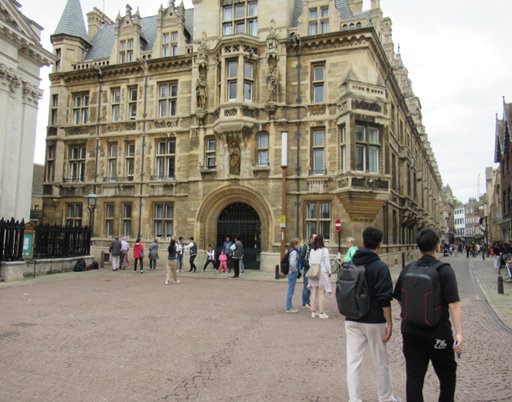
Gonville and Caius College

We carried on along King’s Parade, stopping briefly outside King’s College to learn that mathematician Alan Turing had studied here, as had chemist Frederick Sanger and physicist Patrick Blackett. 

The next stop was the Eagle in Benet Street to look at the blue plaque celebrating the discovery of DNA.
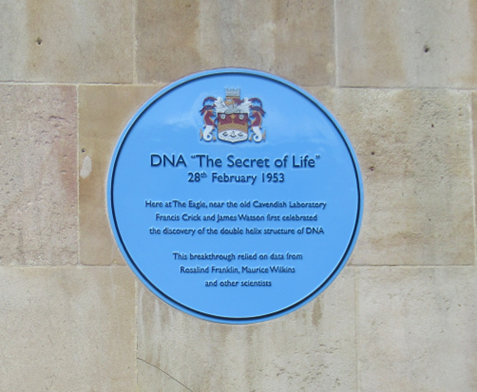
The Blue Plaque on the Eagle public house.

Our last stop was at the site of the original Cavendish Laboratory in Free School Lane, just across the road from the Eagle. As Sophie reminded us, this was where the secret of life was discovered with the discovery of DNA and the means to end it with splitting the atom. Cathy’s father had worked here as a laboratory technician, describing himself as Rutherford’s tea boy.
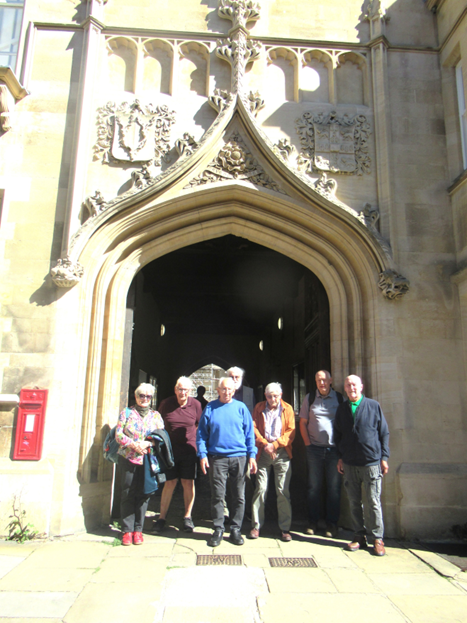
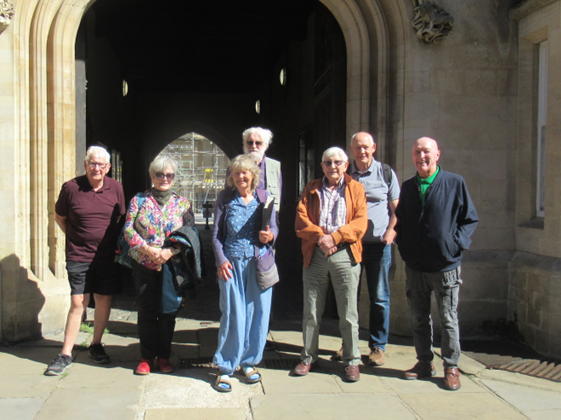
Outside the entrance to the original Cavendish Laboratory
And with our guide Sophie smiley in the centre.

We concluded our day with a late lunch in the Bath House on Benet Street before heading for Drummer Street and the guided bus back to St Ives.

It was a great day out with excellent company and an excellent tour guide. I wish I could have remembered more of the information Sophie gave us.

Thanks to Jo Edkins for the use of her photo; it saved me a trip back to Cambridge.

Cambridge Spies Tour Revisited

Great Saint Mary’s Church

Five years ago nearly to the day, in August I took the Cambridge Spies Tour and enjoyed it so much I wanted not only to repeat it but share it with some of my family. As a result, four elderly men waited with others outside Great St Mary’s Church for the tour to start. Perhaps, part of a torn postcard would have made a more appropriate ticket than the downloaded and printed affair we brought with us. Particularly as our tour guide was Sophie Smiley, no relation to George, she assured us but she would say that; wouldn’t she?

As before when I went on the spies tour comments and names of people set me off researching and making further enquiries, information I have added to this report.

The Eagle Cambridge
The Eagle Benet Street

The Eagle pub, Saint Benet’s Church and Corpus Christi College

Our first stop was outside the Eagle, Cambridge’s oldest pub, we didn’t go in but Sophie mentioned the RAF bar and the connection to Watson, Crick, Franklyn and Wilkins discovery of DNA. We then crossed the road and entered Saint Benet’s church, once everyone was settled in the pews Sophie pointed to a small window cut in the stonework looking out into the church. She said it was there so the priest could watch the worshipers from his office behind the closed door.  Corpus Christi College had been built around the church by the city. The playwright and contemporary of William Shakespeare, Christopher Marlowe was a graduate of Corpus Christi and was according to some sources a spy in the service of Sir Francis Walsingham the Elizabethan spymaster. Sophie mentioned the uncertainty over Marlowe’s supposed death and whether it was staged to allow him to move incognito abroad to continue his career in espionage. Also a graduate of Corpus Christi and a man who had occupied the same room as Marlowe had was, Cedric Belfrage, he became a British/Russian Double agent. Harry Shergold the British handler of Penkovsky a Russian intelligence officer spying for the west at the time of the Cuban Missile Crisis, also graduated from Corpus Christi.

Sophie highlighted the nature of surveillance within the city, indicating that espionage was woven into the very fabric of the university and town. We moved on from the church into Free School Lane and stopped briefly outside the old Cavendish Laboratory to discuss the important discoveries made there. Behind the laboratory is the Mond building with a crocodile motif by Eric Gill incorporated into the brickwork of the building. Ernest Rutherford was given the nickname ‘Crocodile’ by a Russian scientist Peter Kapitza. I can’t remember whether Theodore Hall’s name was mentioned at the Cavendish he was an American working there post war until he retired who passed nuclear secrets to the Russians. 

Pembroke College

Pembroke College Cambridge
Pembroke College

We moved on turning into Botolph Lane, stopping briefly to look at the Hangman’s house and then to look in the window of Bodies in the Bookshop. Our next stop was Pembroke College in Trumpington Street it is one of Cambridge’s oldest colleges founded in 1347 by the Countess of Pembroke. The college had an original statute that required students to report fellow students if they indulged in excessive drinking or visited disreputable houses.

Maurice Dobb studied here and went on to teach at Kings where he met Kim Philby, Dobb was thought to be involved in the recruitment of the Cambridge Five, Guy Burgess, Donald  Maclean, Anthony Blunt, John Cairncross  and  Kim Philby. Sophie mentioned that one of Philby’s greatest acts of treachery was to disclose a list of Germans who were hoping to rebuild Germany after the war to his Russian spy masters. The list had been shown to him by another MI6 colleague, Nicholas Elliot who wasn’t a Russian double agent. Everyone named on the list given to Russia was murdered.

A former master of Pembroke was Sir Richard Dearlove, a retired chief of the SIS (MI6). Sophie told us a little about him and also about the escape through Finland of Oleg Gordievsky, a double agent supplying the British with intelligence. He was driven out of Russia in the boot of an embassy car, the wife of his driver distracted the dogs of the Russian border guards by changing her baby’s nappy on the top of the boot of the car then dropping the dirty nappy on the ground. This distracted the dogs long enough to allow them to get the all clear to cross the border into Finland. An added irony was the man in charge of the border guard at the time of Gordievsky’s escape was a certain KGB officer by the name of Vladimir Putin.

Kings College

From Pembroke College we moved on into Kings Parade until we reached the entrance of Kings College, Queen Elizabeth the first’s, spy master Francis Walsingham studied here, he is famous for discovering or possibly constructing the Babington plot that let to the execution of Mary Queen of Scots.

 Kings is also where Alan Turing studied for his BA and MA, leaving in 1938 to travel to Princetown in the USA to study for his PhD. Although his work in decoding German ciphers is said to have shortened the Second World War by two years the blue plaque celebrating his life and connection with King College is placed so high on the wall it is difficult to read without the aid of a step ladder. Dilly Knox, responsible for decoding the Zimmerman telegram that helped bring the USA into the First World War and for helping set up Bletchley Park also graduated from Kings College.

Alan Turing Blue Plaque Kings College Cambridge
Alan Turing’s Blue Plaque at Kings College
Alan Tring's Plaque close up King's College Cambridge
Alan Turing’s Blue Plaque.

Trinity College

Great Gate Trinity College Cambridge
Trinity College Great Gate Henry the eighth’s sword replaced with a chair leg

After Kings College we moved onto Trinity College, I know we had a look down the Senate House Passage but can’t recall now, quite how we arrived outside the gate of Trinity College.

An early cryptographer who worked for Walsingham and studied at Trinity was Thomas Phelippes responsible for deciphering the code used in the Babington Plot, used to convict Mary Queen of Scots and secure her execution. Trinity and Trinity Hall were where the Cambridge five studied, all were members of a group known as the Apostles.

Gordon Welchman, also studied here, he is credited with discovering the concept of traffic analysis which proved crucial particularly during the early part of the Second World War before the German Codes could be effectively deciphered. The method was also said to have helped track down Bin Laden.

Cambridge University Bookshop
Cambridge University Bookshop Plaque
Close up of the plaque.

We returned to Kings Parade and Great St Mary’s Church to end the tour with Sophie mentioning that although members of the Cambridge Five were disgraced and living in exile they were still receiving books and gifts from friends in Cambridge, with Sophie stopping outside the University Bookshop on our way back to mention this. We all enjoyed the tour and our guide was excellent, thank you, Sophie.

plasticdollheads

Dr Gemma Ahearne

BRYN DONOVAN

TELL YOUR STORIES, LOVE YOUR LIFE

Kyle Brennan

The Truth for Kyle

Gabrielle Ray

'Gabrielle Ray said, 'I am always dancing; I love it! When I don't dance, I sing. What else is there to do?'

JR Harland Poetry

This is a collection of some poems I've written.

Whittlesey Street Pride

Creating pride in Whittlesey

Kim's Musings

Authors Supporting Authors

Story Empire

Exploring the World of Writing

Gloria McBreen

May you be at the gates of heaven an hour before the devil knows you are dead.

Love13Reading

FOR READERS AND ASPIRING WRITERS

Jill's Book Cafe

Bookish news, views and 'Five on Friday'

Victoria Weisfeld

Stories about the perils of life and the mysteries of travel

Brooke Nelson

Author of New Adult Fantasy and Thriller novels

Huntingdonshire History Festival

Discovering Huntingdonshire's Local History

Grumpy old fart!!!

"If you talk to God you're religious. If God talks to you, you're psychotic."

Later life

Enjoying Twilight Years

Kent Wayne

Epic fantasy & military sci-fi author.

Seclusion 101 with AnneMarie

Life After Retirement

CabbieBlog

Taxi Talk Without Tipping

Gabriele Romano

Less Noise. More Meaning

My Life With GraciePress

A Backyard Garden Is A Perfect Place For Chickens

Words and Fictions

Jessica Norrie on writing, books and language - in her own words.

Damyanti Biswas

For lovers of reading, crime writing, crime fiction

Tessa’s poems

Poetry from a Septuagenarian

Linda's Book Bag

Loving books and reading

John Ager's Home on the Web!

reflecting my eclectic (and sometimes erratic) life

Stuart Orme

Historian, Folklorist, Writer, Re-enactor, Museum Professional. Follow me on Twitter: @stuartorme

thedrabble.wordpress.com/

Shortness of Breadth

Best Dog Training Tips & Tricks

Dog Training Guidance

Fenlandphil's Blog

A blog from the low country

So You think you've got problems?

The advice columns of two eccentric agony aunts who guide the bewildered of Britain through their personal problems,

Marigolds and Gin

Because even in chaos, there’s always gin and a good story …

Seriousgardener's Blog

Just another WordPress.com weblog

The Incomplete Verse

Here I share words and illustrations I discover on the journey within the crevices of my mind and the outside world. 💚

Dread Poets Sobriety

Irreverence's Glittering New Low!

MovieBabble

Ramblings of the Cinema

Mistakes Writers Make ...

... and how to put them right! Advice and opportunities for new, aspiring and upcoming journalists and writers of non-fiction