Archive for the ‘Cambridge’ Category

Exploring the Mullard Radio Astronomy Observatory (MRAO): A Fascinating Tour

Visit to the Mullard Radio Telescope

The Cambridge Astronomical Association had organised the tour of the Mullard Radio Telescope. Jeff and I were there before 9.30, waiting for the gate to open at half past nine.

When I had an ironwork business, I had driven past the telescope on occasion when travelling between Cambridge and Sandy. The huge structures visible from the road with what appeared to be radar dishes on top, sitting beside the A603, fascinated me. I can’t remember if I knew it was a radio telescope at the time, but Mullard was definitely a familiar name. Mullard had made and possibly still does radio valves, the forerunners of transistors. It was not just the large structures that interested me but that some were mounted on a trolley, albeit a substantial one, with flanged wheels running on very widely spaced iron rails.

Once the gate had been opened and the visitors allowed in, it was closed and locked, and we gathered outside the former Lord’s Bridge Station building to be greeted by our host, Peter. Peter gave us a brief history of the site as we stood outside the former station building on what had been, before its closure, the Cambridge-to-Oxford railway line, the one now being rebuilt at enormous public expense.

The former Lords Bridge Railway Station Building

Before and during the Second World War, the site had been used to store munitions and explosives, notably many containing mustard gas. This extensive 30-hectare site, occupied by the radio telescope, is owned by Cambridge University.

Following the brief introduction, at the former station building standing outside on what would have been its platform, we were shown into the station building itself. In there, we were given more details about the site’s history and that of the telescope by Peter. The telescope isn’t one single instrument but a variety of configurations of apparatus and structures, each measuring different wavelengths of signals emitted by the various planets, stars, galaxies and other bodies that make up the cosmos.

The telescope was opened in 1957, it is part of the Cavendish Laboratory and was initially funded by Mullard Limited. It was originally under the direction of Professor Sir Martin Ryle, who, together with Professor Antony Hewish, went on to receive the 1974 Nobel Prize for Physics for their work there on radio astronomy.

Radio telescopes can observe parts of the cosmos not visible in the optical spectrum and can look back at the very early universe, as it was billions of years ago. A lot of the work at the Radio Telescope is on the Cosmic Microwave Background (CMB), which is observed using some of the Ryle Telescope and other instruments on site.

Part of the Ryle Telescope.

We moved from the station building to look around the site itself. The first stop was the Ryle telescope, which consists of large dishes with some mounted-on rails, also known as the Large Array. Using these clusters of dishes, they can achieve the same results as one large dish, the diameter of the distance between the smaller dishes in the array. So, the one-mile-long array produces results equivalent to a single dish one mile in diameter.

The site is so large that we drove from one part of the site to another, although even so, there was a fair bit of walking involved. Back in the cars, as we moved on to our next stop, we passed the Merlin 32m dish, part of a Jodrell Bank project involving a number of these dishes in different parts of the country.

Merlin 32m dish.

After passing various wartime bunkers or their remains, the next stop revealed some very interesting receivers, which seemed to be structures in the shape of large diameter bowls constructed of wooden frames covered in wire mesh. These turned out, I found out later, were Part of the prototype HERA, the Hydrogen Epoch Ionisation Array developed on site at Lord’s Bridge. HERA looks back at the very early universe just after the Big Bang. The shape of the antenna above the centre of one of these dishes is the result of extensive research.

HERA, the Hydrogen Epoch Ionisation Array

The next stop was to look at the memorial plaque to the telescope and, below it, one celebrating the work of Grote Reber. Reber built the first radio telescope in his backyard in Wheaton, Illinois, USA, in 1937. This followed the discovery of radio signals from the Milky Way by Karl Guthe Jansky in 1933.

The Memorial Plaques.

The Small Array was next on the list. Consisting of ten smaller dishes used together with two of the Ryle telescope’s receivers it forms the Arcminute Microkelvin Imager (AMI). This project primarily measures temperature fluctuations in the Cosmic Microwave Background (CMB).

The Small Array part of the AMI

We had a short biscuit break before looking around some other telescopes, none of which looked like what you would imagine a telescope to look like. Probably the closest to an optical telescope was the Cambridge Optical Aperture Synthesis Telescope (COAST), which combines the signals from several telescopes. The telescopes track the same object and combine the images to produce one that overcomes atmospheric effects, yielding images equivalent in resolution to those from a 70m-diameter telescope.

The Cambridge Optical Aperture Synthesis Telescope (COAST) in the background, Peter, our guide, in front. To the right of the telescopes is the bunker where the data gathered from the instruments is analysed.

Inside the COAST bunker.
Photo credit: By Cmglee – Own work, CC BY-SA 3.0, https://commons.wikimedia.org/w/index.php?curid=33433698

Although much of the site is active, there was also a historical connection. The mile-long telescope is no longer in use but the structures, the dishes and rails are still in place as is the data collection centre, kept locked but opened for our visit. This building is a time capsule housing what was, in its day, cutting-edge technology, now largely obsolete, including eight-inch floppy discs, punched-tape machines and some very old electrical instruments.

The Mile Long Telescope with the 2C Array to the right.
Inside the control room for the Mile Long Telescope. Note the 8″ floppy disc.
In its day, this was cutting-edge technology. Note the punched paper tape
Note the wide paper strip information from the instruments was recorded on this and checked visually. Jocelyn Bell Burnett was said to have examined hundreds of feet of this paper to find the pulsars she is credited with finding

To one side of the mile-long track is the 4C telescope, a series of masts with oddly shaped arms sticking outwards at right angles to the line of masts, which appear to be connected with cables at the top and struts lower down. This telescope was constructed in 1957 and was one of the first to be built there. 

The 2C Array built in 1954.
Photo credit the Cavendish Laboratory Cambridge.

Further along, we crossed the tracks and were shown down a narrow pathway to view a much simpler, low-tech design. The Interplanetary Scintillation Array, built in 1967, covered four acres. It was enlarged in 1978 to nine acres and refurbished in 1989. It was designed by Antony Hewish, who was awarded a Nobel prize for the discovery of pulsars, although the credit should arguably have gone to Jocelyn Bell Burnett. Jocelyn Bell Birnett not only analysed the results from the data gathered by the array, but she also helped build it. Originally, it had consisted of over a thousand wooden poles connected with cabling to measure another part of the wavelength of signals received from space. Time has taken its toll on this telescope and what remains of it is in poor condition.

The Interplanetary Scintillation Array. as it is now
The Interplanetary Scintillation Array as it was originally in 1967, with Jocelyn Bell Burnett.
Photo credit: Science Museum Group. Parts from the Cambridge Interplanetary Scintillation Array. 2009-43 Science Museum Group Collection Online. Accessed 9 July 2026. https://collection.sciencemuseumgroup.org.uk/objects/co8105496/parts-from-the-cambridge-interplanetary-scintillation-array.

This completed our tour. After returning to the former Lord’s Bridge Station building, the gate was unlocked and we headed home. It was a fascinating visit. I was amazed by the depth and quantity of knowledge that our guide, Peter, not only the knowledge he had acquired and retained but also how much he shared with us.

Porterhouse Blue by Tom Sharpe, a review.

Porterhouse Blue written by Tom Sharpe

It is a little while since I have read one of Tom Sharpe’s books, several years in fact, Porterhouse Blue had been serialised in the television some years ago, after watching it, I had always intended to read the book.

Porterhouse is a fictional college within Cambridge University. The city of Cambridge is largely unchanged from the late 1960s when the book was written and set within. Many of the streets that Sharpe’s characters inhabited are much as they are described in the book; I suppose this gives Porterhouse Blue a degree of familiarity to those of us who visit the city on a regular basis.

Porterhouse is a poor relation compared to its wealthier fellow colleges; Skullion its head porter manages various dubious schemes to help the finances and maintain the college in the traditional way its fellows and he regard as essential. However, it is the arrival of a new master, Sir Godber Evans, an ex government cabinet minister and former Porterhouse student, which starts a battle of wills. His intention of reforming the college and bringing it into the twentieth century, provokes a battle between the two opposing camps. The fellows and Skullion are strongly united against Godber’s planned reforms which included: female students, more concentration on academic achievement and less attention to sporting prowess. However, it is the master’s proposed installation of a contraceptive machine in the student toilets that proves the catalyst for even greater conflict.

I really enjoyed Porterhouse Blue and was laughing out loud at times, a really good read.

Cambridge Spies Tour Revisited

Great Saint Mary’s Church

Five years ago nearly to the day, in August I took the Cambridge Spies Tour and enjoyed it so much I wanted not only to repeat it but share it with some of my family. As a result, four elderly men waited with others outside Great St Mary’s Church for the tour to start. Perhaps, part of a torn postcard would have made a more appropriate ticket than the downloaded and printed affair we brought with us. Particularly as our tour guide was Sophie Smiley, no relation to George, she assured us but she would say that; wouldn’t she?

As before when I went on the spies tour comments and names of people set me off researching and making further enquiries, information I have added to this report.

The Eagle Cambridge
The Eagle Benet Street

The Eagle pub, Saint Benet’s Church and Corpus Christi College

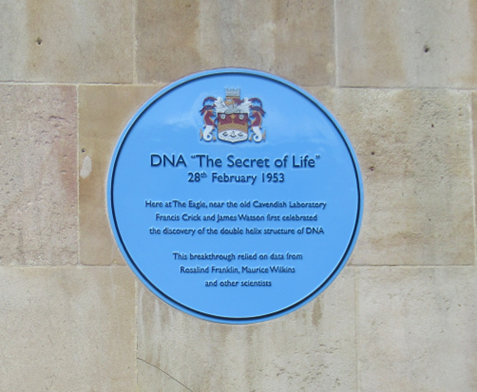
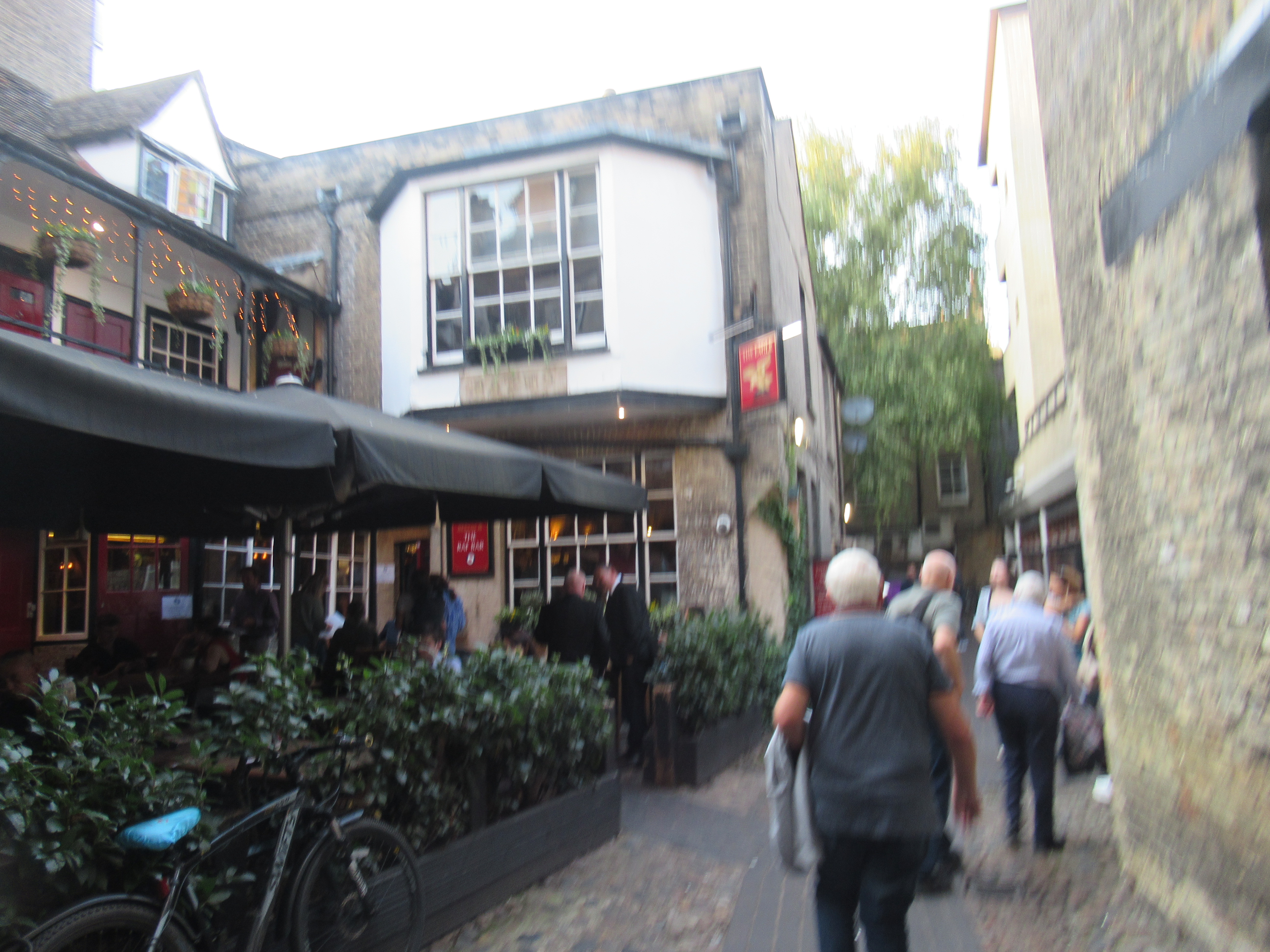
Our first stop was outside the Eagle, Cambridge’s oldest pub, we didn’t go in but Sophie mentioned the RAF bar and the connection to Watson, Crick, Franklyn and Wilkins discovery of DNA. We then crossed the road and entered Saint Benet’s church, once everyone was settled in the pews Sophie pointed to a small window cut in the stonework looking out into the church. She said it was there so the priest could watch the worshipers from his office behind the closed door.  Corpus Christi College had been built around the church by the city. The playwright and contemporary of William Shakespeare, Christopher Marlowe was a graduate of Corpus Christi and was according to some sources a spy in the service of Sir Francis Walsingham the Elizabethan spymaster. Sophie mentioned the uncertainty over Marlowe’s supposed death and whether it was staged to allow him to move incognito abroad to continue his career in espionage. Also a graduate of Corpus Christi and a man who had occupied the same room as Marlowe had was, Cedric Belfrage, he became a British/Russian Double agent. Harry Shergold the British handler of Penkovsky a Russian intelligence officer spying for the west at the time of the Cuban Missile Crisis, also graduated from Corpus Christi.

Sophie highlighted the nature of surveillance within the city, indicating that espionage was woven into the very fabric of the university and town. We moved on from the church into Free School Lane and stopped briefly outside the old Cavendish Laboratory to discuss the important discoveries made there. Behind the laboratory is the Mond building with a crocodile motif by Eric Gill incorporated into the brickwork of the building. Ernest Rutherford was given the nickname ‘Crocodile’ by a Russian scientist Peter Kapitza. I can’t remember whether Theodore Hall’s name was mentioned at the Cavendish he was an American working there post war until he retired who passed nuclear secrets to the Russians. 

Pembroke College

Pembroke College Cambridge
Pembroke College

We moved on turning into Botolph Lane, stopping briefly to look at the Hangman’s house and then to look in the window of Bodies in the Bookshop. Our next stop was Pembroke College in Trumpington Street it is one of Cambridge’s oldest colleges founded in 1347 by the Countess of Pembroke. The college had an original statute that required students to report fellow students if they indulged in excessive drinking or visited disreputable houses.

Maurice Dobb studied here and went on to teach at Kings where he met Kim Philby, Dobb was thought to be involved in the recruitment of the Cambridge Five, Guy Burgess, Donald  Maclean, Anthony Blunt, John Cairncross  and  Kim Philby. Sophie mentioned that one of Philby’s greatest acts of treachery was to disclose a list of Germans who were hoping to rebuild Germany after the war to his Russian spy masters. The list had been shown to him by another MI6 colleague, Nicholas Elliot who wasn’t a Russian double agent. Everyone named on the list given to Russia was murdered.

A former master of Pembroke was Sir Richard Dearlove, a retired chief of the SIS (MI6). Sophie told us a little about him and also about the escape through Finland of Oleg Gordievsky, a double agent supplying the British with intelligence. He was driven out of Russia in the boot of an embassy car, the wife of his driver distracted the dogs of the Russian border guards by changing her baby’s nappy on the top of the boot of the car then dropping the dirty nappy on the ground. This distracted the dogs long enough to allow them to get the all clear to cross the border into Finland. An added irony was the man in charge of the border guard at the time of Gordievsky’s escape was a certain KGB officer by the name of Vladimir Putin.

Kings College

From Pembroke College we moved on into Kings Parade until we reached the entrance of Kings College, Queen Elizabeth the first’s, spy master Francis Walsingham studied here, he is famous for discovering or possibly constructing the Babington plot that let to the execution of Mary Queen of Scots.

 Kings is also where Alan Turing studied for his BA and MA, leaving in 1938 to travel to Princetown in the USA to study for his PhD. Although his work in decoding German ciphers is said to have shortened the Second World War by two years the blue plaque celebrating his life and connection with King College is placed so high on the wall it is difficult to read without the aid of a step ladder. Dilly Knox, responsible for decoding the Zimmerman telegram that helped bring the USA into the First World War and for helping set up Bletchley Park also graduated from Kings College.

Alan Turing Blue Plaque Kings College Cambridge
Alan Turing’s Blue Plaque at Kings College
Alan Tring's Plaque close up King's College Cambridge
Alan Turing’s Blue Plaque.

Trinity College

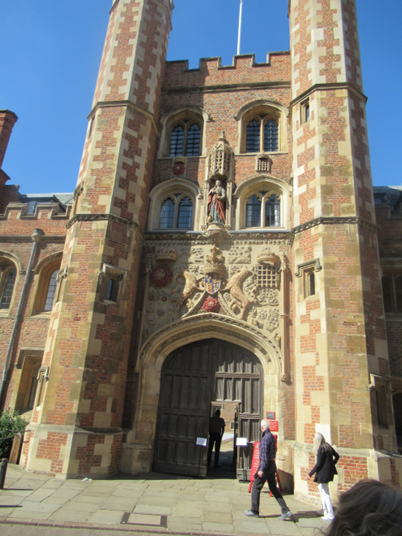
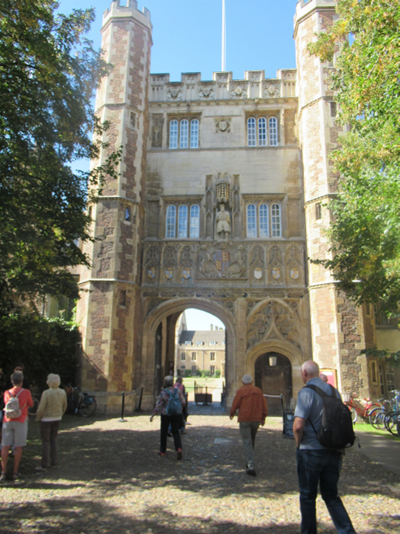
Great Gate Trinity College Cambridge
Trinity College Great Gate Henry the eighth’s sword replaced with a chair leg

After Kings College we moved onto Trinity College, I know we had a look down the Senate House Passage but can’t recall now, quite how we arrived outside the gate of Trinity College.

An early cryptographer who worked for Walsingham and studied at Trinity was Thomas Phelippes responsible for deciphering the code used in the Babington Plot, used to convict Mary Queen of Scots and secure her execution. Trinity and Trinity Hall were where the Cambridge five studied, all were members of a group known as the Apostles.

Gordon Welchman, also studied here, he is credited with discovering the concept of traffic analysis which proved crucial particularly during the early part of the Second World War before the German Codes could be effectively deciphered. The method was also said to have helped track down Bin Laden.

Cambridge University Bookshop
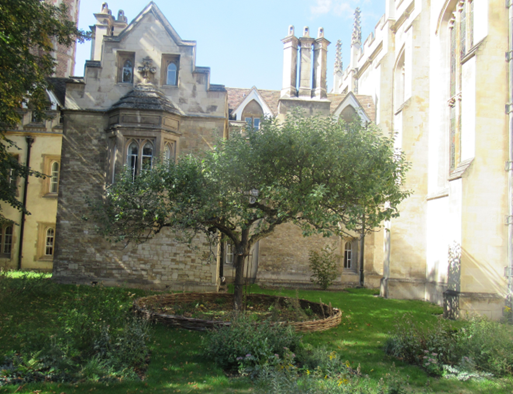
Cambridge University Bookshop Plaque
Close up of the plaque.

We returned to Kings Parade and Great St Mary’s Church to end the tour with Sophie mentioning that although members of the Cambridge Five were disgraced and living in exile they were still receiving books and gifts from friends in Cambridge, with Sophie stopping outside the University Bookshop on our way back to mention this. We all enjoyed the tour and our guide was excellent, thank you, Sophie.

Because She Looked Away, written by, Alison Bruce. A review.

Because She Looked Away by Alison Bruce.

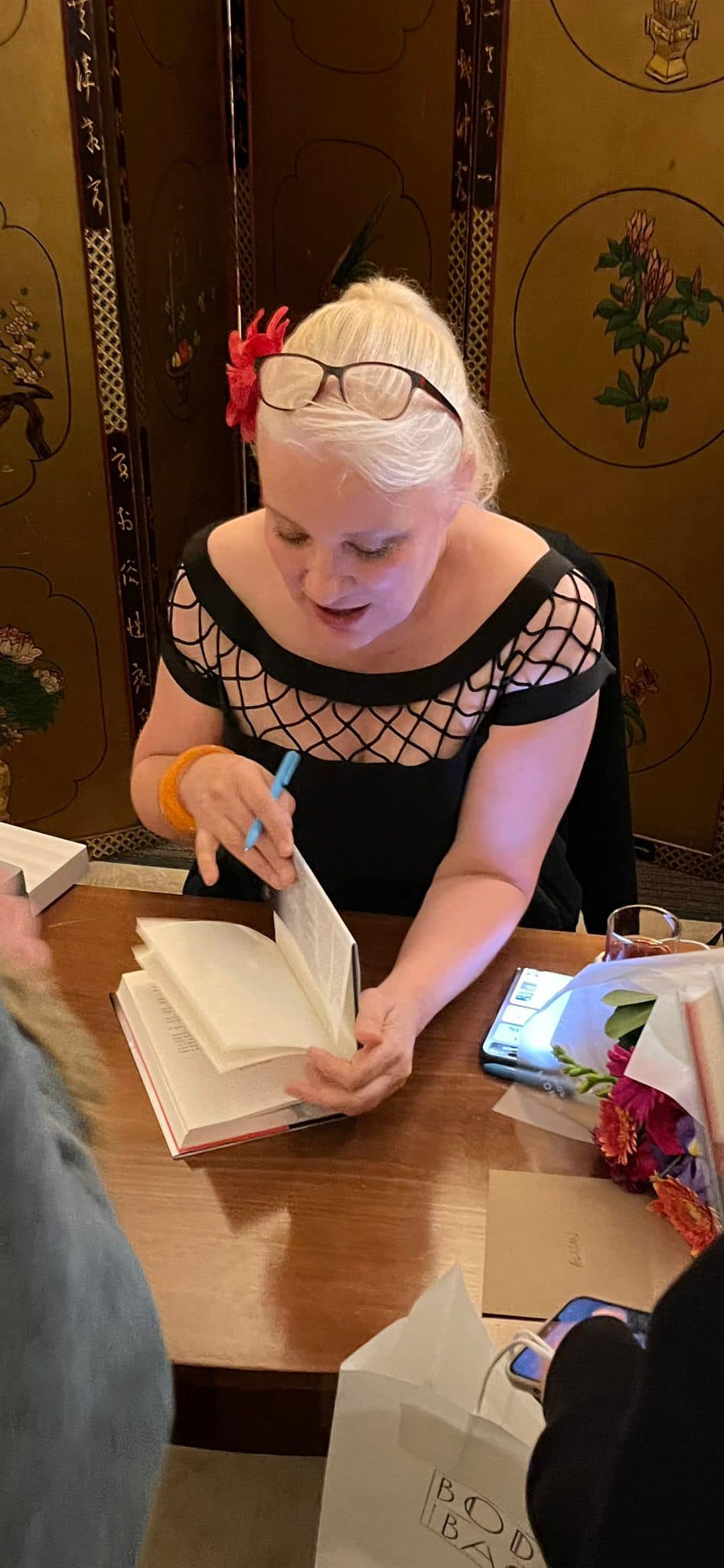
The Master’s lodge of Downing College Cambridge, was the impressive venue for the launch of Alison Bruce’s latest book, Because She Looked Away. The launch was organised by Richard and Jon of Bodies in The Bookshop, Cambridge’s specialist crime bookshop. I was fortunate to be invited. There was a long queue of those attending to buy their signed copy.

The Master’s Lodge Downing College from the garden.

This book introduces us to a new hero, Detective Sergeant Veronica (Ronnie) Blake. Ronnie’s childhood was traumatic and so are the events that prompt her move to Cambridge. She moves in to live with her half brother, Alex and their orphaned nephew, Noah.

Ronnie joins a small team of detectives, known as the DEAD Team, at Cambridge’s Parkside police station. The unit which is under threat of disbandment, is unable to solve an outstanding unsolved case, Operation Byron. Then a list of three names is passed to the group anonymously, one of the names is that of Ronnie’s sister Jodie. With a fresh pair of eyes Ronnie, with the help of a fellow newcomer to the team Malachi, is able to help the DEAD team start to make progress with this complex enquiry.

This is an intriguing who done it, a crime novel which kept me reading at every opportunity I had. It is easy to understand why Richard, of Bodies in The Bookshop stayed up until 3.30am to finish reading it.

The all-important book signing (photo credit Alison Bruce}

I have enjoyed every book of Alison Bruce’s I have read, Because She Looked Away, is the best yet. I thought it was impossible for her writing to get any better, how do you improve on perfection? Somehow she has managed it. I’m looking forward to the next Ronnie Blake book in the series.

Murder by the Book

Murder By The Book

I am interested in Crime fiction as both a reader and writer. When I saw the exhibition, Murder by the Book at Cambridge University Library advertised, I decided to visit. The guided bus from St Ives seemed the best option for travelling to Cambridge, it was just a question of timing my journey to be late enough to use my bus pass but early enough to arrive in time for the 11 am pre-booked slot.

My route on foot, from the Round Church bus stop, planned mainly courtesy of Google maps started in St, John’s Street, which led into Trinity street followed by a left turn into Trinity Lane. A little way along Trinity Lane a right turn took me into Garret Hostel Lane the lane narrowed as it approached the Garret Hostel Bridge over the river Cam, Trinity Hall’s Jerwick Library sits more or less on the bridge on the left. Punts were moving along the river tour guides working the poles as they pointed out places of interest on the banks, to their passengers.

Guided punt tours.

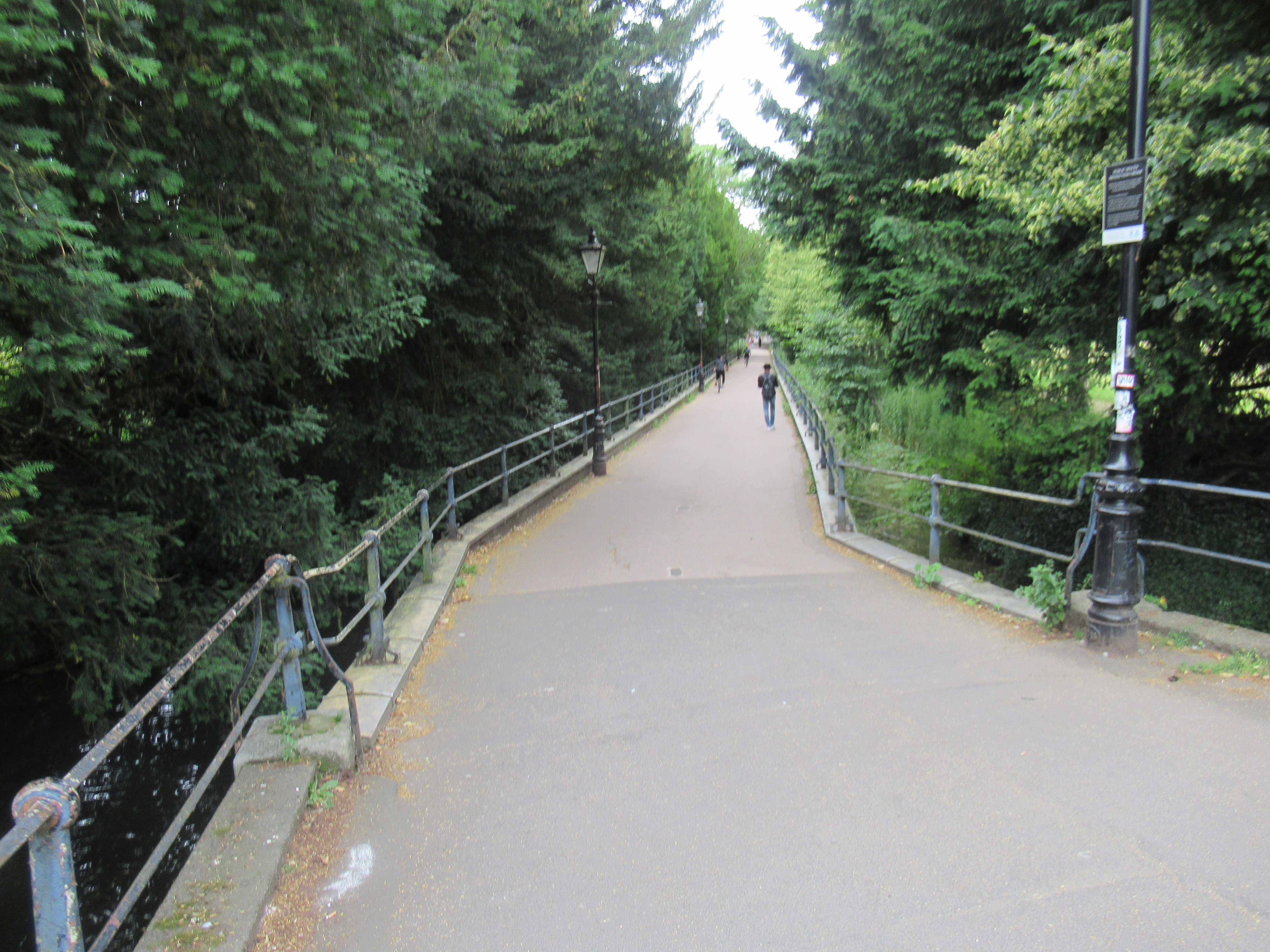
The bridge heralded a change the walk was no longer flanked by buildings but after the bridge the lane was tree lined.

Garret Hostel Lane after the bridge

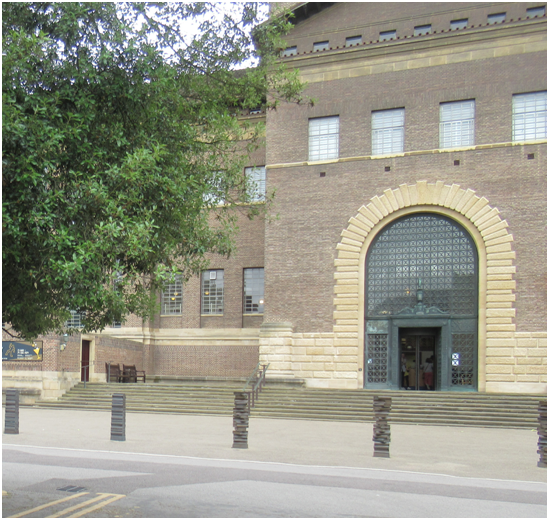
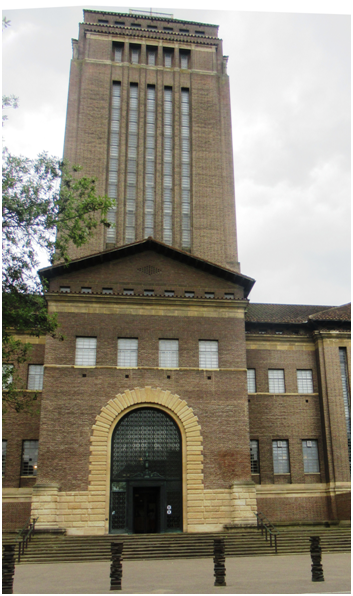
At the end of Garret Hostel Lane, the route took me across Queen’s Road into Burrell’s Walk. Before long I was at the gateway gazing at the imposing University Library Building and facing it to my left was Clare College.

It is difficult to show the size of the library building, if I remember correctly this tower houses the crime fiction collection. If that is the case, somewhere within lurks Arnold Lane, Marvin and of course Sylvia.
The entrance to the library

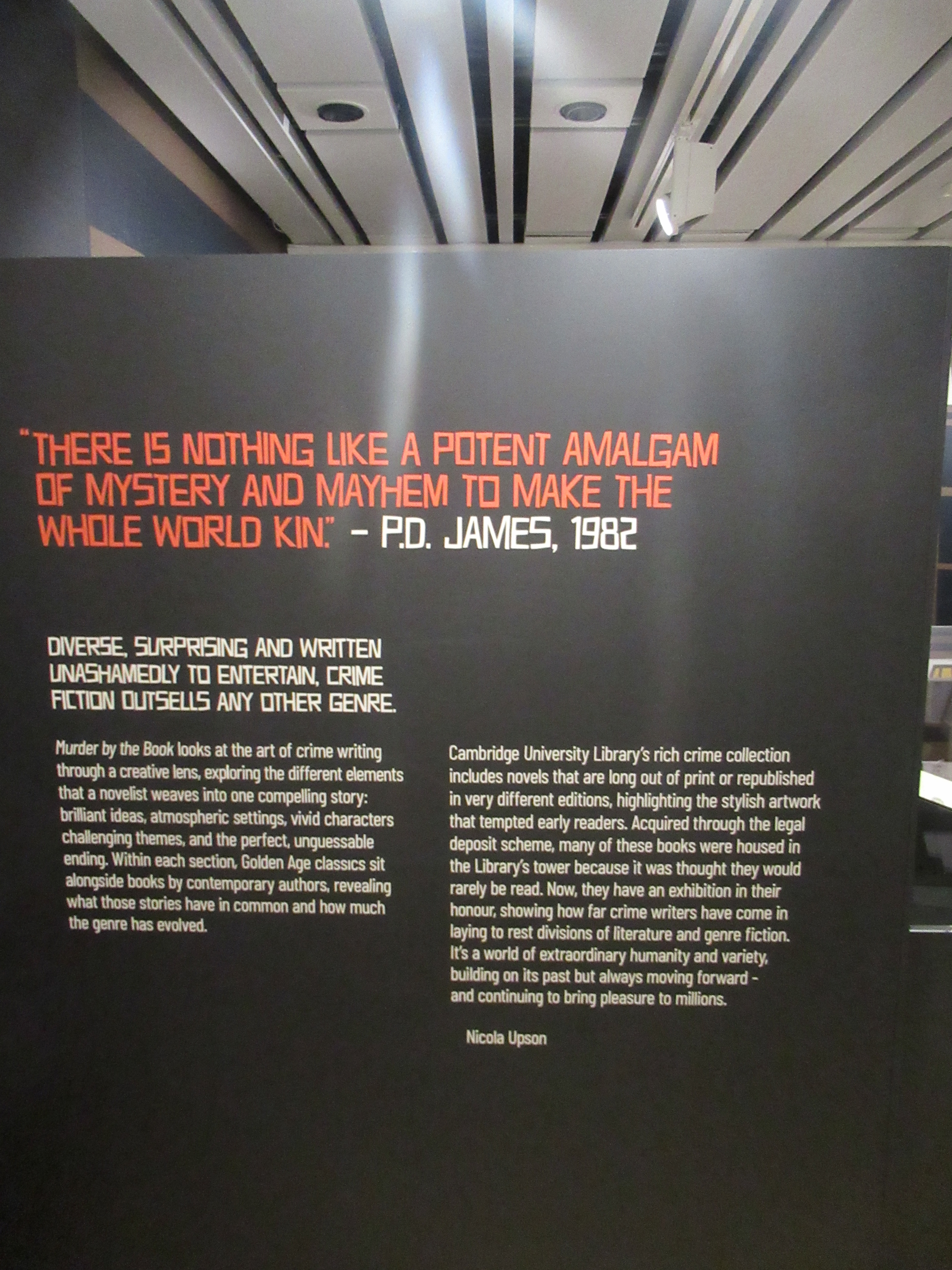
Once I was through the imposing entrance I made my way to the exhibition. The first thing I noted was a quote by PD James, one of many of hers within the collection.

P.D. James telling it like it is

The exhibition started with a chronological history of crime fiction with copies of some of the very earliest works Wilkie Collins The Lady in White and an even earlier work whose title I didn’t note.

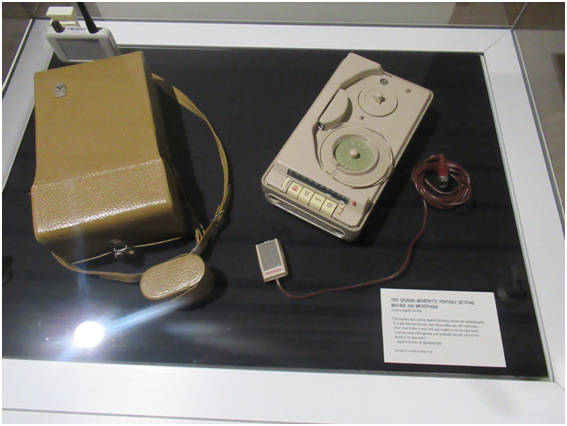
Unsurprisingly Conan Doyle’s Sherlock Holmes books featured prominently in early British crime writing. Slightly later came Dorothy L Sayers and of course Agatha Christie. On display were several exhibits relating to Agatha Christie, her Dictaphone which came into use when she broke her arm and her portable typewriter. However, the items relating to Agatha Christie which held most interest for me were her notebooks, a separate one for each book it seemed. That is one idea I might borrow.

Agatha Christie’s dictaphone.

I took a leisurely stroll around part 1 of the exhibition, many of the authors were familiar to me PD James, Dorothy L Sayers, Sir Athur Conan Doyle and of course, Agatha Christie but there were others unknown to me including, Martin Blake, Ellen Wilkinson, Cyril Hare, Nicholas Blake and Celia Fremlin.

Another P.D. James quote and totally accurate.

Further along were some more contemporary authors H R Keating, Ian Rankin, Ruth Rendell, Lynda La Plante and Marjory Allingham. I looked for books by Raymond Chandler but didn’t see any of his displayed, although he was based, as was his writing in America, he was an Englishman.

More contemporary crime fiction.

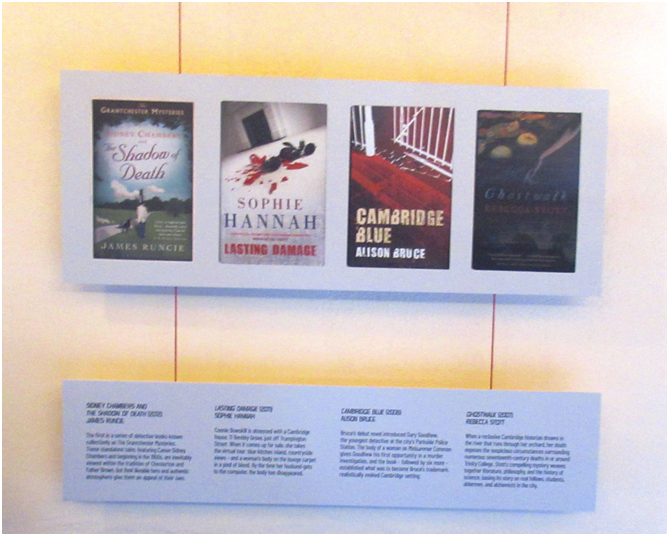
Having completed the circuit of part 1, I stowed my bag in the locker room and made my way upstairs to the gallery and the other parts of the exhibition to find books by authors I had met. For me, Alison Bruce’s D C Gary Goodhew, could well fit the bill as Cambridge’s iconic detective, a possible answer to Oxford’s Morse but he wasn’t elevated to this position by the powers that be. However Cambridge Blue had a well deserved prominent position as did books by Sophie Hannah and Ellie Griffiths two other authors I have had the pleasure of meeting.

On the first floor part 2 of the exhibition.

When I had seen all the exhibits I sought refreshment in the café situated on the first floor at the end of the gallery. The mistake I made was not bringing my tablet computer in with me in a clear bag I like the quiet of libraries to write in and with generous-sized desks or even in the café, this quiet place would have been ideal. However, on this occasion as I hadn’t used the clear bag for my laptop it would have to be the Central Library.

An ideal place to write.
This picture of just one of many corridors leading off in different directions and on several floors gives a glimpse of the size of the building.

I retraced my steps to Trinity Street and then made my way through the city to the Central Library, on my way along Kings Parade I came across students, well graduates now, in white trimmed black gowns together with their families emerging from a graduation ceremony. It was I am sure a proud moment for all those concerned.

A graduation, one of many in Cambridge during the summer a moment of pride for all concerned.

All in all, after a short stint of writing at the Central Library and the return trip on the guided bus, it was a great day out.

If you think this exhibition might interest you here is the link to the site but hurry: https://www.lib.cam.ac.uk/murderbythebook

A return trip to Cambridge

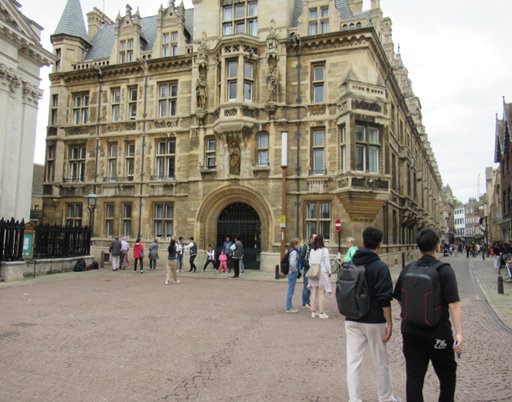
Gonville and Caius College looking from Kings Parade

When I was about eleven or twelve my cousin Richard and I ventured into Cambridge on our own. The purpose of this first excursion was to buy a Meccano clockwork motor,. We boarded the double decker 151 bus at Huntingdon and set forth for a day of adventure. On that first trip we left the bus at Drummer Street before walking first to the toyshop in Mill Road. I can remember us returning via the fish and chip shop in King Street before the bus station in Drummer Street. I can’t remember anything else about the day, other that it was an enjoyable experience, it was after all, sixty years ago.

Over the next few years we would repeat the visits to this nearby city, as we grew older, it would be evening trips to the cinema or to perhaps a dance. Then we met the girls we married and the trips stopped.

The Great Gate at Gonville and Caius College Cambridge

Erlier in the month on a Friday Richard and I visited Cambridge together again, catching the Guided bus from St Ives Park and Ride.After walking from the bus station it was into Wetherspoons in Andrew Street for a quick bite to eat and a cuppa. I was writing a short piece about Gonville and Caius College and wanted some photos, so that was our next port of call. Richard had been a regular visitor to Cambridge when he was working and knows a lot more about the colleges than I do. He worked for a company hiring access platforms so would be lifting stone masons and builders often to roof level to work.

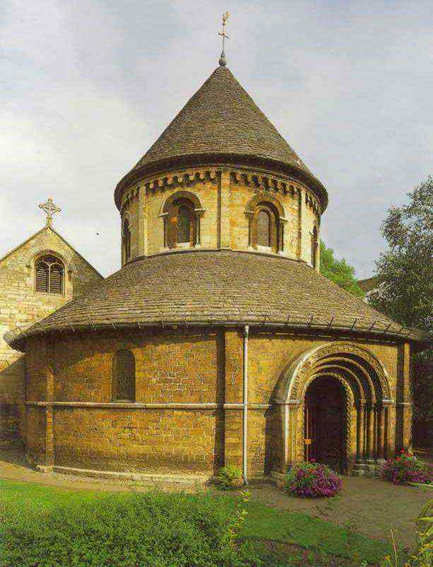
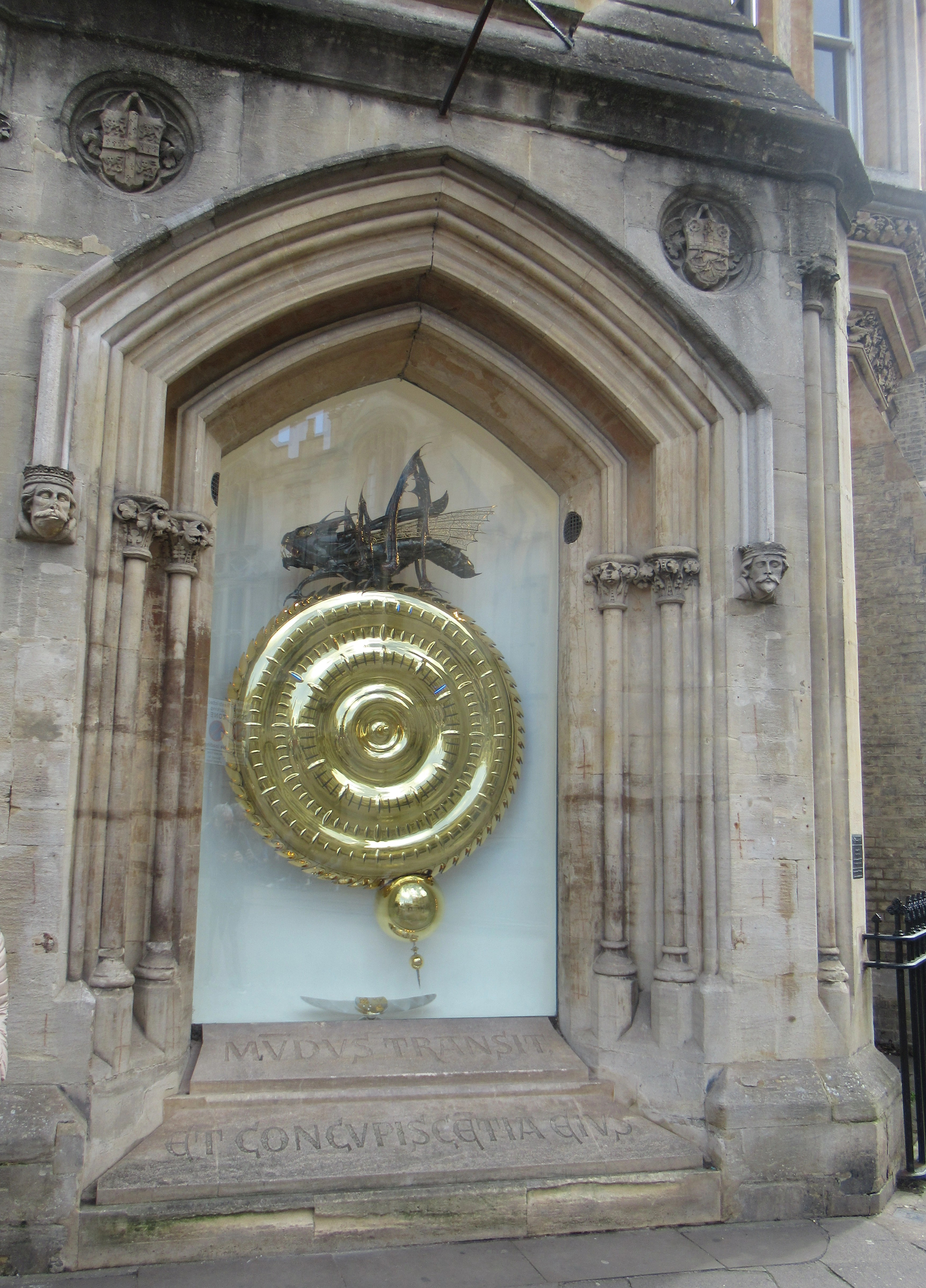
We ambled along Trinity Street then St John’s Street to the junction with Sidney Street at the Round Church. Just past Sidney Sussex College a right turn took us into Green Street and the short walk back to Trinity Street, then along Kings Parade. Since I used a photograph of The Grasshopper Clock on the cover of Killing Time in Cambridge I like to keep an eye on it. We had a good look at the Grasshopper Clock at Corpus Christi College, before making our way towards the Guildhall via Benet Street.

Corpus Christi Grasshopper Clock Cambridge

It is good to see that Rosalind Franklin’s name and a few others have been added to the blue plaque on the wall of the Eagle pub commemorating the discovery of DNA.

The New Blue Plaque at the historic Eagle Pub
The History of the Eagle

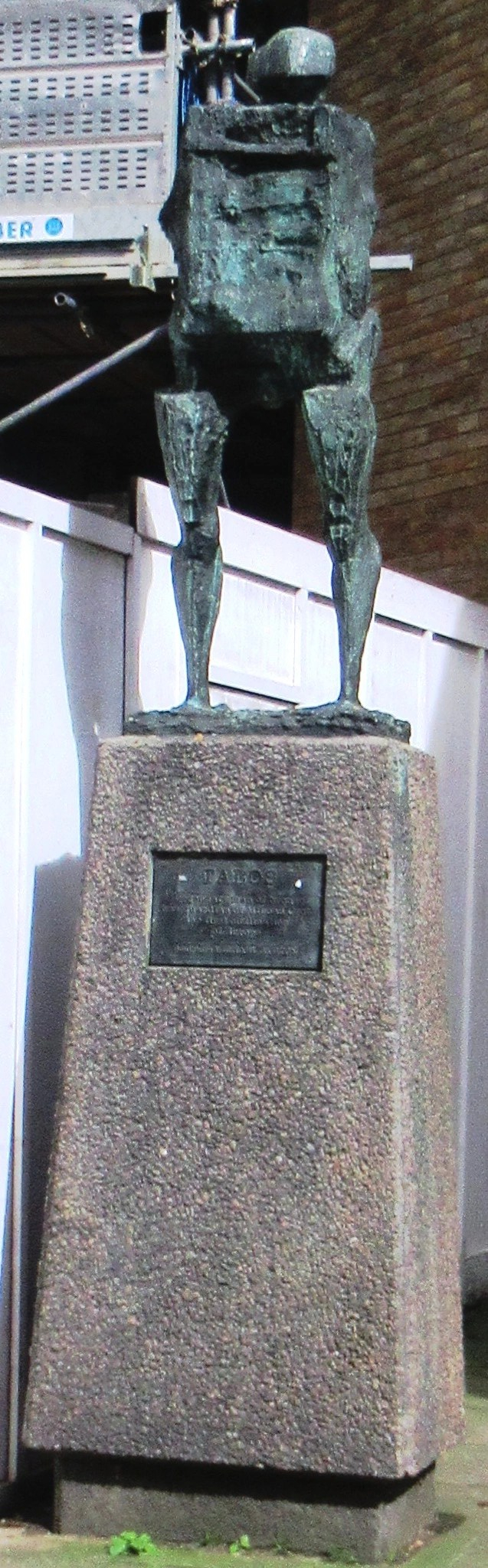
Near the Guildhall, a very curious looking statue took our eye I had noticed it before but had only given it a cursory glance. It was difficult to make out what or who it was of, I found out later after google research that the statue in Guildhall Street was of Talos by Michael Ayton. Talos was a legendary man of bronze, guardian of Minoan Crete.

Statue of Talos Guildhall Street Cambridge.

Our next destination was Norwich Street, where one of our great grandfathers had lived in 1921, it was a fair walk for two old men. On the corner of Norwich Street and Hills Road is the controversial Statue of Prince Philip, as bad as it is thought to be, it is probably slightly more lifelike than the statue of Talos.

The soon to be gone statue of the late Prince Philip

We looked at the House where Great Granddad lived then made our way via Francis Passage and Bateman Street back to Hills Road, the bus back into town saved our legs. After a coffee it was back to Drummer Street and a stroll in Christ’s Pieces, before boarding the bus back to St. Ives.

We had a great day out in Cambridge and a trip we intend to repeat in the future.

I DID IT FOR US written by Alison Bruce, a review.

I Did It For Us by Alison Bruce

Triggered by events beyond her control Emily’s life has been changed,. In a short space of time the certainty and the structure of her existence, as she knew it suffers devastating changes. She decides to start anew and in an attempt to get her life back on track moves to Wicken, a village some distance from her previous home. There Emily rents a flat in a converted mansion, hoping to be able to rebuild her life away from Cambridge and her previous life.

A close friendship with a new neighbour, Joanne and her two young children helps Emily to start moving on. The only dark cloud is Joanne’s relationship with Matt, a relationship that causes Emily great concern for her new friend and Joanne’s children.

The tension builds as we turn the pages and race towards the unexpected ending.

The book is well written the descriptions and emotions expressed are exceptionally crafted. While we read we inhabit Emily’s, mind seeing the world through her eyes, sharing her thoughts and feeling her tension.

I am a great fan of Alison Bruce and have enjoyed everything I have read of hers, I Did it For Us is no exception, it is a remarkably good book.

Rainy Cambridge

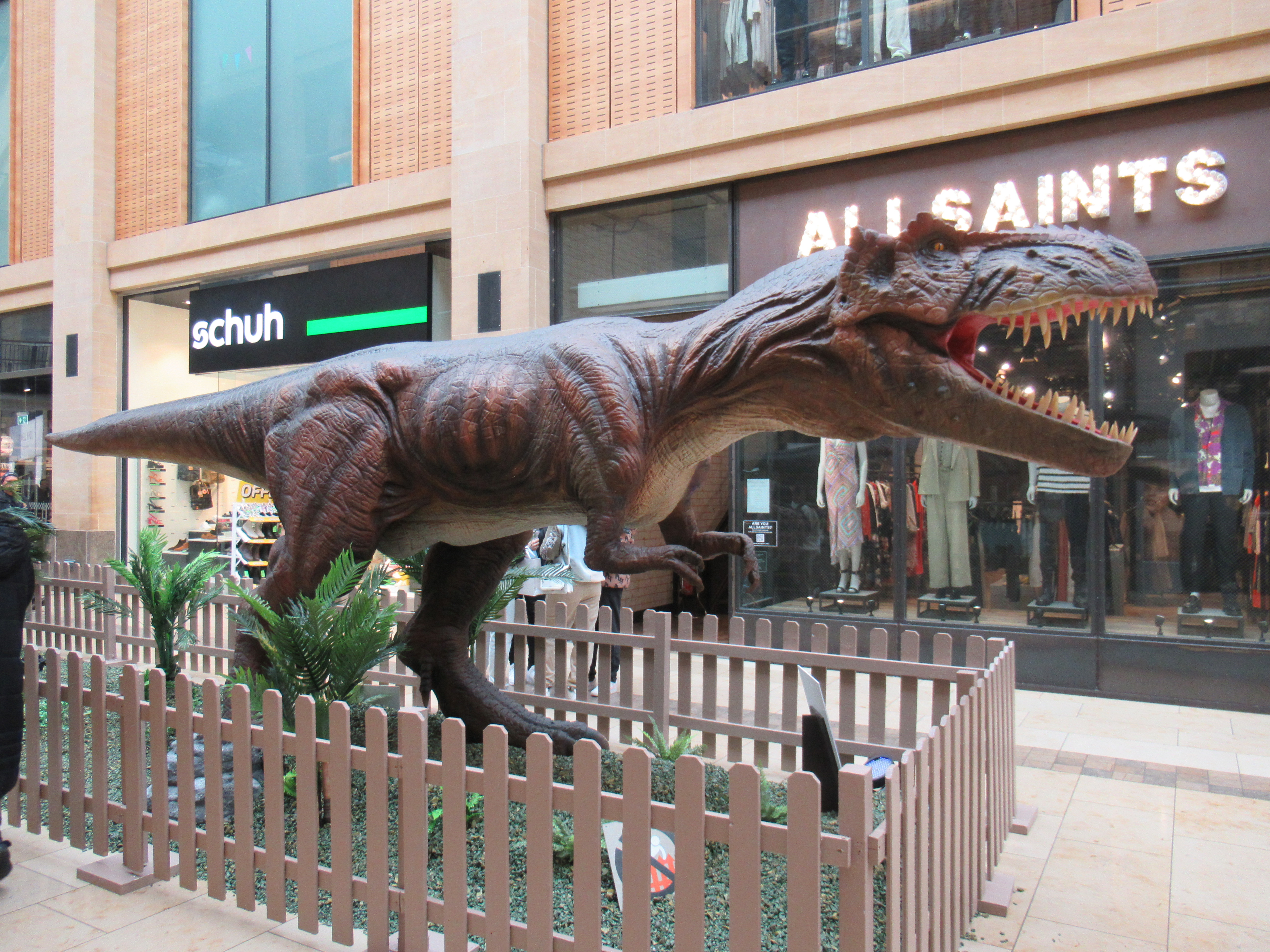
A dinosaur in the Grand Arcade

On the face of it, travelling to Cambridge on a rainy day would seem an unusual choice. Apart from visiting the street where one of my Great Grandfather’s lived at the time of the 1921 census (thanks to the help of a lady in the local u3a Genealogy group) I wanted to see how the city appeared in the rain, for purposes of research. Arnold Lane keeps nudging me hoping for a return and in response I have written a couple of tentative chapters.

How was Cambridge in the rain? Wet is the answer. I got off the bus at New Square rather than Drummer Street, thinking that Greggs would give me a bit of shelter. Hopefully, the rain would die down a little over a coffee and roll. Foolishly, I had left the umbrella in the car at St Ives; I remembered it once I was on the bus.

The rain was having none of it and carried on relentlessly after I left Greggs I crossed over to Wilkos and bought a cheap brolly. Even the threat of an umbrella didn’t stop the rain. Such is the nature of research, I had once driven from Cambridge to Heacham in the rain, recording it all on my dash cam for research, my wife thought I was mad, she still does.

I found the house in Norwich Street where Great Granddad had lived, took a look at the outside and set off back to the top of the road. There was a most unusual delivery van parked up further along the road, it had four wheels was pedal powered with an electric motor to assist. I had a chat with the driver; he said it was okay in windy weather particularly if it had a full load, which surprised me, it looked very lightweight and likely to catch the wind.

Pedal-powered deliveries in Cambridge

The bus around the corner in Hills Road, delivered me to Emmanuel Street; I had a short walk to the Grand Arcade and my next destination, the Central Library. There was an exhibition of life size animated dinosaur models in the arcade, I stopped and photographed them before spending an hour writing in the library.

Pterodactyl
More Dinosaurs

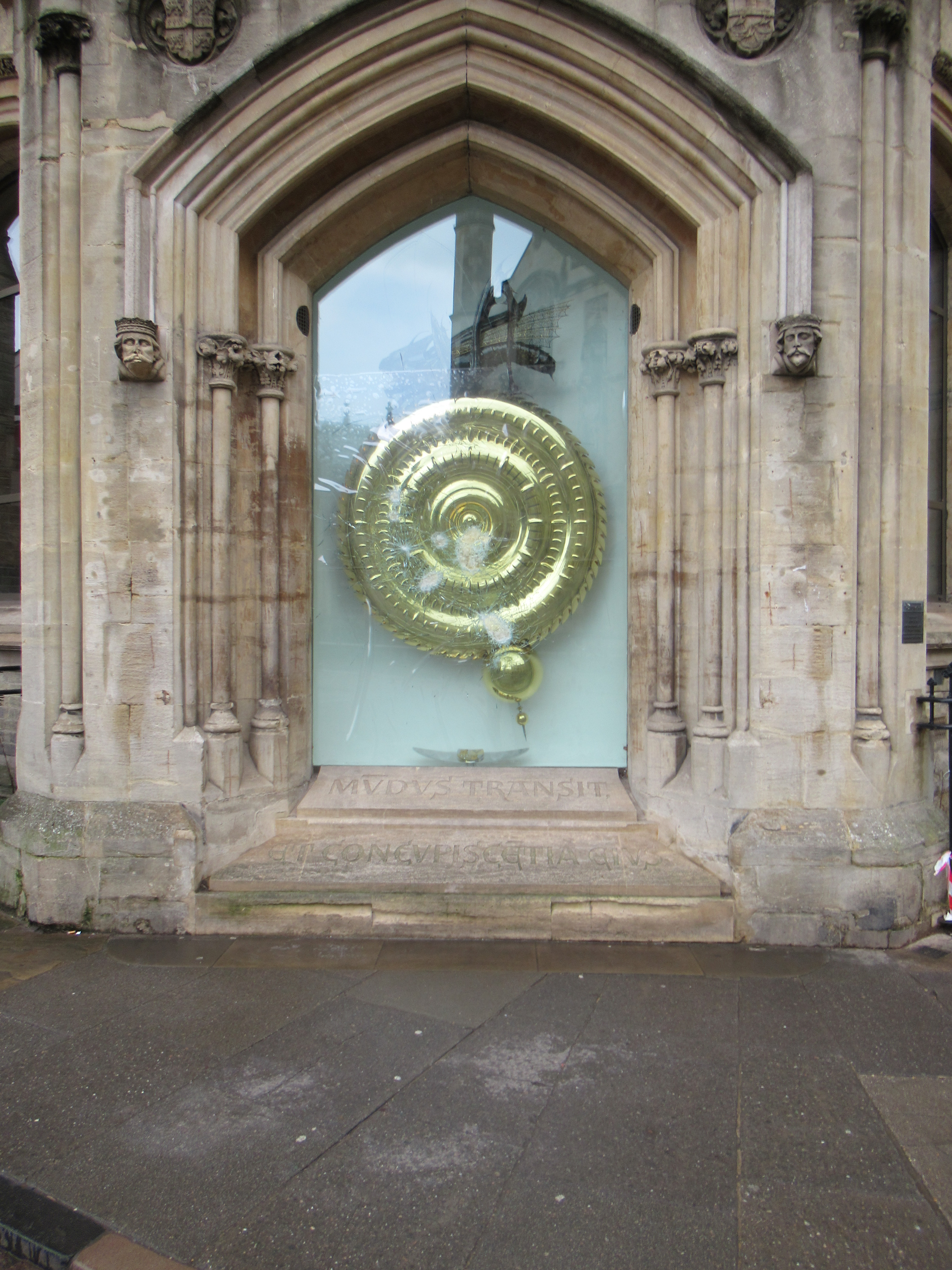
Benet Street, was next on the list to visit, I wanted a look at the damaged Grasshopper Chronophage at Corpus Christi College. It is a sad sight, to see this beautiful clock stilled and the grasshopper unable to munch through the minutes.

The damaged clock
Close up of the Grasshopper clock in happier times

It was time to return home so it was back to Drummer Street and to catch the bus back to St Ives. I was saddened by the damage to the clock whose picture occupies the cover of my novel, Killing Time in Cambridge. Hopefully, it can be repaired and the grasshopper put back to work, I know Arnold hopes so too.
Book Review – Killing Time in Cambridge by Philip Cumberland

A book review and a Q&A, thank you for your kindness and generosity Eva.

Eva Jordan's avatarEva Jordan

“AI is likely to be either the best or worst thing to happen to humanity”­­––Stephen Hawking

This month I interviewed local author (to me) Philip Cumberland (see here), who is also one of the coordinators and founding members of a local U3A Writing Group, Whittlesey Wordsmiths. As well as a contributing author of several anthologies written by the group, Philip has also recently published his debut novel, KillingTime in Cambridge, and this is my review.

The story opens with an axe wielding knight of old, dressed in full body armour, clanking down the corridor of a software company, who then hacks down the office door of the managing director, demanding to know who the ‘master’ is. The poor MD then has a heart attack, the knight disappears, and a short time later the building is besieged by medieval catapults. At this juncture, we are introduced to…

View original post 186 more words

Light on Leeds Podcast

Killing Time in Cambridge book cover

I was honoured and delighted to be invited by Hazel to be interviewed for her podcast Light on Leeds.

She wanted to ask me about my writing, my book, the Fens and Cambridge.
Here is the link to her podcast:

https://www.lightonleeds.com/episodes/light-on-episode-4-philip-cumberland-author?fbclid=IwAR0Rqhq61E1ObUfbHK4-Hy2xcySyImPWf4qCk0wfW-HS1UIqFrBSLHzx1VA#

To hear more of Hazel’s podcasts please visit her site.

https://www.lightonleeds.com/

plasticdollheads

Dr Gemma Ahearne

BRYN DONOVAN

TELL YOUR STORIES, LOVE YOUR LIFE

Kyle Brennan

The Truth for Kyle

Gabrielle Ray

'Gabrielle Ray said, 'I am always dancing; I love it! When I don't dance, I sing. What else is there to do?'

JR Harland Poetry

This is a collection of some poems I've written.

Whittlesey Street Pride

Creating pride in Whittlesey

Kim's Musings

Authors Supporting Authors

Story Empire

Exploring the World of Writing

Gloria McBreen

May you be at the gates of heaven an hour before the devil knows you are dead.

Love13Reading

FOR READERS AND ASPIRING WRITERS

Jill's Book Cafe

Bookish news, views and 'Five on Friday'

Victoria Weisfeld

Stories about the perils of life and the mysteries of travel

Brooke Nelson

Author of New Adult Fantasy and Thriller novels

Huntingdonshire History Festival

Discovering Huntingdonshire's Local History

Grumpy old fart!!!

"If you talk to God you're religious. If God talks to you, you're psychotic."

Later life

Enjoying Twilight Years

Kent Wayne

Epic fantasy & military sci-fi author.

Seclusion 101 with AnneMarie

Life After Retirement

CabbieBlog

Taxi Talk Without Tipping

Gabriele Romano

Less Noise. More Meaning

My Life With GraciePress

A Backyard Garden Is A Perfect Place For Chickens

Words and Fictions

Jessica Norrie on writing, books and language - in her own words.

Damyanti Biswas

For lovers of reading, crime writing, crime fiction

Tessa’s poems

Poetry from a Septuagenarian

Linda's Book Bag

Loving books and reading

John Ager's Home on the Web!

reflecting my eclectic (and sometimes erratic) life

Stuart Orme

Historian, Folklorist, Writer, Re-enactor, Museum Professional. Follow me on Twitter: @stuartorme

thedrabble.wordpress.com/

Shortness of Breadth

Best Dog Training Tips & Tricks

Dog Training Guidance

Fenlandphil's Blog

A blog from the low country

So You think you've got problems?

The advice columns of two eccentric agony aunts who guide the bewildered of Britain through their personal problems,

Marigolds and Gin

Because even in chaos, there’s always gin and a good story …

Seriousgardener's Blog

Just another WordPress.com weblog

The Incomplete Verse

Here I share words and illustrations I discover on the journey within the crevices of my mind and the outside world. 💚

Dread Poets Sobriety

Irreverence's Glittering New Low!

MovieBabble

Ramblings of the Cinema

Mistakes Writers Make ...

... and how to put them right! Advice and opportunities for new, aspiring and upcoming journalists and writers of non-fiction