May Morrigan lives in her large Blackheath Home with her very elderly mother (Minty) and friend Fletcher, also known as Barbara Bouvier, the other two members of the household are May’s two miniature dachshunds, Bess and George. That is the straightforward part of the book.
The story starts at May’s bookshop when a mysterious text message appears on the phones of everyone in the bookshop. The action is non-stop from that point forward, weaving in and out of unconvential lifestyles and relationships.
Murders follow the receipt of cryptic text messages, which prompts May and her friends to try to track down the murderer.
The scenes are wonderfully set and the descriptions paint vivid pictures of the action. The characters particularly the lusty Minty are interesting and far from run of the mill.
This is the most unusual, funniest book I have read in a long time and one of the most enjoyable ever.
I am not normally tempted by historical novels; those more historical than the 1930s, that is but it was the promise of a murder mystery that swung the balance. The story is set in the early eighteenth century West Country and mainly in Bristol.
Miss Coronation Amesbury leaves her village in Wiltshire to seek her fortune in Bristol. The coach journey alone in atrocious weather is an adventure in its self. Her arrival in this bustling port city following a difficult overnight stay in Bath is not an easy one for her and a great shock after village life.
The recent horrendous murder of several young boys haunts Bristol. We follow Coronation as she looks for work in what she hopes will be her new home and her search for the perpetrator of these horrendous crimes.
The time, place and the events are beautifully painted we can see it all in our minds eye, a warts and all view of a bustling Bristol with its busy port during the era of slave trading. The story is well told and I found myself neglecting important tasks to finish the book, I struggled to put it down until I read those two final words, “The End”.
After the book’s shocking start, we share the events leading up to and following a life-changing experience.
Leora is one of a very unusual pair of twins, her childhood, teenage years and the life which follows is chronicled in detail. The story gives a vivid picture of Leora, her friends, loves and family, while exploring the relationships with and between them.
In part, this is a psychological thriller, a story with elements of the paranormal, exploring a controlling relationship and the ultimate destructiveness of jealousy. However, it is Leora and Ben’s enduring love for each other, which is at the very heart of this novel.
We have to wait to the very end to see how they move forward.
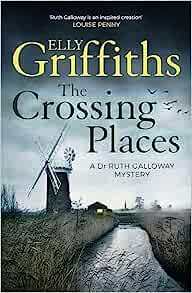
I was sorry to have missed an author event with Elly Griffiths in Huntingdon organised by Niche Comics Bookshop but it did put Elly’s name on my radar. With the name Elly Griffiths lodged firmly in what passes these days as my memory, I looked in the local library. Picking up a copy there of The Crossing Places, Elly Griffith’s first novel in the Dr. Ruth Calloway series.
Elly Griffith’s, Dr Ruth Calloway is a Forensic Archaeologist, and lecturer at the North Norfolk University. she is called in to help the police when bones of a young child are discovered buried in a salt marsh, close to Ruth’s home. The man requesting her assistance is Detective Chief Inspector Harry Nelson, a man trying to solve the mystery of a child who disappeared ten years earlier. The book is well written in as much as the characters are finely drawn and believable. The landscape and the locations are described with great skill.
However, the plot could be better. This is I understand Elly Griffiths first crime novel, I will try some of her others, to see if she has addressed, what was in my opinion a serious shortcoming.
This remarkable book is a real thriller, which gradually draws you into the life of Kate and the relationship she has with her husband. The troubled relationship with her parents and siblings during childhood also form part of the plot.
The story starts when Kate’s life gradually starts to disintegrate before her, a slow-motion train crash of events that turns her world upside down. As the reality of Kate’s situation starts to unfold, the search for the truth and answers to questions that emerge during that search, kept me reading. I was always spending more time reading than I had allocated myself for the activity, other projects and important jobs were put on hold until I had finished turning the pages. Yes, it is a good read, a damn good read, well it certainly was for me. Now to get the things done, I had neglected to finish reading this book.
Triggered by events beyond her control Emily’s life has been changed,. In a short space of time the certainty and the structure of her existence, as she knew it suffers devastating changes. She decides to start anew and in an attempt to get her life back on track moves to Wicken, a village some distance from her previous home. There Emily rents a flat in a converted mansion, hoping to be able to rebuild her life away from Cambridge and her previous life.
A close friendship with a new neighbour, Joanne and her two young children helps Emily to start moving on. The only dark cloud is Joanne’s relationship with Matt, a relationship that causes Emily great concern for her new friend and Joanne’s children.
The tension builds as we turn the pages and race towards the unexpected ending.
The book is well written the descriptions and emotions expressed are exceptionally crafted. While we read we inhabit Emily’s, mind seeing the world through her eyes, sharing her thoughts and feeling her tension.
I am a great fan of Alison Bruce and have enjoyed everything I have read of hers, I Did it For Us is no exception, it is a remarkably good book.
A beautiful, black eyed, blond woman; walks into Philip Marlowe’s office and into his life. The blond, Mrs Clare Cavendish, daughter of a fabulously rich perfume maker, hires him to find a missing man, a man who is not her husband. Will he find this man, and what is this man’s connection to the woman looking for him? It is an intriguing story seeing Marlowe tangling with the rich, famous and the criminal underworld of Los Angeles, some of the characters fall into more than one category, some of them into all three.
As long as I can remember I have been a fan of Raymond Chandler and his hero Philip Marlowe. I don’t know if my first encounter with Marlowe was in a book, watching Humphrey Bogart play him in the Big Sleep on the silver screen or Chandler’s books dramatised on Radio 4, with Ed Bishop as Marlowe. Since then, Marlowe has lurked in my subconscious.
Chandler’s style is something I admire the one line descriptions are brilliant, the plots are tangled and interesting Philip Marlowe is always in the thick of the action, there is usually a fascinating woman involved, often a femme fatale.
Poodle Springs was partly written when Chandler died, it was finished by Robert B Parker, his completion of Poodle Springs is seamless Parker wrote some other Marlowe Novels I haven’t read any these yet but they are on my “To Be Read” list.
Parker and I are not the only people who think there is more in the tank where Marlowe is concerned. I have read one or two Marlowe books by other authors; I can’t say that any I had read were anywhere near as good as Chandler’s originals. That is until I read The Black Eyed Blond; Benjamin Black’s Marlowe is a damn good likeness to Chandler’s, even when stood next to him in the bright California sun.
We can’t visit the time when Marlowe walked the mean Streets or even those Streets themselves as they were then but they seem real in our imagination as we turn the pages, both in Chandler’s originals and in Black’s, Black Eyed Blond. I hope we see some more Philip Marlowe novels from Benjamin Black.
I have been for as long as I can remember unconvinced about the value of the British monarchy, for me the institution had about it a great negativity. Why is the best choice for part of our government; the head of state, an accident of birth?
My view of the monarchy was and still is that it is a thoroughly rotten institution, I had however reserved judgement on the individuals that comprise the sprawling costly entity that is the royal family. They seemed to be more like a group of soap opera celebrities and as time has gone on with their seemingly petty squabbles, (the ones I am aware of that is,) making headline news, more so. As I paid little heed to the individuals concerned most of the mindless tittle tattle has passed me by.
Norman Baker forensically destroys not only the institution itself but the reputations of much of the large and sprawling monarchy. He highlights tax dodging, a scandalous waste of taxpayer funds, dishonesty and hypocrisy. The idea that a part of our government can hide its activities behind a wall of secrecy, denied to other branches of the government is in itself a scandal. The Royal Family’s connections with Hitler and the far right during the thirties is something we ought to know more about, a full disclosure would be useful.
The only Royal to come out unscathed from Normal Lamb’s book is Princess Anne, although the late Queen’s reputation hasn’t suffered too badly.
However, probably one of the most unsettling things in terms of our governance, highlighted by Baker, is the Royal Consent. We are led to believe that our constitutional monarch has no influence over what legislation is debated and the royal assent, a rubber stamping exercise is proof of that. What I was not aware of together with probably most of the British public, is that before any legislation is able to be debated, it first has to receive Royal Consent. This isn’t a rubber stamping exercise; the monarch has to approve any legislation to be debated.
Consent is and has been withheld, if things included in the proposed legislation are thought to be at odds with the interests of the monarchy. There are times when legislation has been sent back to be changed before it receives royal consent if at all.
This book is well researched and referenced. It is one I recommend everyone to read whether Republican or Monarchist.
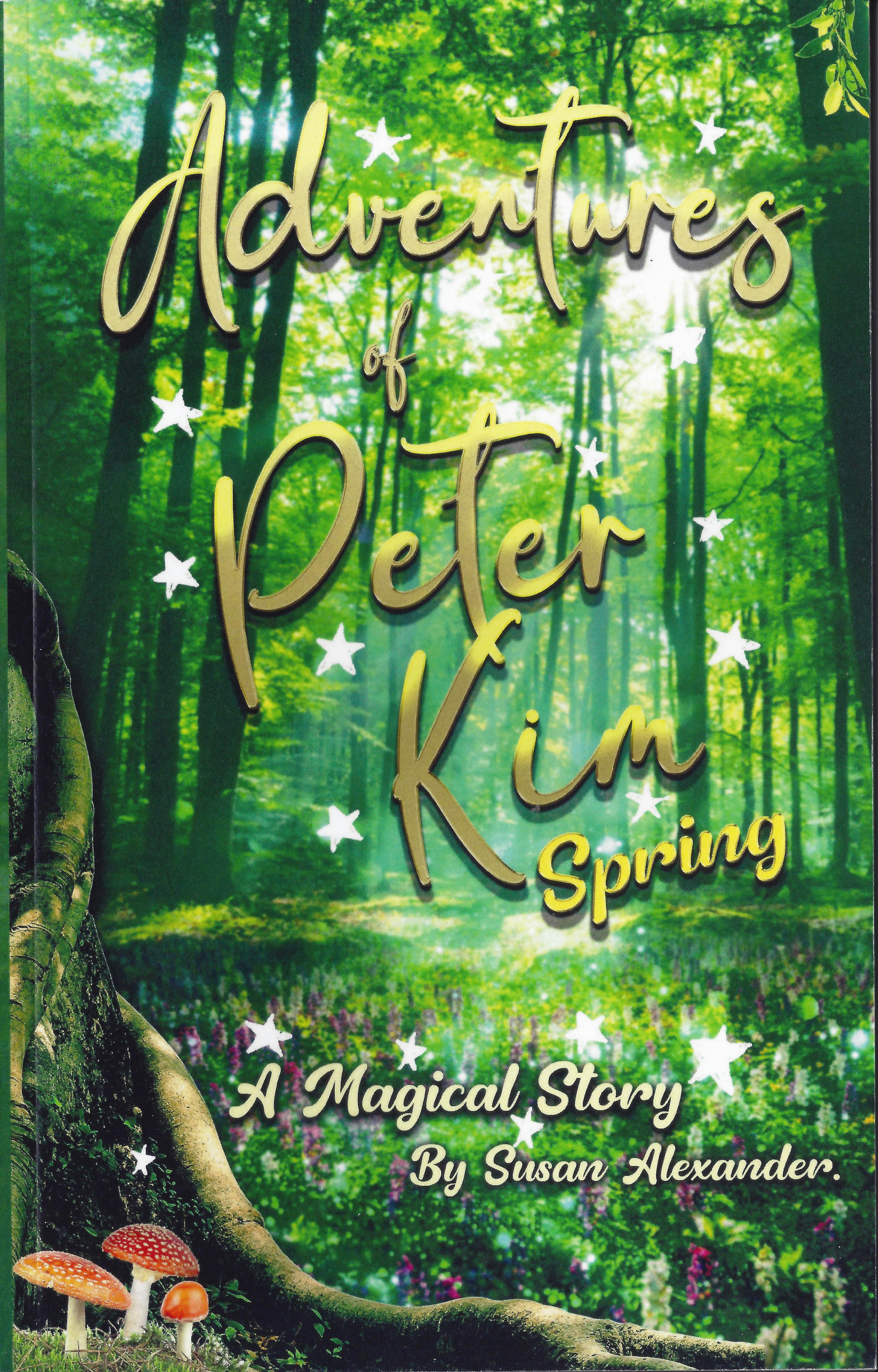
I haven’t read many children’s books in the last twenty years or so, what was a near nightly experience for me when my children were small has long past. Often or not my children would be asleep before I finished reading the chapter or story, sometimes my children would have to wake me to finish reading to them.
Peter Kim is a shy elf living with his parents in their toadstool home in Glebe Wood; we follow Peter’s adventures as he explores the wood that is his home, meeting interesting characters and the friends he makes. These friends include fairies Bella and Flossie, Harry the Hedgehog and a number of other woodland creatures.
The pictures that accompany the text are beautifully drawn by a number of different artists including the author.
Children’s stories should entertain and ideally, subtly educate in the process, this book does this, it is well written, informative and entertaining, and the chapters are the right length for bedtime reading.
This is the first book in a planned series of seasonal adventures for Peter Kim with Summer, Autumn and Winter to come. These are treats to look forward to.
I had enjoyed the Guide to Grunty Fen also by Christopher South and thought more of the same would make a useful tonic for me. I was delighted to find a copy in Huntingdon’s wonderful Niche Comics and Books.
This who’s who is a definitive guide to the notable people that have made this overlooked but remarkable area of the Cambridgeshire fens what it is today. The biographies of these inhabitants and former inhabitants are informative, making for fascinating reading. It describes the sheer diversity of talent that has and still continues to occupy this close knit community.
Amongst others we learn of Ron Flash Gordon postman and Pyloneer, Daisy Dockeridge a notable Pharmacist, any number of remarkable clergymen, among them Emmanuel Partington Vosper-Jones. Vosper-Jones, installed a gingerbread house (originally a pantomime stage prop) as a confessional later following a nervous breakdown he left the clergy to become a tobacconist.
Other notables include, inventors, philosophers, parachute knitters, educationalists and an early equal rights activist Queenie Marsden
Every page is full of interesting facts that shed a light on the lives of those residing in this under discovered corner of Cambridgeshire. I am sure it won’t be long before the casual weekend tourist, anxious to see where Dennis lived and to learn more of this remarkable community,becomes inspired to buy the corrugated iron and reclaimed building materials needed to build their very own shed. Many of them will consider employing the famous Grunty Fen Architect Niven Parr to help with the design and construction.
For those seeking a simpler more sustainable but in many ways an unusual form of life Grunty Fen seems to have a lot to offer.
With an easy bicycle commute to Ely and access to the rail network those tired of city life could do worse than move to Grunty Fen