Rainy Cambridge

A dinosaur in the Grand Arcade

On the face of it, travelling to Cambridge on a rainy day would seem an unusual choice. Apart from visiting the street where one of my Great Grandfather’s lived at the time of the 1921 census (thanks to the help of a lady in the local u3a Genealogy group) I wanted to see how the city appeared in the rain, for purposes of research. Arnold Lane keeps nudging me hoping for a return and in response I have written a couple of tentative chapters.

How was Cambridge in the rain? Wet is the answer. I got off the bus at New Square rather than Drummer Street, thinking that Greggs would give me a bit of shelter. Hopefully, the rain would die down a little over a coffee and roll. Foolishly, I had left the umbrella in the car at St Ives; I remembered it once I was on the bus.

The rain was having none of it and carried on relentlessly after I left Greggs I crossed over to Wilkos and bought a cheap brolly. Even the threat of an umbrella didn’t stop the rain. Such is the nature of research, I had once driven from Cambridge to Heacham in the rain, recording it all on my dash cam for research, my wife thought I was mad, she still does.

I found the house in Norwich Street where Great Granddad had lived, took a look at the outside and set off back to the top of the road. There was a most unusual delivery van parked up further along the road, it had four wheels was pedal powered with an electric motor to assist. I had a chat with the driver; he said it was okay in windy weather particularly if it had a full load, which surprised me, it looked very lightweight and likely to catch the wind.

Pedal-powered deliveries in Cambridge

The bus around the corner in Hills Road, delivered me to Emmanuel Street; I had a short walk to the Grand Arcade and my next destination, the Central Library. There was an exhibition of life size animated dinosaur models in the arcade, I stopped and photographed them before spending an hour writing in the library.

Pterodactyl
More Dinosaurs

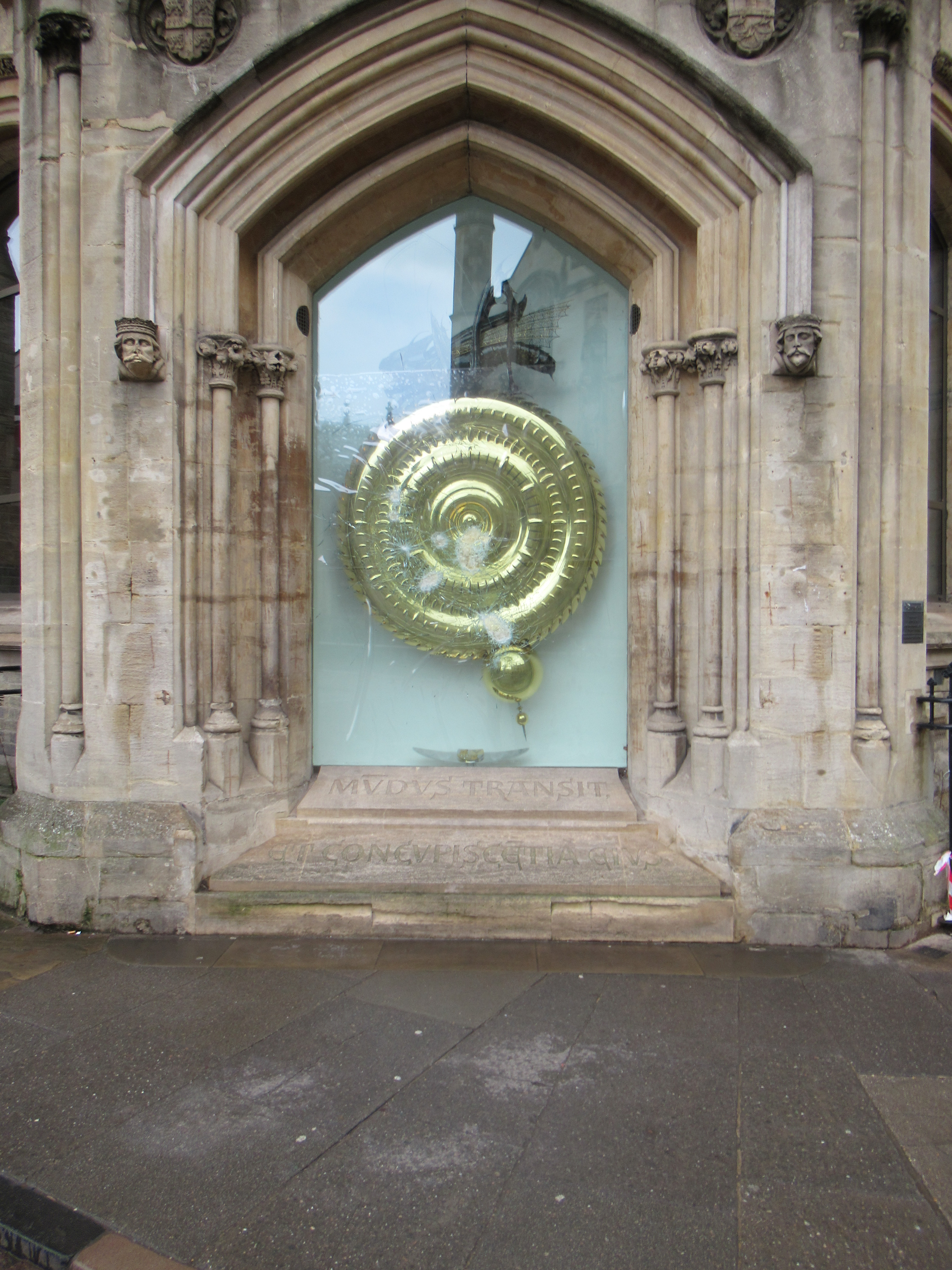
Benet Street, was next on the list to visit, I wanted a look at the damaged Grasshopper Chronophage at Corpus Christi College. It is a sad sight, to see this beautiful clock stilled and the grasshopper unable to munch through the minutes.

The damaged clock
Close up of the Grasshopper clock in happier times

It was time to return home so it was back to Drummer Street and to catch the bus back to St Ives. I was saddened by the damage to the clock whose picture occupies the cover of my novel, Killing Time in Cambridge. Hopefully, it can be repaired and the grasshopper put back to work, I know Arnold hopes so too.

The Black Eyed Blond by Benjamin Black, a review.

The Black Eyed Blond by Benjamin Black
 

The Black Eyed Blond.

A beautiful, black eyed, blond woman; walks into Philip Marlowe’s office and into his life. The blond, Mrs Clare Cavendish, daughter of a fabulously rich perfume maker, hires him to find a missing man, a man who is not her husband. Will he find this man, and what is this man’s connection to the woman looking for him? It is an intriguing story seeing Marlowe tangling with the rich, famous and the criminal underworld of Los Angeles, some of the characters fall into more than one category, some of them into all three.

As long as I can remember I have been a fan of Raymond Chandler and his hero Philip Marlowe. I don’t know if my first encounter with Marlowe was in a book, watching Humphrey Bogart play him in the Big Sleep on the silver screen or Chandler’s books dramatised on Radio 4, with Ed Bishop as Marlowe. Since then, Marlowe has lurked in my subconscious.

Chandler’s style is something I admire the one line descriptions are brilliant, the plots are tangled and interesting Philip Marlowe is always in the thick of the action, there is usually a fascinating woman involved, often a femme fatale.

Poodle Springs was partly written when Chandler died, it was finished by Robert B Parker, his  completion of Poodle Springs is seamless  Parker wrote some other Marlowe Novels I haven’t read any these yet but they are on my “To Be Read” list.

Parker and I are not the only people who think there is more in the tank where Marlowe is concerned. I have read one or two Marlowe books by other authors; I can’t say that any I had read were anywhere near as good as Chandler’s originals. That is until I read The Black Eyed Blond; Benjamin Black’s Marlowe is a damn good likeness to Chandler’s, even when stood next to him in the bright California sun.

We can’t visit the time when Marlowe walked the mean Streets or even those Streets themselves as they were then but they seem real in our imagination as we turn the pages, both in Chandler’s originals and in Black’s, Black Eyed Blond. I hope we see some more Philip Marlowe novels from Benjamin Black.

In From The Cold

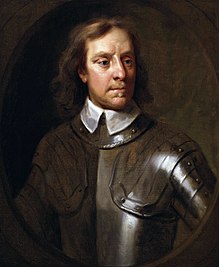
Oliver Cromwell, ‘warts and all’ painted by Samuel Cooper painted in 1656 (public domain)

Oliver Cromwell is Huntingdon’s most famous son and has been voted England’s greatest man. However it is not until very recently that Huntingdon acknowledged him as a worthy citizen of the town.

It is said that it is the victors that write the history books and although Cromwell and the Puritans won the Civil War, establishing a republic for the first time in these islands, the restoration of the monarchy was ultimately a defeat. The Monarchists were the ultimate victors and until the nineteenth century Cromwell had been painted in various shades of black. It was only when historians took a more balanced view of the Civil War and Cromwell that; the acknowledgement of Cromwell’s achievements and his contribution to our parliamentary democracy became appreciated.

The restored monarchy in a very short space of time became the model offered to and rejected by Charles the first. Had he been less arrogant and accepted what was offered by Parliament, it would have saved many lives, his own included.

Back to Cromwell, he grew up and was educated in Huntingdon, he was for a time its Member of Parliament. He fell out with the town, when it became what was known as a Rotten Borough and moved to St Ives. From the time of the restoration until recently, Huntingdon wanted little to do with his memory.

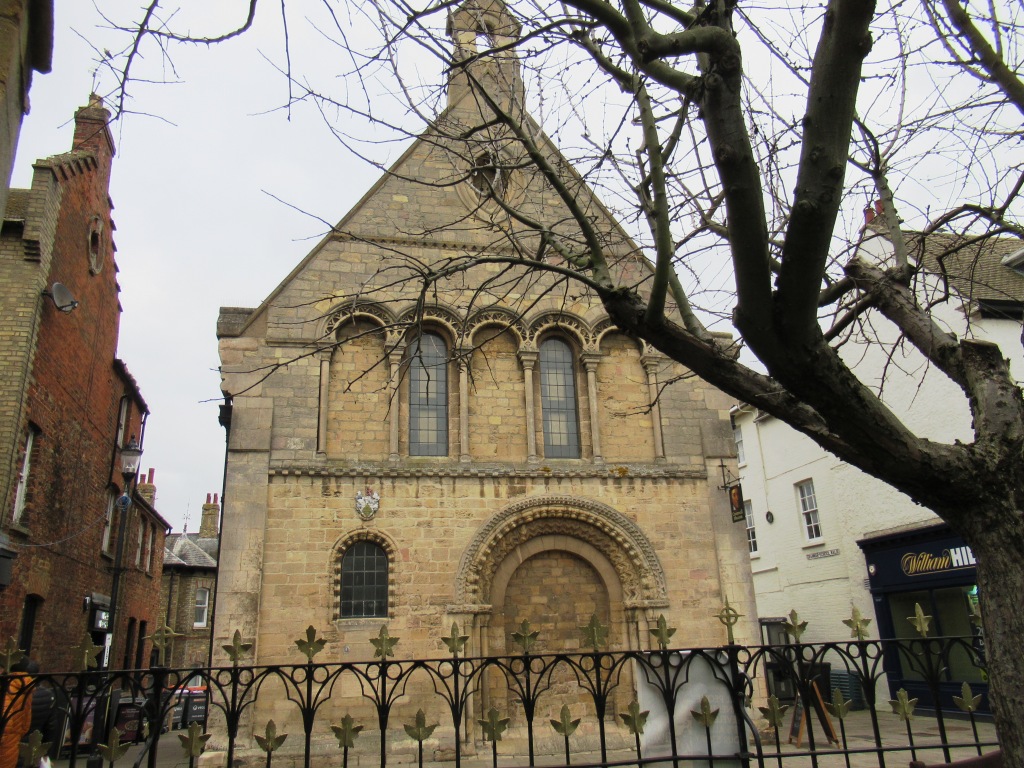
All Saints Church

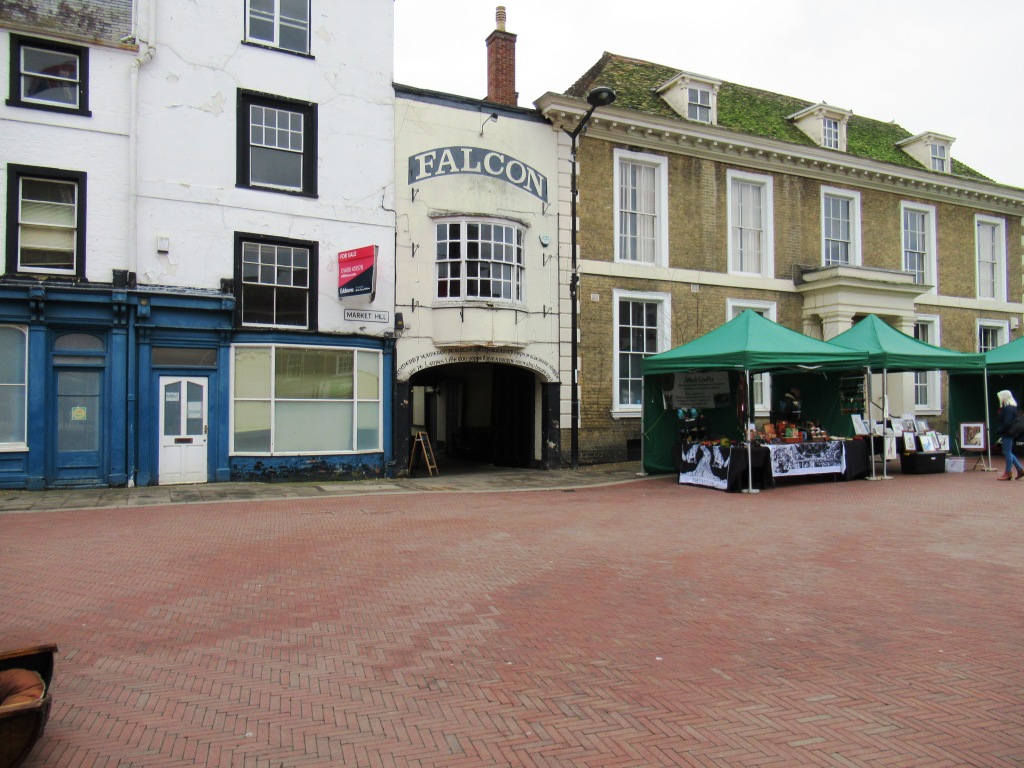
Huntingdon was in Cromwell’s time a much smaller place but then as now The Market Square is flanked on one side by All Saints Church; to the right of the church facing it from across the High Street is what was the Old Grammar School, now the Cromwell Museum. The building itself was rebuilt in the nineteenth century but where it stands is where Cromwell was educated. Opposite the museum is the Falcon Inn, the headquarters of the Parliamentary forces. Standing to the left of the Falcon and directly opposite All Saints Church is the Town Hall, in Cromwell’s time an earlier building stood on the same site.

The Old Grammar School now The Cromwell Museum
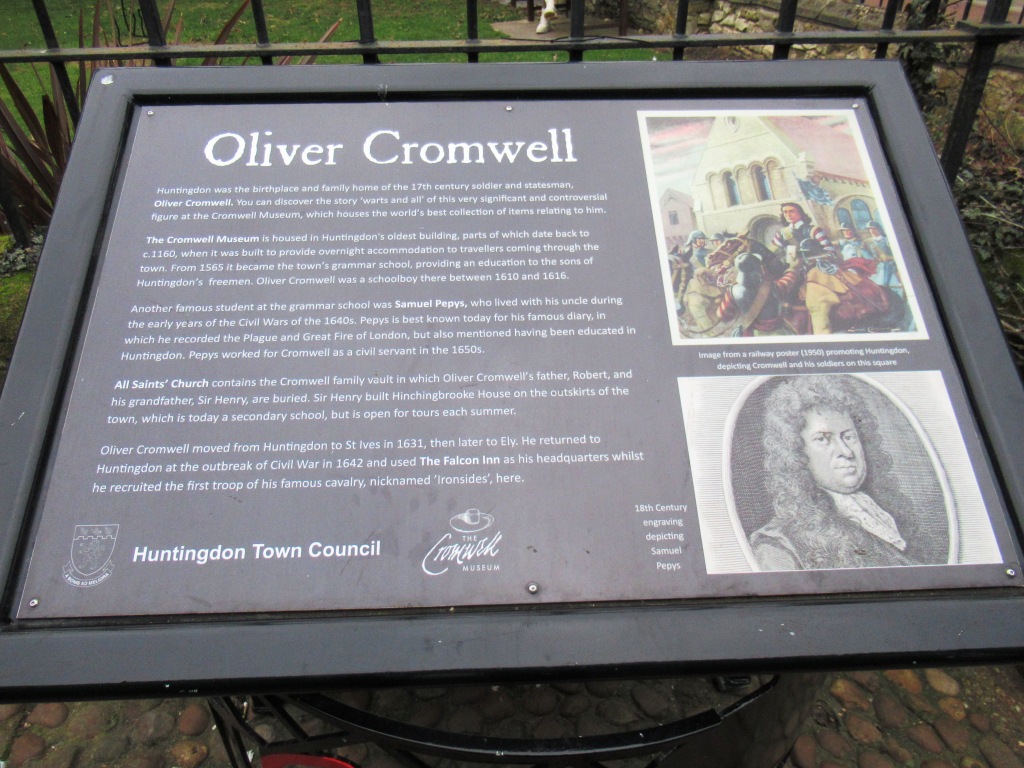
One of the signs

Such was the town’s antipathy to its favourite son that it dithered and delayed about erecting a statue of statue of the man, instead Cromwell’s statue was accepted by St Ives where it still stands.

Over the years various centenary celebrations of Cromwell were shunned by Huntingdon’s town council despite their popularity with the townsfolk and visitors but things have changed.

The Falcon
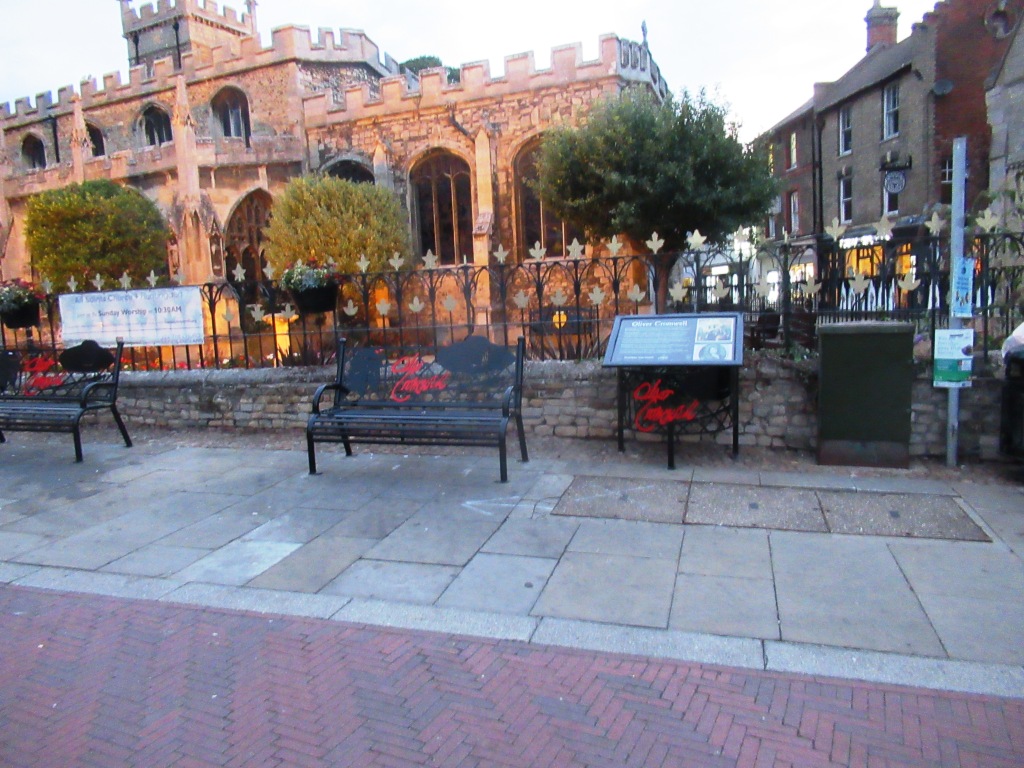
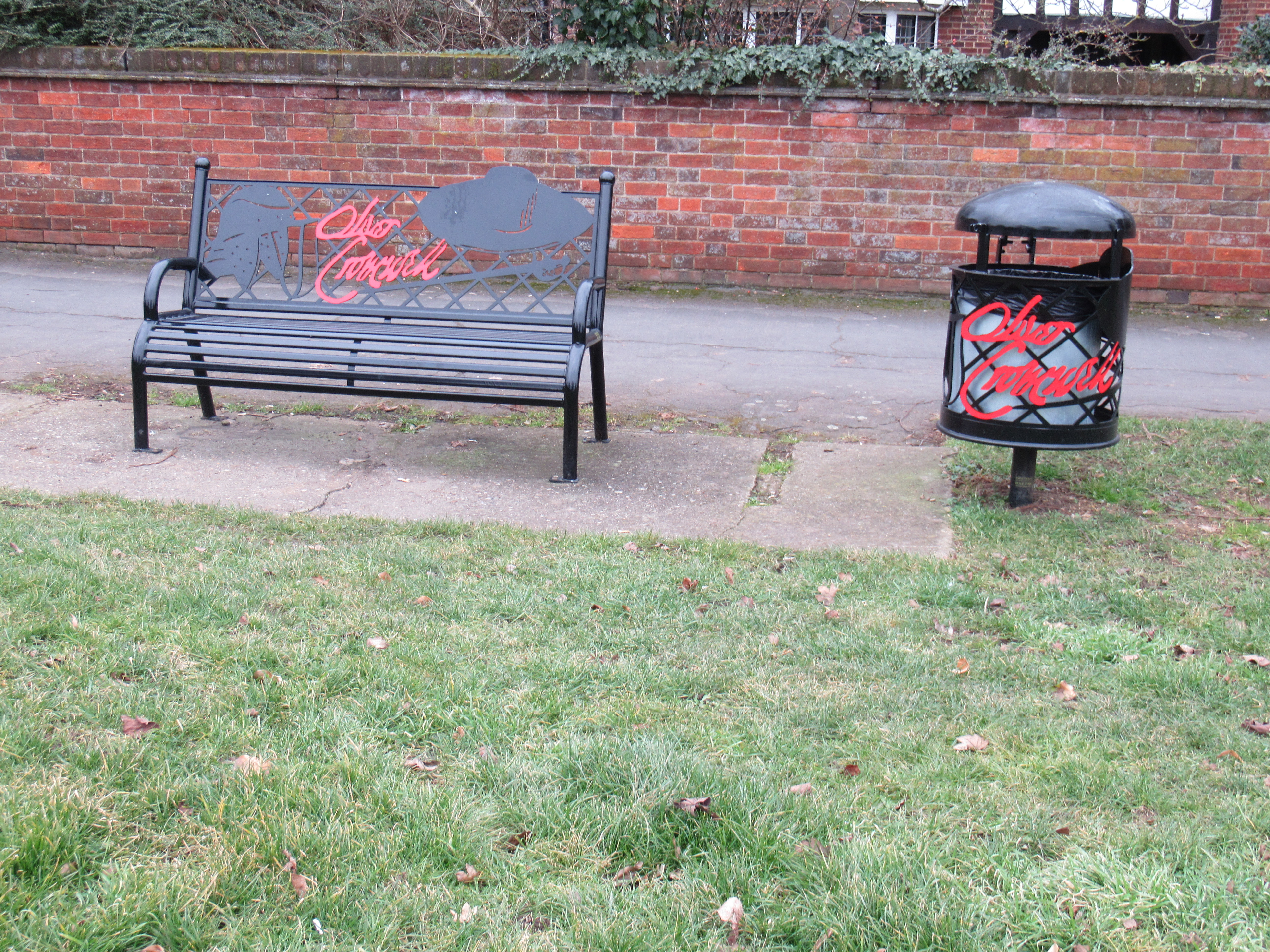
Bench and litter bin

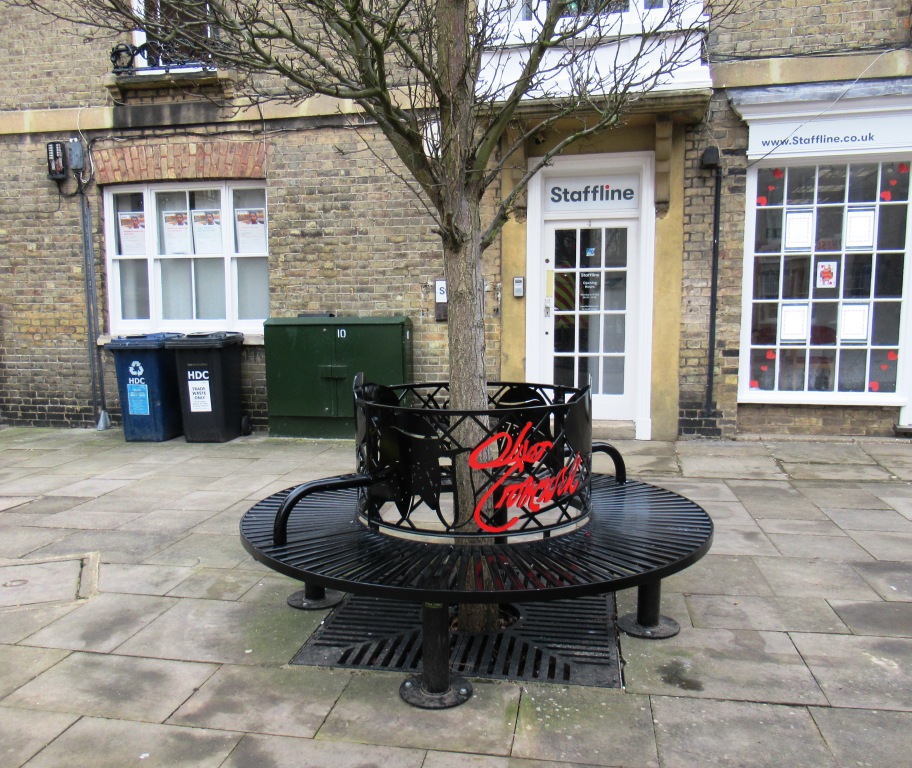
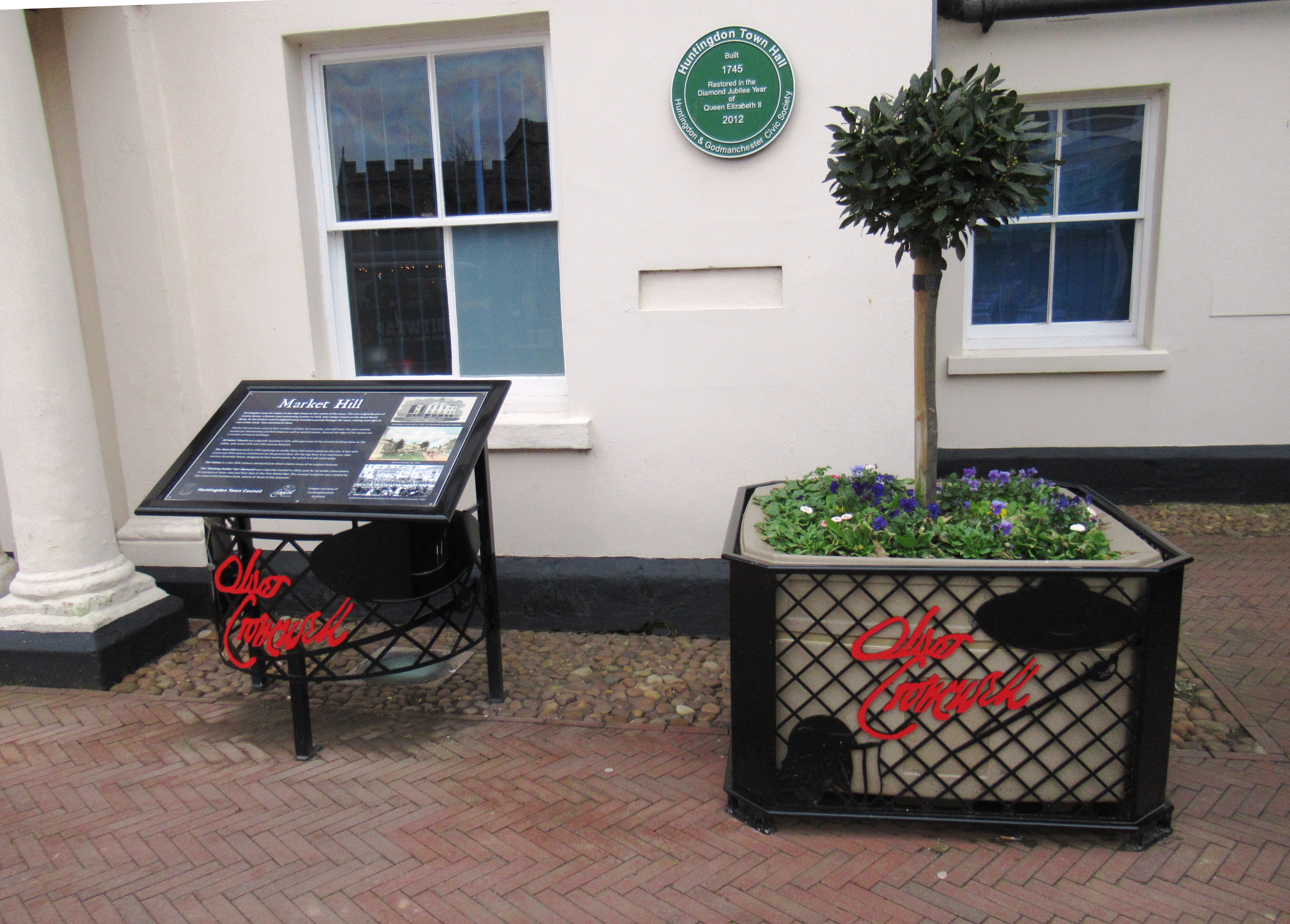
Street furniture bearing a motif of his hat, a Roundhead helmet and his signature together with commemorative information signs are in place within the market place and the surrounding streets.

Tree seat
Outside the Town Hall

Oliver, as far as Huntingdon is concerned, it seems, has come in from the cold, at last.

And What Do You Do? Written by Norman Baker, a review

And What Do You Do? by Norman Baker

I have been for as long as I can remember unconvinced about the value of the British monarchy, for me the institution had about it a great negativity. Why is the best choice for part of our government; the head of state, an accident of birth?

My view of the monarchy was and still is that it is a thoroughly rotten institution, I had however reserved judgement on the individuals that comprise the sprawling costly entity that is the royal family. They seemed to be more like a group of soap opera celebrities and as time has gone on with their seemingly petty squabbles, (the ones I am aware of that is,) making headline news, more so. As I paid little heed to the individuals concerned most of the mindless tittle tattle has passed me by.

 Norman Baker forensically destroys not only the institution itself but the reputations of much of the large and sprawling monarchy. He highlights tax dodging, a scandalous waste of taxpayer funds, dishonesty and hypocrisy. The idea that a part of our government can hide its activities behind a wall of secrecy, denied to other branches of the government is in itself a scandal. The Royal Family’s connections with Hitler and the far right during the thirties is something we ought to know more about, a full disclosure would be useful.

The only Royal to come out unscathed from Normal Lamb’s book is Princess Anne, although the late Queen’s reputation hasn’t suffered too badly.

However, probably one of the most unsettling things in terms of our governance, highlighted by Baker, is the Royal Consent. We are led to believe that our constitutional monarch has no influence over what legislation is debated and the royal assent, a rubber stamping exercise is proof of that. What I was not aware of together with probably most of the British public, is that before any legislation is able to be debated, it first has to receive Royal Consent. This isn’t a rubber stamping exercise; the monarch has to approve any legislation to be debated.

Consent is and has been withheld, if things included in the proposed legislation are thought to be at odds with the interests of the monarchy. There are times when legislation has been sent back to be changed before it receives royal consent if at all.

This book is well researched and referenced. It is one I recommend everyone to read whether Republican or Monarchist.

Adventures of Peter Kim, Spring, by Susan Alexander, a review.

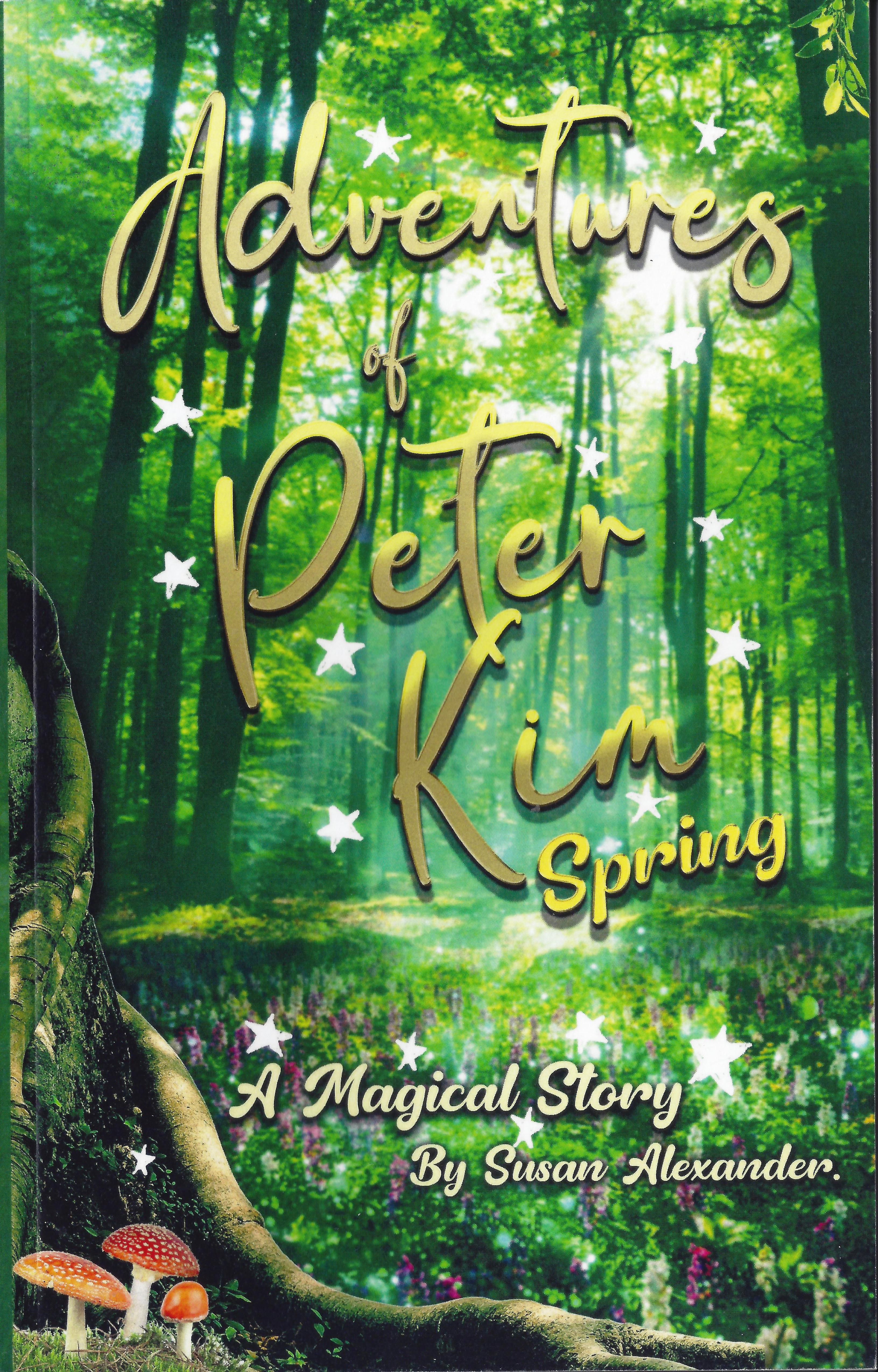
Adventures of Peter Kim Spring

I haven’t read many children’s books in the last twenty years or so, what was a near nightly experience for me when my children were small has long past. Often or not my children would be asleep before I finished reading the chapter or story, sometimes my children would have to wake me to finish reading to them.

Peter Kim is a shy elf living with his parents in their toadstool home in Glebe Wood; we follow Peter’s adventures as he explores the wood that is his home, meeting interesting characters and the friends he makes. These friends include fairies Bella and Flossie, Harry the Hedgehog and a number of other woodland creatures.

The pictures that accompany the text are beautifully drawn by a number of different artists including the author.

Children’s stories should entertain and ideally, subtly educate in the process, this book does this, it is well written, informative and entertaining, and the chapters are the right length for bedtime reading.

This is the first book in a planned series of seasonal adventures for Peter Kim with Summer, Autumn and Winter to come. These are treats to look forward to.

Available on Amazon

Who’s who in Grunty Fen by Christopher South, a review

Who’s Who in Grunty Fen by Christopher South

I had enjoyed the Guide to Grunty Fen also by Christopher South and thought more of the same would make a useful tonic for me. I was delighted to find a copy in Huntingdon’s wonderful Niche Comics and Books.

This who’s who is a definitive guide to the notable people that have made this overlooked but remarkable area of the Cambridgeshire fens what it is today. The biographies of these inhabitants and former inhabitants are informative, making for fascinating reading. It describes the sheer diversity of talent that has and still continues to occupy this close knit community.

Amongst others we learn of Ron Flash Gordon postman and Pyloneer, Daisy Dockeridge a notable Pharmacist, any number of remarkable clergymen, among them Emmanuel Partington Vosper-Jones. Vosper-Jones, installed a gingerbread house (originally a pantomime stage prop) as a confessional later following a nervous breakdown he left the clergy to become a tobacconist.

Other notables include, inventors, philosophers, parachute knitters, educationalists and an early  equal rights activist Queenie Marsden

Every page is full of interesting facts that shed a light on the lives of those residing in this under discovered corner of Cambridgeshire. I am sure it won’t be long before the casual weekend tourist, anxious to see where Dennis lived and to learn more of this remarkable community,becomes inspired to buy the corrugated iron and reclaimed building materials needed to build their very own shed. Many of them will consider employing the famous Grunty Fen Architect Niven Parr to help with the design and construction.

For those seeking a simpler more sustainable but in many ways an unusual form of life Grunty Fen seems to have a lot to offer.

With an easy bicycle commute to Ely and access to the rail network those tired of city life could do worse than move to Grunty Fen

A Gift Called Hope by Eva Jordan a review.

Jill who is estranged from her husband, has moved to a seaside town to run a mobile, beachside, vegetarian, snack bar.

She is caring for her young grandson, Jack but grieving for her son, Davey, Jack’s father. As Christmas nears; the anniversary of her son’s death, Jill struggles to cope with her conflicting emotions, trying to give Jack the best possible Christmas she can while dealing with the still rawness of her grief.

I am certain this story will stay with me for a very long time. It moved me in a way that surprised me. It is beautifully written, the characters are believable and well-drawn. The end is satisfying, living up to the title

The only other book that has affected me in the same way as A Gift Called Hope; is “The Catcher in the Rye” by J D Salinger.

That I remember so much of The Catcher in the Rye after reading it just once, fifty years ago, speaks volumes.

Like Catcher in the Rye, this story is about loss and the grief that accompanies the loss of a loved one.

Reaching an accommodation with loss is a bumpy road; this book describes that journey with tenderness and humanity.

It is a truly remarkable book.

An Unusual Job For A Woman

Three Sheets to The Wind is the latest collection of stories and poems from the renowned u3a writing group Whittlesey Wordsmiths of which I am immensely proud to be a member

Three Sheets to the Wind by Whittlesey Wordsmiths

I promised to put a longer version of my story that featured on Marsha Ingrao’s blog after the book, Three Sheets to the Wind was published An Unusual Job for a Woman is one of the stories in this collection.

Here is the full version of the story that appeared earlier as “Not a Proper Job.”

An Unusual Job for a Woman.

Philip Cumberland

The guided bus was an unusual getaway vehicle, but it had served her well in the past.

“It’s their vanity that makes them vulnerable,” she thought.

She had been glad to get out of her waitress uniform and into something less conspicuous. What politician full of their own importance could refuse an honorary doctorate from one of the world’s leading universities?

“More wine Mr Ambulant? Yes, the glass is a bit dirty. I will fetch you a clean one. It was the Chardonnay, wasn’t it?”

Fortunately, she was in the kitchen when he collapsed, nowhere near him. When they all rushed to see what was happening, she was in the ladies, changing into jeans and a tee shirt. Then nipping out through the Masters’ Garden… a bit naughty really, but not as naughty as poisoning someone.

Thank goodness for the tourists. It was easy to get swallowed up by the crowds. The bus was waiting in its bay when she arrived at Drummer Street. Some of those academics can be a bit handy when a girl is carrying a tray of drinks while wearing a fairly short skirt; the women were the worst. She wondered if she had been missed yet. The Park and Ride is very useful; you can park for free at St Ives, get into the middle of Cambridge then back to pick your car up. The luggage lockers are useful too. The Jiffy bag was waiting for her; Sheila would count its contents later. No doubt the next job was in there too.

The policemen standing waiting by her car were a surprise. She noticed them as she closed the locker door – always sensible to park near the bus shelter. Fortunately, the bus was still waiting to move off. She climbed back on, flashed her day rider ticket at the driver, and then found a seat next to the emergency exit.

As she left the bus at Huntingdon, she thought it was always good to have a plan B. The elderly Renault Clio was inconspicuous and could be left anywhere without arousing suspicion if there weren’t yellow lines or parking restrictions.

She drove to her cottage in Wistow. It wasn’t her main address, but somewhere out of the way when life got complicated. After opening the Chardonnay with a wry smile on her face and pouring herself a glass she reached for the Jiffy bag. Inside were a few hundred in twenties and tens for expenses. The lottery ticket was there too.

The photograph of her next target was a bit of a surprise. He was nasty enough but well connected; he must have really upset someone, Sheila thought. Then she remembered a story – well, a rumour of a story circulating – that would explain it.No matter how big a bully you are, there is always someone bigger and nastier.

Right, London on Monday to claim her lottery prize and perhaps a call to Grandmother.

The Sunday papers headlined Ambulant’s sudden death; a heart attack was the suspected cause. Hopefully, the college had secured his endowment before his demise.

Sunday passed quietly, and it was the eleven-thirty train from Huntingdon that delivered Sheila to Kings Cross. The newsagent’s shop was small, scruffy and inconspicuous, located on an anonymous side street.

The newsagent, certainly the man behind the counter, was elderly, bald and stooped. His nicotine-stained fingers suggested that a few years ago, a cigarette would have been permanently between his lips. He took Sheila’s blank lottery ticket and took it into a back room. Returning after a few minutes he inserted it into the lottery machine. The tune from the machine announced it was a winner.

“Congratulations, young lady; five numbers and the bonus ball, £180,000 and 3p. You will have to contact Camelot; keep your ticket safe.”

Sheila called Camelot’s special number using her mobile phone, identified herself, scanned the QR code and arranged the transfer of the winnings to her bank in Switzerland. She had left the newsagents with a copy of the Times and then found a call box.

The call was answered on the third ring by a quavery elderly male voice.

“Hello, who is it?”

“Mr Wolf?”

“Yes.”The voice immediately changed to something younger, no longer quavery.

“It’s Little Red Riding Hood. Can I speak to Grandmother please?”

“Grandmother’s familiar voice was calm as usual.”

“Hello, my dear. What can I do for you?”

“I am a little concerned about my next job.”

“He has got a history of heart problems. You are an attractive young lady and very clever.”

“Two policemen were waiting by my car at St Ives after Mr Ambulant died.”

“You should have a list of your next target’s engagements in your pack. You need to be very careful about how you manage things.”

“I am a little concerned about how quickly the police were onto my car.”

“The payment for the next job will be a lot higher, a million from the Euromillions draw. There is less interest in those winners.”

“Who else knows about me and the next target?”

“Just Mr Wolf, the Woodcutter and myself.”

“What about the Witch?”

“She’s dead.”

“Okay then, I will do it, but won’t notify you first. Once I have done the job I will phone you.”

“That’s absolutely fine, my dear. We know you well enough by now.”

Sheila ended her call and went shopping, mainly in charity shops, although she didn’t need new clothes, but the right clothes for the job.

A slightly plump middle-aged woman booked a room at a small hotel near Holborn underground station. She had booked for a week in the name of Mrs June Gordon and produced her driving licence with an address in Stamford as proof of identification. Her clothes were of good quality but not fashionable: sensible suits and skirts.

Sheila’s target was a man of habit. He jogged in Green Park most mornings, usually at seven. His list of engagements included lunch with the prime minister, theatre visits, and talks with dignitaries.

Sir John Grantly-Crouch prided himself on his physical fitness, and his run in Green Park, close to his house, was part of his daily routine. It was the second day in a row that the middle-aged lady wobbled by on a Santander hire bicycle, wishing him good morning. A bit unusual for a woman to cycle in a tweed skirt, he thought, but that was all. He jogged on, turned a corner, and saw that she appeared to have fallen off her bike. He extended his hand and helped her up, holding her gloved hand to do so.

She thanked him profusely, remounted her cycle and rode off.

Sir John Grantly-Crouch never finished his run. A few minutes later, he suffered a heart attack, collapsed and died.

The middle-aged lady parked the hired cycle at the docking station near the toilets and Green Park underground station. She peeled off her gloves and put them on the ground beside her. After taking her capacious leather handbag from the bicycle’s front basket, she opened it and put on a pair of surgical rubber gloves before opening a plastic bin liner. The leather gloves were placed in the bag; a pack of antibacterial wipes was used to clean the handlebars, saddle and frame. She didn’t want innocent victims.

The used wipes and surgical gloves went into the bin bag too. The partially filled bin bag was sealed, placed inside another, and both went back into the capacious handbag.

Sheila found a call box and spoke to Grandmother.

“Sir John Grantly-Crouch collapsed and died in Green Park this morning whilst out for his run. The cause of death will be a heart attack.”

“Thank you, Little Red Riding Hood. Your lottery ticket will be sent to you.”

“I have already bought it. Here is the number; have you got a pen to hand?”Sheila read the number from her ticket.

“That’s not the way it works, Little Red Riding Hood.”

“It is this time. I have plenty of the substance left, Grandmother. Or should I say, Joan? I know where you all live, so no monkey business.”

“There will be none, I assure you.”

The tube was busy with the morning commute. Kings Cross was crowded and they weren’t looking for a middle-aged lady or the older woman who left the train at St Neots.

Three Sheets to the Wind is available to buy on Amazon

Missing, Presumed by Susie Steiner a review.

Missing Presumed by Susie Steiner

I can’t think of a single occasion when I have visited a book event at Huntingdon’s Commemoration Hall and left empty handed.

The Book Bank and similar book related events are hosted by Niche Comics and Books of Huntingdon, it was at a recent event that I came away with “Missing, Presumed”, written by Susie Steiner.

Angela Mackey, of said Niche Comics told me that the book was set in Huntingdon.

I bore my purchase home and have now finally got around to reading it.

I think knowing the area identifying the streets and places adds a little more to the story, it does for me and I have had similar comments from those readers familiar with Cambridge about my book.

Susie Steiner’s story is of a young woman, whose disappearance, is discovered by her boyfriend. An open door a trail of blood, her clothing and mobile phone left behind in their house, prompts fears for her safety. DS Mannon Bradshaw, DI Harriet Harper and their team struggle to make headway in the search for famous surgeon Sir. Ian Hinds’, daughter Edith.

This is a fascinating story, the plot moves in different directions as new threads are woven into its fabric.

All the time the team are coping with their own problems, within their relationships and families.

 A tale of secrets, fragile lives, deception and families under stress, the end is unexpected and satisfying.

Susie Steiner

I learned from Angela that Susie Steiner was no longer with us having died of brain cancer in July 2022 at the tragically young age of 51.

Thin Air by Ann Cleeves, a review.

Thin Air written by Ann Cleeves

Thin Air is set in The Shetland Isles the story centres on a wedding and a legend of the ghost of a young girl lost to the sea in 1930. When one of the wedding guests, a bridesmaid is reported missing Jimmy Perez and Sandy Wilson are sent to help find her. The discovery of the missing woman’s body in a loch turns a hunt for a missing woman into a murder investigation. Willow Reeves joins Perez and Wilson to lead the investigation.

I read a lot of crime fiction as well as writing some. Thin Air is the first of Ann Cleeves’ Shetland series I have read; I found it a difficult read. The story seemed to take a good while to get into its stride. I had the impression the author started the book stopped then took up the story later fitting bits in as she went. It is an interesting story set in the far North of the British Isles, a part I would like to visit. Although the pictures of the weather, terrain and communities are well drawn there seems to be a tiredness in the telling of the story. The plot is interesting and convoluted, and the characters are believable but it took me a long while to read it.

I don’t know if all the Shetland stories are written in the same way a steady gathering of threads or if this one is less lively than some of the others, I will have to see. Ann Cleeves writes well but I preferred other Ann Cleeves books I have read.

plasticdollheads

Dr Gemma Ahearne

BRYN DONOVAN

TELL YOUR STORIES, LOVE YOUR LIFE

Kyle Brennan

The Truth for Kyle

Gabrielle Ray

'Gabrielle Ray said, 'I am always dancing; I love it! When I don't dance, I sing. What else is there to do?'

JR Harland Poetry

This is a collection of some poems I've written.

Whittlesey Street Pride

Creating pride in Whittlesey

Kim's Musings

Authors Supporting Authors

Story Empire

Exploring the World of Writing

Gloria McBreen

May you be at the gates of heaven an hour before the devil knows you are dead.

Love13Reading

FOR READERS AND ASPIRING WRITERS

Jill's Book Cafe

Bookish news, views and 'Five on Friday'

Victoria Weisfeld

Stories about the perils of life and the mysteries of travel

Brooke Nelson

Author of New Adult Fantasy and Thriller novels

Huntingdonshire History Festival

Discovering Huntingdonshire's Local History

Grumpy old fart!!!

"If you talk to God you're religious. If God talks to you, you're psychotic."

Later life

Enjoying Twilight Years

Kent Wayne

Epic fantasy & military sci-fi author.

Seclusion 101 with AnneMarie

Life After Retirement

CabbieBlog

Taxi Talk Without Tipping

Gabriele Romano

Less Noise. More Meaning

My Life With GraciePress

A Backyard Garden Is A Perfect Place For Chickens

Words and Fictions

Jessica Norrie on writing, books and language - in her own words.

Damyanti Biswas

For lovers of reading, crime writing, crime fiction

Tessa’s poems

Poetry from a Septuagenarian

Linda's Book Bag

Loving books and reading

John Ager's Home on the Web!

reflecting my eclectic (and sometimes erratic) life

Stuart Orme

Historian, Folklorist, Writer, Re-enactor, Museum Professional. Follow me on Twitter: @stuartorme

thedrabble.wordpress.com/

Shortness of Breadth

Best Dog Training Tips & Tricks

Dog Training Guidance

Fenlandphil's Blog

A blog from the low country

So You think you've got problems?

The advice columns of two eccentric agony aunts who guide the bewildered of Britain through their personal problems,

Marigolds and Gin

Because even in chaos, there’s always gin and a good story …

Seriousgardener's Blog

Just another WordPress.com weblog

The Incomplete Verse

Here I share words and illustrations I discover on the journey within the crevices of my mind and the outside world. 💚

Dread Poets Sobriety

Irreverence's Glittering New Low!

MovieBabble

Ramblings of the Cinema

Mistakes Writers Make ...

... and how to put them right! Advice and opportunities for new, aspiring and upcoming journalists and writers of non-fiction