After reading and enjoying the first three books in the Elderwick Mysteries series, I have become familiar with the main characters.
When Constance’s van breaks down, Dr Laurel Nightingale, Albert and Maggie are only too willing to help move Constance’s Food from the Plump Tart Bakery to Elderwick Hall for a function. As they near the hall, the weather takes a turn for the worse with a storm breaking while the food is being moved into the hall.
The failure of most of the catering staff and the supplies they were due to bring, to turn up, prompts Constance to offer her help with the catering. As the guests arrive, the weather worsens, electrical power is lost, and the telephones and internet stop working. The deteriorating weather and an unexplained death prompt the Elderwick trio to try and find answers; later, it is not only the weather that traps the guests, staff and the trio in the hall. Laurel is not only trying to unravel the cause of the mysterious events at the hall but is coping with a more personal problem.
I enjoyed the book immensely; it was a quick read for me. More, please, Ms Gray.
Blackheath, during the approach to Christmas, is blighted by the murder of Caspar Campbell, a friend of the Morrigan household.
The Morrigan family home, Greenway, is due to host its first family Christmas for many years. The celebrations include the return to the family home of May Corrigan’s identical twin sister, Cass, on the insistence of Minty. Minty is May and Cass’s somewhat unconventional ninety-six-year-old mother.
Fletcher, May’s friend, is the other member of the household, apart from May’s mini Dachshunds, Bess and George. Fletcher is writing, directing and producing the village pantomime, Peter Pan.
The star of the show, a fading, predatory actor, Clarke Woolf, is playing Widow Twankey and causing Fletcher problems trying to manage Woolf’s attempted philandering.
The run-up to Christmas brings the sharing of family secrets, while May is trying to navigate her way through an acrimonious divorce.
This is a great book. I read it very quickly, putting aside things I shouldn’t have put aside to find out how the story ends. It certainly turns out to be a most curious Christmas.
I had been meaning to read some of Gina Kirkham’s work for some time, so when the opportunity presented itself to me, I grabbed it eagerly. This was to be my first acquaintance with the ladies of the Winterbottom Women’s Institute. The opportunity to become extras in an upcoming film was an opportunity too good to miss for these women. The chance to meet an attractive male actor, Flynn Phoenix and his co-star, Dana Simon, cast in the leading roles, was another attraction.
The filming is to take place in Black Abbey Towers, a building with a dark history, currently owned by the church and occupied by the Archdeacon Clement Gregory of Fallow Falls and his wife, Fiona. The Archdeacon’s wife is none too keen on the intrusion of the film-makers and their entourage. However, her husband is keen to obtain the money the film-makers will bring into the church’s coffers.
Four of the ladies of Winterbottom W.I., Ethel, Hilda, Kittie and Millie are taken on as extras. The ladies, ‘The four Wrinkled Dears’, are joined by another lady, Olive, recruited from the cast of extras, and they are soon sleuthing. At first, trying to locate a missing Housekeeper and then a murderer. With Prunella Barnes, the Winterbottom WI’s president, in the late stages of pregnancy. It was down to Bree Richards, the W.I.’s vice president, to rein in the sleuthing ladies.
The story is overshadowed by Black Abbey Towers’ dark history, and the house itself is a labyrinth of secret passages, holding even darker secrets of its own. The film crew’s very mature female stunt coordinator, Dorothy May (Dottie) Barker, plays a significant part in the action, a lady with remarkable talents.
I enjoyed this book; it was a great read and I will seek out more of Gina’s work.
It is a little while since I have read one of Tom Sharpe’s books, several years in fact, Porterhouse Blue had been serialised in the television some years ago, after watching it, I had always intended to read the book.
Porterhouse is a fictional college within Cambridge University. The city of Cambridge is largely unchanged from the late 1960s when the book was written and set within. Many of the streets that Sharpe’s characters inhabited are much as they are described in the book; I suppose this gives Porterhouse Blue a degree of familiarity to those of us who visit the city on a regular basis.
Porterhouse is a poor relation compared to its wealthier fellow colleges; Skullion its head porter manages various dubious schemes to help the finances and maintain the college in the traditional way its fellows and he regard as essential. However, it is the arrival of a new master, Sir Godber Evans, an ex government cabinet minister and former Porterhouse student, which starts a battle of wills. His intention of reforming the college and bringing it into the twentieth century, provokes a battle between the two opposing camps. The fellows and Skullion are strongly united against Godber’s planned reforms which included: female students, more concentration on academic achievement and less attention to sporting prowess. However, it is the master’s proposed installation of a contraceptive machine in the student toilets that proves the catalyst for even greater conflict.
I really enjoyed Porterhouse Blue and was laughing out loud at times, a really good read.
Carol was a guest speaker at our local u3a meeting; she had been part of the team making a popular local radio program about a character living in the fens, Dennis of Grunty Fen. Carol was not only the sound recorder for the programme but she edits and illustrates books written about Dennis’s Grunty Fen. We met at an Indie Author Book Fair in Huntingdon where I bought another of the Grunty Fen books, written by Christopher South, the third in the series. Carol illustrates and edits, these books.
But enough about Huntingdon, when Carol gave her brilliant talk at our U3a meeting about Dennis of Grunty Fen, she brought books with her. In addition to the Grunty Fen books was a book of her own; Gingerbread Children. I bought my copy there and then.
. Gingerbread Children, is apart from the architecture nothing like that of Hansel and Gretel, (What about the children?), well children are involved a boy and a girl. There are witches too, not just one but lots of them and cats, together with other ‘Familiars’ but mostly cats. The story starts with the failing health of the Matriarch of The University of Nature, (The Union), with her failing health comes the question of who will succeed her. The question of succession, the building of an edible house, a gymnasium for dogs which is managed by a cat, are among just some of the remarkable events within this fantastic book. And of course, there is magic, gingerbread and lots of cake.
Gingerbread Children is one of the most unusual books, I have read but it is without doubt one of the best. Thank you Carol
Gingerbread Children is available to buy from bookshops or on Amazon.
The story is set in Inverness and the surrounding rural area of the Scottish Highlands. An escalating series of fatal road accidents on straight sections of the A9 road are beginning to interest Detective Inspector Alec Mc Kay, of Inverness’s Major Investigation Team, (MIT). He starts to think these accidents are being deliberately caused, to kill or injure the occupants of the targeted vehicles. However, there doesn’t seem to any common factor regarding the victims or connection linking them to each other. Interwoven with this investigation is a press campaign casting doubt on a twenty year old murder conviction. The murder was investigated by Detective Superintendent Rory Grant the late husband of the current head of the MIT, DCI Helena Grant. Helena Grant, is concerned that the campaign will defame the reputation of her late husband. Investigating the murder story and employed to write ghost articles for rabble rousing campaigner Iain Pennycook; is veteran free lance reporter, Craig Fairlie. The outcome is unpredictable in every respect.
This crime fiction story is fast-paced, engaging and well-told; I raced through it and will seek out other books by Mr Walters. This is an excellent book.
Along with Cathy Cade, a talented fellow U3a Whittlesey Wordsmith, I have had some of my short stories published on Marsha’s Blog.
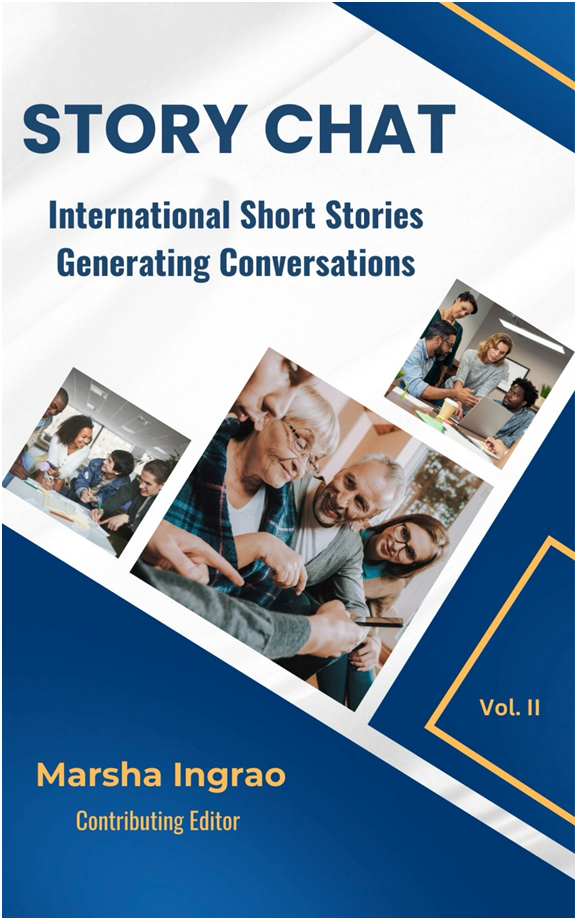
Story Chat Volume 2 is the second collection of short stories previously published on Martha’s blog. Together with each story are comments from the blogs’ followers and readers, this is the chat part.
The book is available as a paperback or on Kindle. Click on the links if you would like to buy a copy.
Story Chat started as a unique online blogging program for authors and readers. This second book includes a diverse set of original short stories by authors from almost every continent in the world. While most of the stories would fall into the category of drama at all ages from children to older adults, this collection includes sci-fi, comedy, and two non-fiction articles about the writing process. All of the selections are family-friendly, even though the topics are aimed at adult readers.
In this book, you will enjoy realistic fiction, surprise, and open endings. Halloween vampire horror stories, it might make you laugh and wonder how you could. Traveling to an alternate universe – that happens to be familiar to some of you will keep you entertained. You might find yourself stepping into another universe or two that are so bizarre you don’t know what to do with them.
Characters will bring you to tears as they bravely reach for love or face tragedy you hope no one will have to face. You will laugh at the older couple discussing booking the adventure of a nudist cruise. You will cheer for a mother and her autistic child as they surmount obstacles. One story will remind you of Toy Story or the Velveteen Rabbit. Another is an epic children’s poem with illustrations made of fondant by the talented author and her son.
This book is so much fun. Yet, it can be educational, especially for writers who constantly work to improve their craft. Each story has discussion questions that you can use if you belong to a book club or writing group.
All of us, known as Story Chatters, hope this book will make an impact on your lives.
Other Factoids about Volume II
Twenty published and previously unpublished authors from eight countries on six continents submitted short stories. Most of these stories were lighthearted family or youth drama, several comedies, coming of age, and science fiction. The stories covered relevant topics like planning vacations, managing estate assets, walking in the fog, trick or treating, solving mysteries, robbing robbers, creative solutions to autism, double-dealing, life-long companions, recycling garbage in space, and many more topics.. Most of the stories have surprise endings. Some have open endings, leaving the reader to imagine what might happen next.
Each story takes about three to five minutes to read, making it the perfect book for readers who need something to read in short spurts. The twenty-seven stories are pure entertainment, yet each probes a deeper conception to stimulate and delight thoughtful readers.
New this year are three posts on writing tips, and two poems.
Comments about Story Chat Volume II:
International Short Stories Generating Conversations:
“That sounds like a great initiative, a very interesting book. I love short stories” -Thomas
“The balance is perfect. There has been a good mixture of male and female writers from all over the world.
I have joined Cambridge University Library’s Really Popular Book Club, The Unlikely Pilgrimage of Harold Fry, was September’s chosen book. Unfortunately, I won’t be able to attend the Zoom meeting to discuss it. I have an unexpected journey to undertake at the same time the meeting is due to happen.
The story starts when Harold Fry receives a letter sent on behalf of a former work colleague, Queenie Hennessy. Harold hasn’t heard from Queenie in twenty years, the letter is from a hospice in Berwick on Tweed. The letter written on Queenie’s behalf, informs Harold that Queenie is suffering from terminal cancer and has very little time left. Harold writes a reply and sets out to post the letter he hesitates at the post box and then at the next one. He decides instead to walk to Berwick on Tweed to see Queenie in person.
Harold’s journey is a remarkable one, not only for the people he meets on the way some of whom and a dog walk with him but also as an examination of his past, his personality, relationships and regrets. The walk north from Kingsbridge in Devon, without preparation, proper hiking equipment a map or compass, is physically arduous, as Harold discovers. Yachting shoes are not ideally suited for a long hike, in all weathers. It was a companion walking with Harold that coined the title The Unlikely Pilgrimage of Harold Fry
As Harold walks, the back story of his life, his marriage to Maureen, his childhood and his relationship with his son David, is slowly revealed. We are drawn into an emotional journey as Harold reflects on these things. It is as much a journey of self discovery for Harold as a physical journey. For myself as the reader I found it incredibly moving and like all really good books The Unlikely Pilgrimage of Harold Fry, will inhabit my thinking for a long time.
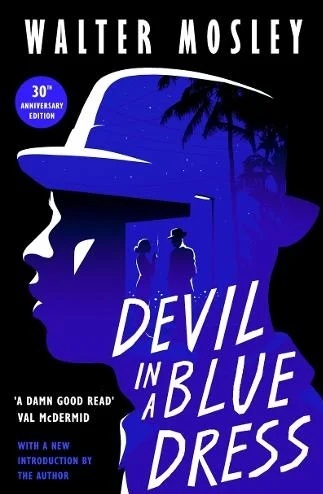
I had read only one other crime novel featuring a black hero, Reginald Hill’s, Blood Sympathy. As far as I can tell Reginald Hill was white. Blood Sympathy is set in Hill’s version of Luton England and was first published in 1985, Devil in a Blue Dress, 1990. Blood Sympathy’s, Joe Six Smith and Devil in a Blue Dress’s, Easy Rawlins have both lost their jobs forcing career changes onto them. Similarities end there.
Walter Mosley is a year younger than me, neither of us, at 72 and 73 years old respectively, were alive in 1948. Mr Mosley no doubt had family to tell him how things were then. From what I am told by friends who have visited the States more recently, the attitudes and prejudices mentioned within Devil in a Blue Dress haven’t changed much and certainly haven’t gone away.
The author has no doubt had his thinking about Los Angeles, at the time of the book coloured by contemporary literature and films made in that period. In terms of American detective crime fiction Raymond Chandler is probably a go-to point of reference, both in time and location. That most of Chandler’s novels have been made into films, with Playback the only exception, reinforces this view.
Devil in a Blue Dress, is written in the first person, that of Ezekiel Rawlins, “Easy” Rawlins, the hero. Recently unemployed, war veteran, Easy is engaged to search for a white woman Daphne Monet, who is known to frequent the coloured jazz clubs and bars of Los Angeles. Easy’s, employer, Dewitt Albright, a white man is introduced to Easy by his bar owner friend and ex boxer, Joppy.
In 1948 as many places were segregated and Albright feels he can’t search for Daphne himself, because of this colour bar existing at the time. Easy knows the places where Daphne might be found, is familiar with the people who frequent them and is of course the right skin colour to visit these places without a problem. Devil in a Blue Dress shares characteristics of US detective fiction of the period but the perspective from someone of black ethnicity is different. The body count is high, the plot is interesting the ending, unpredictable.
I thought Devil in a Blue Dress was an excellent read and I really enjoyed it.
Gonville and Caius College looking from Kings Parade
When I was about eleven or twelve my cousin Richard and I ventured into Cambridge on our own. The purpose of this first excursion was to buy a Meccano clockwork motor,. We boarded the double decker 151 bus at Huntingdon and set forth for a day of adventure. On that first trip we left the bus at Drummer Street before walking first to the toyshop in Mill Road. I can remember us returning via the fish and chip shop in King Street before the bus station in Drummer Street. I can’t remember anything else about the day, other that it was an enjoyable experience, it was after all, sixty years ago.
Over the next few years we would repeat the visits to this nearby city, as we grew older, it would be evening trips to the cinema or to perhaps a dance. Then we met the girls we married and the trips stopped.
The Great Gate at Gonville and Caius College Cambridge
Erlier in the month on a Friday Richard and I visited Cambridge together again, catching the Guided bus from St Ives Park and Ride.After walking from the bus station it was into Wetherspoons in Andrew Street for a quick bite to eat and a cuppa. I was writing a short piece about Gonville and Caius College and wanted some photos, so that was our next port of call. Richard had been a regular visitor to Cambridge when he was working and knows a lot more about the colleges than I do. He worked for a company hiring access platforms so would be lifting stone masons and builders often to roof level to work.
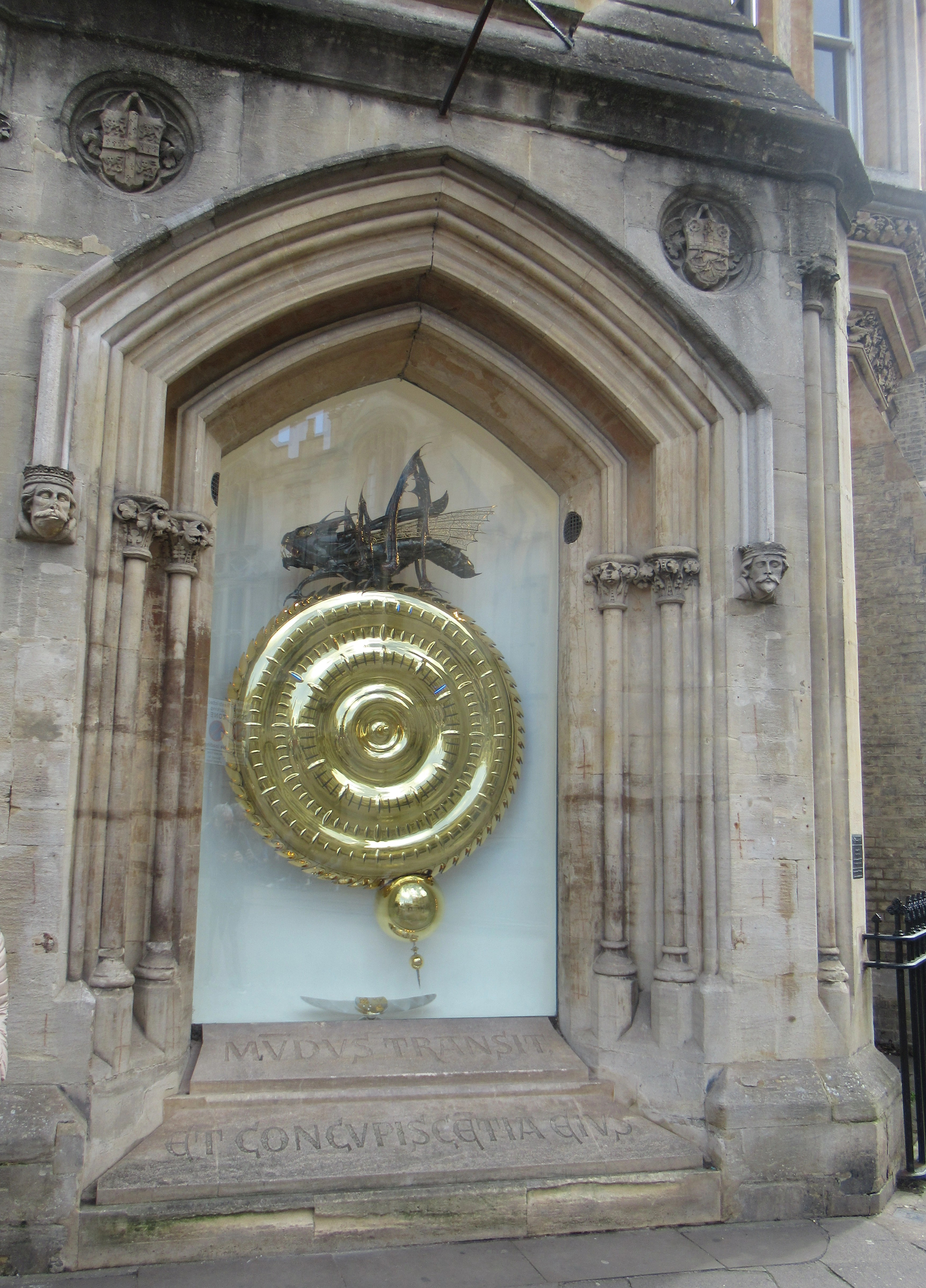
We ambled along Trinity Street then St John’s Street to the junction with Sidney Street at the Round Church. Just past Sidney Sussex College a right turn took us into Green Street and the short walk back to Trinity Street, then along Kings Parade. Since I used a photograph of The Grasshopper Clock on the cover of Killing Time in Cambridge I like to keep an eye on it. We had a good look at the Grasshopper Clock at Corpus Christi College, before making our way towards the Guildhall via Benet Street.
Corpus Christi Grasshopper Clock Cambridge
It is good to see that Rosalind Franklin’s name and a few others have been added to the blue plaque on the wall of the Eagle pub commemorating the discovery of DNA.
The New Blue Plaque at the historic Eagle Pub
The History of the Eagle
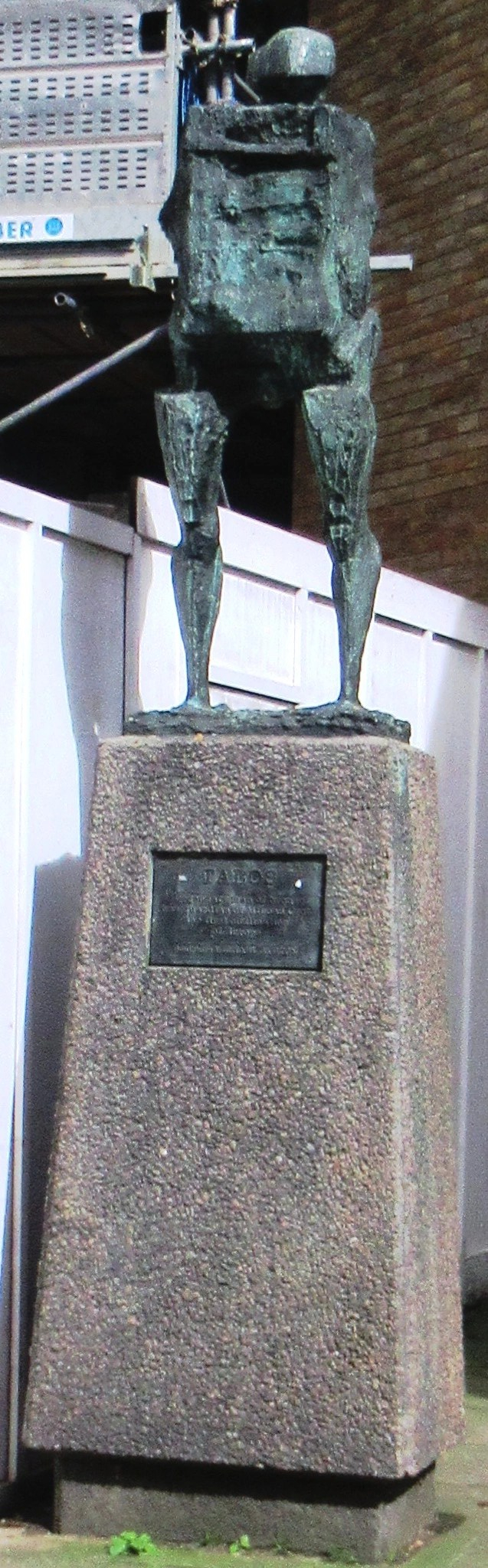
Near the Guildhall, a very curious looking statue took our eye I had noticed it before but had only given it a cursory glance. It was difficult to make out what or who it was of, I found out later after google research that the statue in Guildhall Street was of Talos by Michael Ayton. Talos was a legendary man of bronze, guardian of Minoan Crete.
Statue of Talos Guildhall Street Cambridge.
Our next destination was Norwich Street, where one of our great grandfathers had lived in 1921, it was a fair walk for two old men. On the corner of Norwich Street and Hills Road is the controversial Statue of Prince Philip, as bad as it is thought to be, it is probably slightly more lifelike than the statue of Talos.
The soon to be gone statue of the late Prince Philip
We looked at the House where Great Granddad lived then made our way via Francis Passage and Bateman Street back to Hills Road, the bus back into town saved our legs. After a coffee it was back to Drummer Street and a stroll in Christ’s Pieces, before boarding the bus back to St. Ives.
We had a great day out in Cambridge and a trip we intend to repeat in the future.










 Fenlandphil's Blog