
Photo credit Hinchingbrooke Hospital by Andy Parrett, CC BY-SA 2.0 https://creativecommons.org/licenses/by-sa/2.0, via Wikimedia Commons
I’ve had an interesting week and a half. On the 27th of August, a Wednesday, I was admitted to Hinchingbrooke Hospital for a scheduled hernia repair. It was keyhole surgery, and I was discharged the same day. I spent a reasonable night at home, a little uncomfortable but nothing too worrying. The next morning, I was up early and getting one or two administrative chores out of the way and feeling quite good. However, by the evening, I wasn’t too well and brought up what appeared to be dark blood. My wife and I concluded that, as a tube had been put down my throat to help with breathing during the operation, perhaps it had caused some bleeding.
By Saturday evening, things had become worse, so I contacted the hospital, “No, it isn’t normal, dial 999.” The ambulance could only deliver me to Peterborough. Aware of the possibility of miscommunication between the two hospitals, my brother took me to Hinchingbrooke and delivered me into the welcoming arms of A&E during the early hours of Sunday morning; they were expecting me.
After a while I was wheeled into the same ward I had been admitted to the previous Wednesday. It is always difficult to get answers it seems, I was connected up to drips and given blood transfusions but apart from a doctor telling me it wasn’t a surgical problem and that I would be moved to a medical ward that was about it. The hernia repair gave me no trouble and seems to be a well executed piece of surgery. Eventually I was given an endoscopy and a diagnosis of a Hiatus Hernia. When I was able to talk to a consultant I asked him if what they had found could have accounted for such a large loss of blood, (about one and a half pints or to use the Tony Hancock scale one and a half armfuls). He assured me this was the likely cause.
While lying in bed on my back, I started to examine the ceiling of the ward I was in. Hinchingbrooke Hospital is suffering from the problems of RAAC (dodgy concrete), and they are desperately trying to rebuild it while keeping it open. The ward’s ceiling and presumably the roof above it are now supported by a grid of 203 x 203mm Universal Columns; the minimum weight of this size of column is 47kg per metre (close to a hundred weight per yard). Nearly forty years ago, when I started my metalworking business, the supply price of manufactured structural steelwork was £1000 a tonne; prices haven’t gone down in that time. It wouldn’t surprise me if the cost of the steelwork alone, supporting the roof in that ward, exceeded £20,000, not including all the installation costs. Meanwhile, within half a mile as the crow flies is the original Huntingdon County Hospital building is still there intact and over one hundred years old.
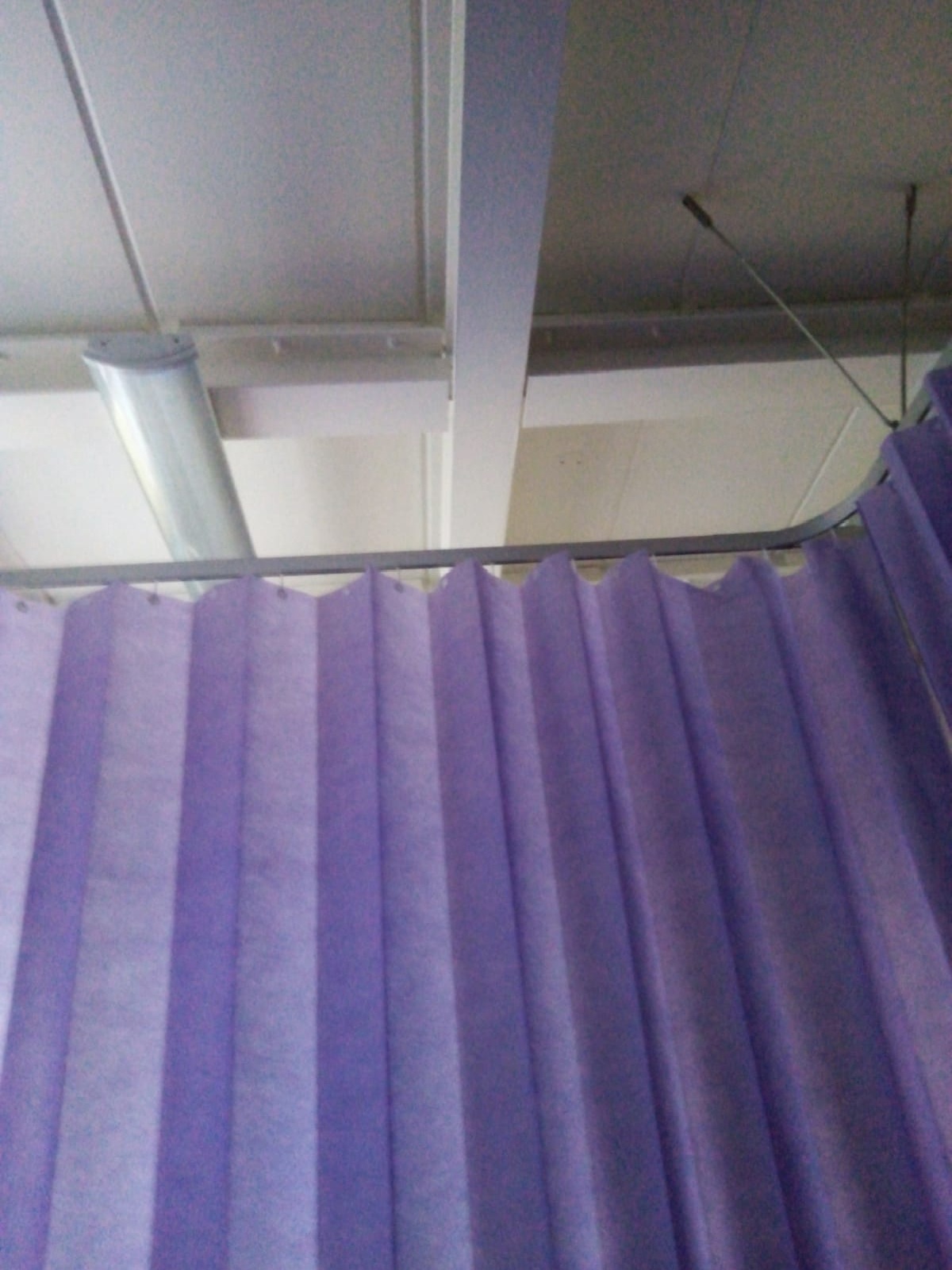
The ward staff were brilliant, compassionate, patient and caring. When I was asked if I would mind vacating my bed early while waiting to be collected I had no hesitation in agreeing. The chap they wheeled in looked very poorly. It was heartening to see the love of mainly, wives, daughters and granddaughters for their, husbands, dads and granddads.
Above all else the experience has given me a renewed hope for us all.

 Fenlandphil's Blog
Posted by purplesandyh on September 8, 2025 at 10:11 am
Sorry to hear of your experience Phil, very worrying, and that is a lot of blood. Our NHS continues to soldier on in spite of money worries and the staff are amazing. They certainly don’t build hospitals like they used to. Hope you are recovering now.
Posted by fenlandphil on September 8, 2025 at 10:15 am
Thanks, Sandra. I am feeling a lot better now.
Posted by summertime75 on September 9, 2025 at 11:33 am
Hi Phil, glad that you are home safe and sound. I started my nurse training at Huntingdon County Hospital in 1976 and despite Wikipedia’s claim that Hinchingbrooke Hospital opened in 1983 we were the first ward to move there in 1976 or 1977 from Walnut Tree House Hospital, the former Workhouse, I think that it was St. Petersfield Hospital at the time, ghastly place, I remember my first shift being “hit” by a hot wall that smelt of urine. There is an amusing side to the move a colleague, forever played the “I don’t understand” when a patient was soiled, his ward who were due to move with us had D&V so had to remain. Hinchingbrooke was rather spooky at night being the only ward open.
I have fond memories of HCH and of Sister Payne, a real old Sister who disliked the young Pupil Nurses because she viewed them as just filling in until they got married, whilst the older women were fine and us chaps, well she liked me, although she gave me a dressing down in the middle of Albert Ward when I told her I was going to The Ida Darwin Hospital, Fulbourn.
Without being disrespectful of the medical staff and someone who also has a hiatus hernia, rather vexing at times I can’t see that it would cause such a blood flow, more likely a result of your intubation, I did a stint in theatres with the ODAs at HCH before leaving, but that’s just my view.
It is ironic that HCH is still standing like so many of the old, discarded hospitals, relegated to “posh” flats. I hope that Hinchingbrooke manages to survive the RAAC problem although I suspect that HCH will outlive us all.
Take care
Chris
Posted by fenlandphil on September 29, 2025 at 7:25 am
Thanks, Chris.
I’m sorry, I have only just found your comment. I remember Walnut Tree Hospital in St Peter’s Road. I grew up in Huntingdon and went to secondary School just up the road at what was originally Huntingdon Secondary Modern.
I imagine Walnut Tree was quite noisy with the main London to Edinburgh railway line just across the road; we used to hear the trains, particularly at night and lived a good half a mile away as the crow flies.
I remember Sister Payne, too, from my stay in the old county hospital and when visiting my dad there. She used to lecture some of the men about smoking but she was a damn good nurse.
Posted by dierj on December 23, 2025 at 8:34 pm
same in Kings Lynn hospital…build cheap and pay for it later double…reuse brick built structures please
glad despite all you now out and as sorted as can be
Posted by Cathy Cade on September 10, 2025 at 3:19 pm
Glad to hear your experience was a positive one – if any A & E experience can be said to be positive. Ward staff do their best under difficult circumstances, but while David was in hospital, I was horrified how unappreciative (and unrealistic) some of his fellow-patients were.
Posted by fenlandphil on September 10, 2025 at 3:44 pm
I didn’t see any fellow patients being difficult with the staff; however, there was one man continually shouting, nurse, help and so on. During moments when he was exhausted by the shouting, he would continue pressing his buzzer. Naturally, I enquired after him but the staff said when they asked him what was the matter, he told them there was nothing wrong.
The state of the building was probably the greatest concern, which made life very difficult for the staff in many ways.